
Apr 12, 2023 | IT, IT Market Reviews
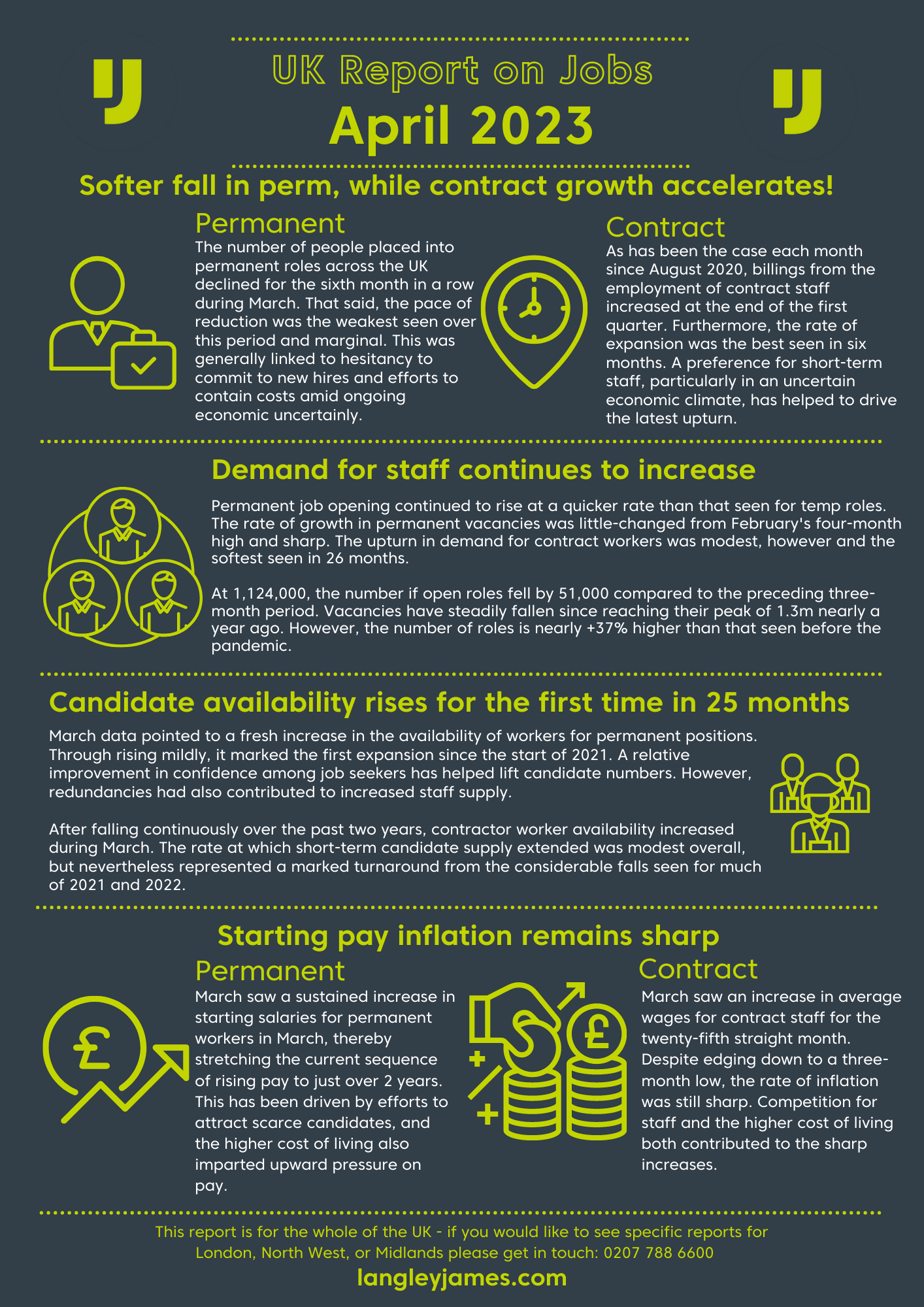

Mar 15, 2023 | Hiring Resources, Tips
With the growing demand for IT contractors, employers need to know how to successfully interview and hire the right professionals for their projects. This guide will provide tips on how to identify the best IT contractors, create a successful interviewing process, and make sure that you are hiring the right person for the job.
From understanding what type of IT contractor you need, to asking the right questions during an interview, this guide will help employers find the perfect candidate for their project. It will also provide insights on how to ensure that you are making a wise decision when it comes to hiring an IT contractor.
The Advantages of Hiring IT Contractors
Hiring an IT contractor can be a great way to get the most out of your IT budget. With the right contractor, you can get access to experienced and knowledgeable professionals who can provide you with the technical expertise you need for your projects. From software development to cybersecurity and networking, there are many benefits of hiring an IT contractor that can help your business succeed.
IT contractors are often more cost-effective than hiring full-time staff, as they don’t require long-term commitments or benefits packages. They also offer flexibility, allowing businesses to scale up or down depending on their needs. Freelance IT contractors can also bring specialized skillsets and knowledge that may not be available in-house. By leveraging their expertise, businesses can save time and money while still achieving their goals.
You may find our blog 8 Reasons to Hire an IT Contractor of interest too.
The Basics of Interviewing & Hiring an IT Contractor
Hiring an IT contractor can be a daunting task, especially when you don’t have much experience in the area. It’s important to remember that interviewing and hiring an IT contractor requires more than just asking the right questions. You need to understand the basics of interviewing and hiring an IT contractor in order to be successful.
Tips on How to Make Sure You Hire The Best IT Contractors
As an employer, it’s essential to make sure you hire the best IT contractors for your business. Hiring the right candidate can be a daunting task, and it requires a lot of effort on the part of employers. However, with the right hiring practices in place, employers can ensure that they are hiring top candidates who will help them meet their business goals. The following are some tips for hiring the perfect IT contractor for your business.
- Hire candidates who understand your industry, and have a good understanding of what you do. This is key because it will give them insights into how your business operates and allow them to be more prepared when they’re interviewing with you.
- Set clear expectations from the start so that both parties know what they are getting themselves into. For example, if you need someone to come in and maintain all of your company’s computer systems and networks, make sure the candidate understands this before verbally accepting their job offer .This will make the process more efficient and will help reduce the amount of time you spend interviewing candidates.
- Ask questions that can determine whether your candidate is a good fit.

Top 5 Questions to Ask IT Contractors During the Interview
Hiring an IT contractor is a big decision, and it’s important to ensure that you ask the right questions during the interview process. In this article, we will discuss the top 5 questions to ask a potential IT contractor during an interview. These questions will help you get a better understanding of the candidate’s skillset, experience, and working style. By asking these questions, you can make sure that you hire the best IT contractor for your project.
1. How Much Experience Do You Have with __________?
This question is a good way to get an idea of the candidate’s experience working on similar projects and for similar companies. The more experience the IT contractor has, the better their chances of success will be. It’s also a good question to ask if the project requires specialised skills that may not be related to what they provide as a typical job function. For example, if your project requires strong Excel skills but their job title doesn’t mention anything about it, this is a good question to ask during your interview to prevent you from hiring the wrong person.
2. How Long Have You Worked As A Contractor?
This question will give you a good idea of what type of experience your IT contractor has had with similar companies, how long they’ve been there, and how well they may be able to adapt to new projects and responsibilities. It will also help you determine if they are used to working on projects that are or have been outsourced, as many companies outsource their IT work these days. .
3. How Do You Feel About the Number of Hours We Have for Work?
A lot of IT contractors work a set amount of hours per week, but others are on-call or work from home from time to time. This question can help you see if your IT contractor prefers being in an office or if they would rather be able to balance their personal life with their job. .
4. Are You Willing to Travel?
IT contractors may need to travel for meetings or training during their career progression. Most IT contractors don’t mind traveling as long as it has been scheduled in advance and is well paid for the time spent away from home and family.
5. Tell Me About Your People Skills
IT contracting isn’t just about technical skills–it’s also about being able to interact with other people on a personal level and having appropriate communication skills.
About Langley James
Here at Langley James, we know our candidates. We have in-depth knowledge of their experience, down to the individual projects they have worked on, their strengths (and their weaknesses). We have access to those details that you just can’t get from a CV alone.
Our talented and specialised consultants work hard to ensure that any candidates we send you are not only a perfect match for the role but your business. To discuss your IT recruitment needs please call us on 0207 099 4839 or email us: langleyjames@langleyjames.com.
We’d love to hear your views on this. Are you struggling to recruit IT staff? Tweet us @ITRecruitment, or follow us on Facebook or LinkedIn

Mar 14, 2023 | IT, Tips
Are you currently looking to hire in IT? If so, there’s a lot to consider. And it may be that the first thing you need to decide is the benefits to you of contract v permanent. Which will you choose when it comes to filling your next IT role? There are advantages and disadvantages of both. Our consultants share their thoughts to help you make the right decision.
What’s the difference? Contract v permanent
A contractor is someone who provides their services to your business. Typically, a contractor is hired for a set period of time, or a set piece of work. A daily rate will be agreed, along with deliverables, deadlines etc. Contractors are usually self-managed and can be left to work independently based on the project brief.
A permanent candidate is an employee that works for you on either a full or part-til basis. They are expected to produce work based on their contract of employment and in return, they are paid a monthly salary on a continuous basis.
Pros and cons of hiring a contractor
When it comes to contract v permanent, it’s important to consider the pros and cons of each. Here’s our top 3 for each –
Pros of hiring a contractor
- Hire as and when you have a need. If you have a project that needs completing, or you are experiencing a temporary increase in work, a contractor could be the perfect answer. Also, if you suddenly have a drop in demand, you don’t have to continue to use the services on a contractor. This can save your business money but only paying for the services of a contractor when you need them.
- It can actually work out cheaper. Yes, it’s true that contractor rates are usually more expensive than a permanent salary. However, it can still work out cheaper to hire a contractor. With a contractor, the daily rate is all you pay. There’s no paying into pensions or other benefits. It gives a certainly of cost so works particularly well if you have a set budget.
- Higher level of expertise. Most of the time, when you hire a contract, you tap into a huge amount of expertise. Having someone in your team who has a lot of experience working for multiple companies can really be more beneficial than you realise. Using their past experiences, they can bring new and exciting things to your business, meaning you could be in a position to tap into this a fast track certain areas of growth.

Cons of hiring a contractor
- Continuity. If you want to turn the services of a contractor on and off, you could end up disappointed. Once a project is complete and the contract has come to an end, the contractor will move on to their next role. Therefore, if you want the same contractor back again a few months later, it may not always be that simple.
- Day rates can be high. We touched on this above. But, day rates can be high when compared to the salary of a permanent member of staff. Contractors looks for higher rates due to the risks associated with the role not being permanent
- IR35 rules – be aware. You can face large penalties if you are in breach of IR35 and need to take extreme care. Make sure that you work with a reputable agency to ensure that you are hiring contractor legitimately.
Pros and cons of hiring a permanent employee
Pros of hiring a permanent employee
- Higher level of control. With an employee, you decide when, where and how they work. They are employed directly for you (and in most cases, only you if full-time), so you get to call the shots.
- Commitment. When you hire a permanent employee, you both agree on the details of an employment contract. This is a long-term consideration for the employee. Therefore, when they agree to be employed, they are fully dedicated to your company.
- Employee engagement levels. A permanent employee has made a choice to join your company as part of their career development. They are more likely to align with your values and are therefore likely to be highly engaged.
Cons of hiring a permanent employee
- Commitment. Both a pro and co on hiring permanent employee! You need to be sure that you will be able to pay a monthly salary, plus all the additional costs, every month despite ups and downs.
- Employee rights. There’s lots to remember here, from holiday pay, redundancy, maternity, sick pay and lots more.
- It can work out more expensive. There’s lots of things that can affect your costs when hiring a permanent employee. From paying agency fees, to higher salaries, you need to have a budget up front. However, to retain your staff, it’s likely that you will also have to invest in training and development too.
Contract v Permanent – which will you choose?
We’ve been helping companies to recruit the very best in IT since 1999. We can advise you on which route is best and can even give you detailed insight into the IT jobs market. Each month, we produce our IT Salary Guide which looks at average salaries and day rates across all areas of IT. We also produce a monthly Report on Jobs so that you can see what’s happening in the market. As ever, we are here to help. So if you are looking to recruit into your IT team, get in touch with our expert consultants today.

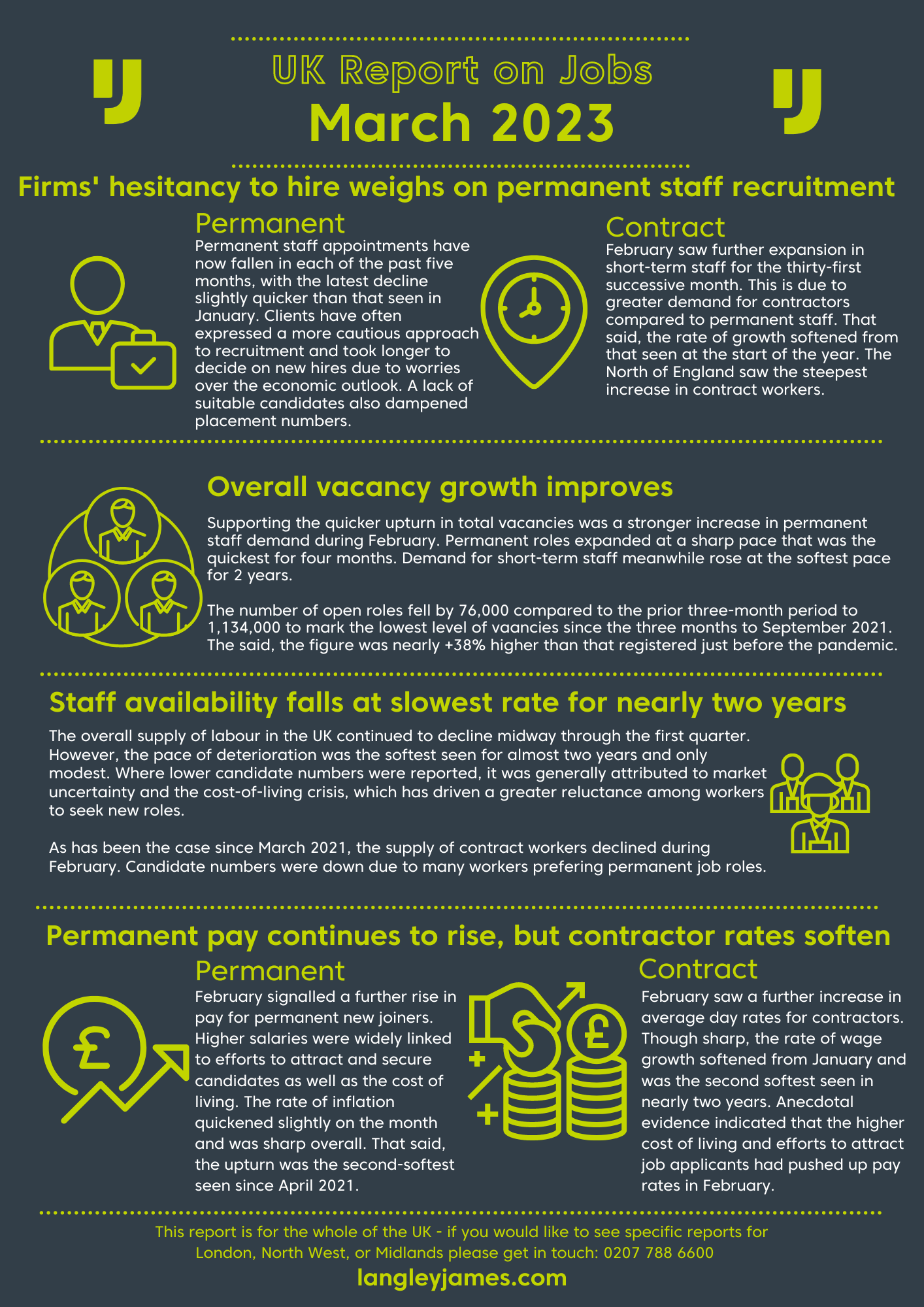
Mar 8, 2023 | IT, IT Market Reviews

Feb 23, 2023 | IT, Management, Tips
It’s not enough to hire the best IT staff. You must also keep them on board
Hiring the best IT people is not enough to ensure success. It’s equally important to ensure that these talented individuals stay on board. How to retain IT staff is a challenge for many companies. They struggle with keeping their top-notch talent engaged and motivated.
The key to successful IT staff retention lies in your environment. It should encourage collaboration, innovation and creativity. Companies should also provide competitive salaries and attractive benefits packages. Therefore ensuring that their IT professionals remain committed and loyal. Additionally, offering training opportunities and career development is key. This can help create a sense of job satisfaction. In turn, leading to better retention rates among your team.
Give employees ample opportunities to grow and advance
Investing in the professional development of your IT staff is a key factor for success. It’s important to provide them with ample opportunities to grow. And toadvance their careers within your company. By offering employee training, you can give your IT staff the skills they need. Enabling them to become more productive and efficient. You can also offer professional development courses that are tailored to their individual needs. This allows them to gain new skills and knowledge. And this will help them succeed in their current roles. With these opportunities, you can create a culture of learning within your company. And this will lead to greater job satisfaction and higher IT staff retention rates.
But it’s not just about training. If you’re pushing your IT staff to do new projects, it’s going to keep them engaged. But don’t stop there! Encourage them to get more out of the technology you already have. Allow them to also investigate new technologies and how they can evolve the business. They’ll feel like they’re a part of the growth of your company, and they’ll be excited about their job—which means they’ll do it better. And that’s what we call a win-win situation!

Make sure your IT staff are adequately compensated for their skill level, talents and experience
Having a competitive IT salary structure is essential for any successful business. It is important to ensure that your IT staff are adequately compensated for their skill level, talents and experience. This will not only help you attract and retain the best talent. Additionally, it will ensure that your company remains competitive in the market.
It is important to review salaries regularly. You need to make sure they are in line with industry standards. Additionally they should reflect the value of each employee’s contributions. It is also important to consider other factors. Things such as cost of living and job market conditions. With a proper salary structure, you can ensure that your IT staff are adequately compensated for their efforts. Therefore making them feel rewarded them for their hard work.
Give your team adequate tools and resources
Having the right tools and resources is essential. This ensures that your team can complete their tasks without having to manage around inadequate technology. Having access to the best technology and resources allows teams to be more productive, efficient, and successful. With the right tools and resources, your team will be able to create better results faster and with less effort. This will result in a higher level of satisfaction from both your employees and customers. Investing in adequate tools and resources for your team is an investment that will pay off in the long run.
Foster a culture of collaboration, inclusivity and transparency
Building an inclusive IT team is a critical step in retention. Fostering a culture of collaboration, inclusivity, and transparency. Inclusivity. This means that everyone on the team is given an equal opportunity to contribute and be heard. This can be achieved by creating an environment where everyone feels comfortable. Where they can express their ideas and opinions without fear of judgement or criticism.
Therefore, it is important to create an environment where all members feel respected and valued. Regardless of their background or experience level. This can be done by providing regular feedback. Encourage open communication between members, and recognise individual contributions. Additionally, it is important to ensure that everyone has access to the same resources so they can do their best work. Creating a culture of collaboration, inclusivity, and transparency within your IT teams. This way you can ensure that all members are working together towards common goals. And with mutual respect for each other’s skillsets and perspectives.

Your success as a business depends on retaining talented IT staff
The success of any business today depends heavily on its ability to retain talented IT staff. As technology continues to evolve, businesses need to stay ahead of the curve and hire the best IT professionals available. The right IT professionals can provide businesses with a competitive edge. Therefore, helping them remain successful in their respective industries.
IT professionals bring a unique set of skills that are essential for any business’s success. They can help businesses develop efficient systems, manage data, and keep up with technological trends. They also have the ability to solve complex problems quickly and accurately. This is key for any business’s growth and development.
About Langley James
Here at Langley James, we know our candidates. We have in-depth knowledge of their experience, down to the individual projects they have worked on, their strengths (and their weaknesses). We have access to those details that you just can’t get from a CV alone.
Our talented and specialised consultants work hard to ensure that any candidates we send you are not only a perfect match for the role but your business. To discuss your IT recruitment needs please call us on 0207 099 4839 or email us: langleyjames@langleyjames.com.
We’d love to hear your views on this. Are you struggling to retain your IT staff? Tweet us @ITRecruitment, or follow us on Facebook or LinkedIn

Feb 10, 2023 | IT, Management
Is it time that you chose experience over qualifications when looking to secure your next IT hire? We look at the facts.
A 1st Class degree: the hallmark of the ideal candidate… or is it? It’s true that a strong qualification does give candidates a good grounding to build from. And it seems that lots of people still agree with this. The number of people applying to study computer science degrees rose by 13% last year. That’s the biggest increase of any UK university subject!
But is it the right choice for your company. In a market where, when star candidates are available, they are being snapped up fast, it may to time to change your approach.
Why let your competitors snap up all the talent? Could it be time to broaden your search by taking experience into account over and above formal qualifications?
Experience over qualifications?
Which is better? Three years working in the IT industry? Gaining in-depth experience in a real-world situation but with no immediately measurable way of proving a level of knowledge? Or three years studying? Gaining tested and proven knowledge of a wide range of systems but with less time for practical application of that knowledge. And what about those candidates who have no formal degree. But years of experience through which they have gained many ‘non-university level’ qualifications in various systems and skills?
It’s believed that more than half of employers still use degree to screen job applicants. But this can mean that they are often overlooking candidates with relevant skills and experience. But there’s something else to consider too. A third of employers agree that university candidates are either ‘fairly’ or ‘very poorly’ prepared for the workplace.
Lizzie Crowley, skills adviser at the CIPD, said employers must stop thinking that university degrees were always the best indicator of a person’s potential at work: “They [employers] think they’re getting ‘off the shelf’ capability rather than assessing the specific skills needed for roles, then wondering why they have ongoing skills gaps.

Does this mean that academic qualifications have no place in candidate selection? Not in our opinion. Qualifications remain a measurable indicator of the quality of a candidate. Additionally, they are certainly a sign of commitment to the industry, as well as ambition. But they are not the only measure. To be sure of finding the ideal candidate for your IT role it is becoming more and more necessary to broaden search criteria.
As you know, IT is a uniquely fast-moving industry. Systems that were in place a decade ago are often unrecognisable. It could be argued that the content of a ten-year-old degree is now largely irrelevant. That the knowledge gained through experience since earning that degree has become more important than the degree itself.
Broaden your criteria
So, how can you broaden your criteria for the perfect candidate without opening the floodgates to unsuitable candidates? After all, for a candidate to list a skill on a CV tells you very little about their level of expertise. There are several things to look for when shortlisting for a position:
– Look for candidates who have listed their achievements on their CV’s. This will give you an idea of the level of experience they have a particular area.
– Look for projects that the candidate has led or been involved in.
– If you are looking at a Web Developer’s CV, take time to examine the sample URL’s they have provided.
– Most importantly, we can help you find a candidate who is the best fit for your company and individual role. We will know what you are looking for and will ensure that all the information you need to know about each candidate is provided in addition to the CV.
Of course, formal qualifications will always remain a valuable asset to any candidate. Completing a degree or other qualification takes dedication, an aptitude for the subject and plenty of fresh industry knowledge. However, with dropping numbers of IT graduates (The University and College Union (UCU) report, stated that only 169 computer science courses were available in 2012, down 18% from 2006), and university applications down for a second year running in 2013 according to UCAS, combined with a marked growth in IT vacancies, perhaps it’s time for a change in the criteria by which the ideal candidate is chosen, without having to compromise on quality.
We can help
Here at Langley James, we know our candidates. We have in-depth knowledge of their experience, down to the individual projects they have worked on, their strengths (and their weaknesses). We have access to those details that you just can’t get from a CV alone. Our talented and specialised consultants work hard to ensure that any candidates we send you are not only a perfect match for the role but your business. To discuss your IT recruitment needs please call us on 0207 099 4839 or email us: langleyjames@langleyjames.com.
We’d love to hear your views on this. Do you rate qualifications over experience or vice versa? Tweet us @ITRecruitment, or follow us on Facebook or LinkedIn

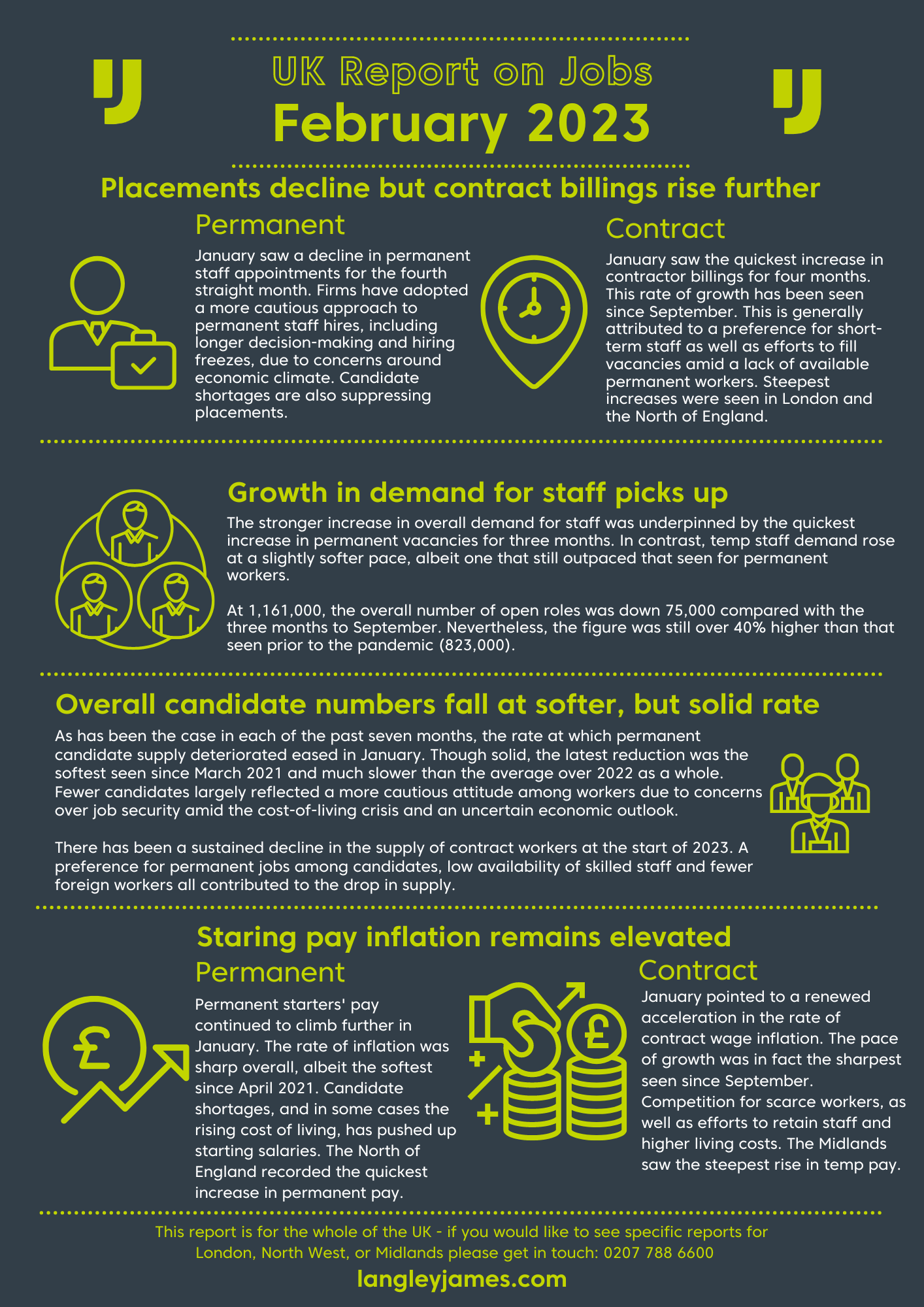
Feb 8, 2023 | IT, IT Market Reviews

Jan 13, 2023 | Management, Tips
Remote working looks like it’s here to stay. Or some form of it at least. Employees now have the legal right to request flexible learning from day 1.
Some of the biggest challenges for employers managing remote teams, often for the first time, include workers struggling with loneliness, managing their time, and communication among staff members.
This can be tough. But finding a practical strategy that works can help.Here are a few points that some of our home-working managers have shared with us that might offer some much-needed wisdom!
Set clear expectations when remote working
Make no mistake, inexperienced remote workers were suddenly thrust into unfamiliar working environments. They’re daily routines all over the place. With that in mind, ensure you give your team crystal clear expectations of what you want them to achieve. Clear direction from you takes the pressure off them. It helps everyone to know what success looks like to you. It may be worthwhile weighting their job descriptions if the balance has shifted due to home working. This will help your team to understand what aspects of their role takes priority.
Treat homeworkers as though they were in the office
If your team were in the office, would they have regular access to you? If that is the case, things should not change for them when working from home.
At the start of working from home, you may have had to contact your staff on a regular basis. Mainly to avoid any feelings of loneliness/isolation, until things settled down. While you and your staff may be in the swing of things, it’s still extremely important that a clear line of communication is continued. You need to manage your staff as if they were in close proximity to you.
People need to feel part of the team, wherever they are working.
Remote working requires regular contact
We’re probably all sick of the thought of Zoom meetings (both in a professional and personal capacity), but truly, what would we do without it now?
We are lucky to have so many communication options available to us. Using video conferencing is a really inclusive way of holding a meeting. Microsoft 365’s Team, Zoom, and Google Meet amongst many others are great ways of very easily holding a face to face team meeting. Telephone Conference calls, Facetime and Skype are other ways to keep in touch when you can’t physically meet with your team. Whatever you choose, try to forge an inclusive contact plan that offers everyone consistency, routine and the chance to be heard.
Video-based coaching
Notice one of your team is not themselves? Follow up with a call and use Video-Based Coaching to help them. Regular contact will help you spot such issues. Working alone from home is not for everyone. For some, being alone all day is their idea of hell. While others are more than happy in their own company. Keep in mind that everyone tends to offer a brave face – be careful not to ignore the signs.
A particularly useful method we have employed here at Langley James is employing a ‘buddy-up’ system. This is where two employees maintain regular contact and catch-up with one another.

Monitor progress
Maintain focus by setting objectives. Use a progress monitoring system to keep people on track. It’s vital your team understands why you need to follow their progress to avoid feelings of distrust. Instead, this is about the business remaining on course for success. Helping you to foresee any issues, offer extra support or opportunities to improve the process.
Trust your team when they are remote working
You might feel unsure as to whether the work will get done to the same standard as if they were in the office. To cope with this, set up work-from-home guidelines. Things like emails must be responded to within 24 hours. Use text for urgent matters. No calls between certain hours. This helps to make sure teammates are not working around the clock. Set the rules and trust the team to follow them. If they don’t, it’s easy to refer to the rule and avoid conflict and negativity.
With this being said, the same rules apply for employees who are working overtime. Indeed, many employers are finding that their staff cannot switch ‘work mode’ off after hours. It’s hard when your computer is just sitting there. The temptation to answer emails and calls on a Sunday evening. It’s become a frequent occurrence for many of the working-from-home army in recent months.
It’s important to help ensure your staff avoid feelings of ‘burning out’ and ultimately ‘switching off’ when the day is done.
Make remote working feel inclusive
Ensure that any news in the business is always circulated to home workers. Ideally at the same time that the rest of the team . There is nothing quite as demotivating as finding out a business critical decision from someone else in the business. Frankly it just makes people feel second class.
Remember, the remote environment can have mental implications for many – with feelings of anxiety, stress and loneliness at its highest. This is only exacerbated by the rising cost-of-living, with many employees fearing that they may be made redundant. Remote working is likely to make staff overthink about their position within the company, so being as open and transparent as possible will be crucial for work productivity and morale.
Remember the company vision
Ensure that home workers still feel part of the overall company vision and how they fit in. To work productively people need to know that their efforts are contributing towards the overall goal. Any changes needs to be properly communicated to maintain motivation and focus.
Remote working needs reliable tools
Ensure your team has the tools to do the job. Broadband is absolutely critical for most of us however, connection reliability may be an issue, especially in more rural areas. Suggest alternative venues for employees struggling with this issue such as working with other colleagues, friends or family. Look for alternatives like Dongles, mobile phone hotspots, etc and try to offer solutions instead of problems for your staff to solve.
Create a Team-to-Manager and visa versa communication strategy
Managing a productive team remotely begins with a strategy for communication. Be aware of how disruptive ‘over-communication’ can be to your day. Set out a process so your team knows when it’s appropriate to call you. First, arrange for the appropriate number of weekly formal “report-ins.” Second, set guidelines about daily needs. Some people work better with a shopping list of questions and thoughts. Others like a trickle. An understanding of what is urgent will further mitigate inefficiency. This allows for ultimate productivity. Try asking team members to question “ Is it Urgent?” or can it wait. Encourage email or instant messages for less urgent issues. Reserving phone call interruptions for the meaningful stuff. That all said, be aware that some of your team may need reassurance or guidance to be productive so assess on a case by case basis.
Establish close bonds, help and support frequently
Empathise and appreciate your team member’s life by discussing family, commonalities and shared beliefs. Things they would normally discuss in the office with their colleagues. It’s worthwhile investing this time in getting to know them. Show you are supportive of their success by using inquiry to help them achieve their goals . Do this rather than just checking on their progress and numbers. Avoid closed questions like, have you done X?, or did you manage to call Y? You may have no idea what their day has been like. If something has interfered with the plan, the only answer they can give is negative. This can result in humiliation and defensive confrontation. Instead ask, What progress have you made on X? or, How’s your morning been? Qualify the situation first and then ask more detailed questions.
It’s important to share team success when remote working
Ensure that everyone gets to know about achievements. Make a real fuss. It will create a team feel good factor.
So, there you have it. Some really useful advice from people who’ve been through the highs and lows of remote working before.
Our expert IT recruitment consultants are here to take the pressure off you when recruiting someone new, permanent or contract. We liaise with candidates with the utmost care to ensure that their candidate experience is a positive one. Call us on 0207 788 6600 and let us help you Recruit Someone Worth Recruiting.

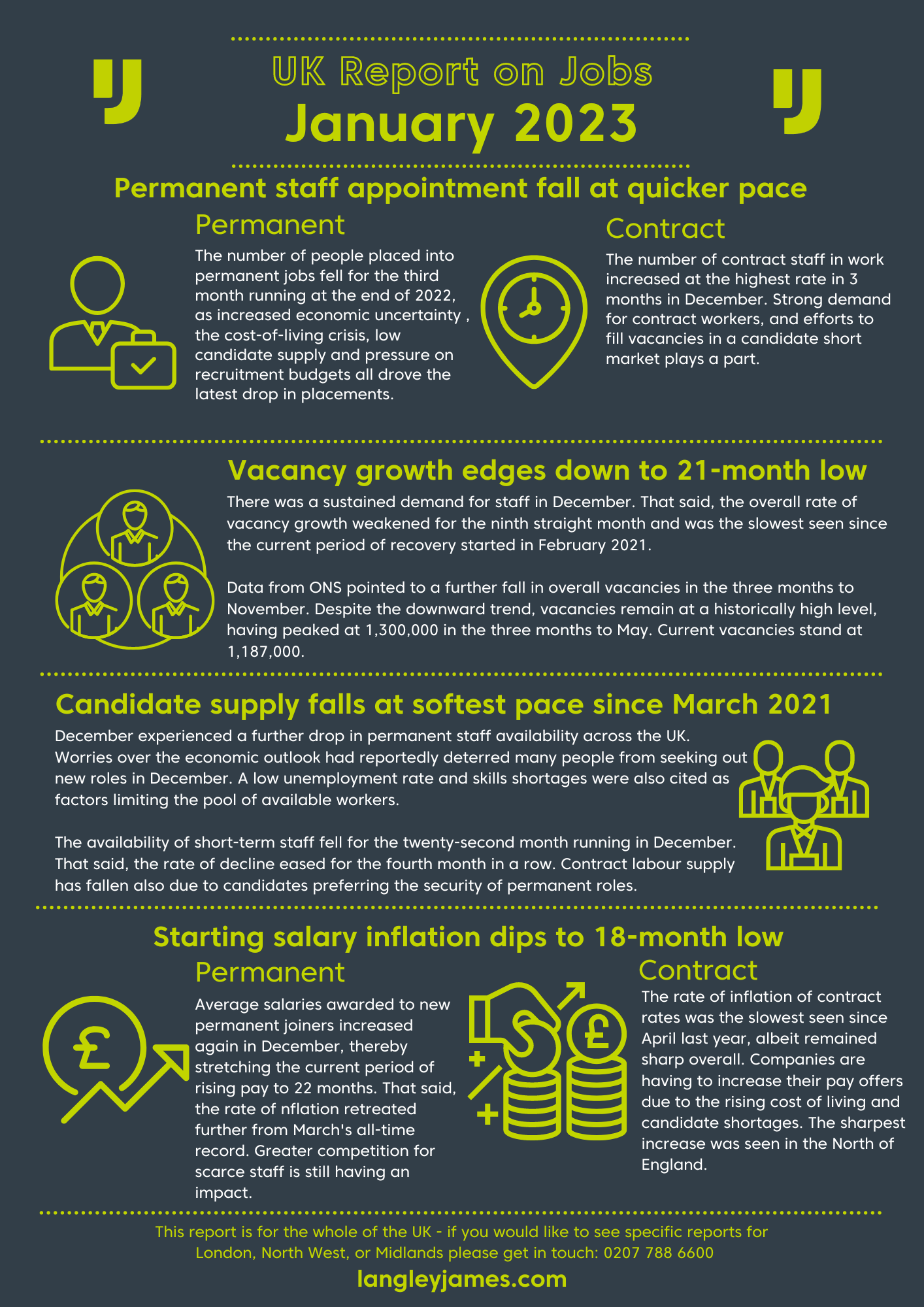
Jan 10, 2023 | IT, IT Market Reviews

Jan 6, 2023 | IT, Tips
Have you considered your IT Recruitment Consultant to be part of your interview process?
This is the first stage of the interview process.
When you outsource your recruitment to Langley James IT Recruitment, you are outsourcing the early stages of your usual IT recruitment process.
Our Recruitment Consultants will act on your behalf. They will meet, interview and qualify candidates. that may be employed by your competitors in line with the job description you provide, We will make IT recruitment decisions based on the knowledge we have of your requirements. Our IT Recruitment Consultant will represent you and your company.
With that in mind, let us clarify how you can optimise this stage of recruitment to ensure your company is properly represented and your shortlist thoroughly vetted before you meet a single candidate.
Share your company knowledge with your IT Recruitment Consultant
If you attempted to recruit directly you might buy some recruitment advertising. Sift through the applicants and select a shortlist using your qualification information. Then, you would invite them to attend an interview where you would explore their suitability against your job description. You’d ask key questions and explain to them what the job is. If you like them, you will probably enthusiastically describe the business and all the reasons why they should join you as you have that knowledge.
Using Langley James IT Recruitment, you will save time. We will be responsible for most of the process allowing you to focus on other business challenges. The information you provide us with at this early stage is crucial to conduct your 1st stage interview to a standard that meets your own.
Qualification
Pass on all your early-stage qualification questions to your IT Recruitment Consultant. Provide examples of the best possible answers so they can match candidate responses accordingly. Context is important here as you might want specific experience and skill application. For example, when you say Advanced Excel skills, what does that really mean?
Describe examples of how the desired skill might be exercised so our Recruitment Consultants can explore a candidate’s experience with more confidence. Be very clear on what is essential and what is desirable so we can prioritise.

Your IT Recruitment Consultant is part of your team
By giving as much information as possible, it will help our Recruitment Consultants represent you and your company in the best possible way. Therefore, the more information we have, the more efficiently we can find you the right people.
Interview Feedback
Do you ensure that you gain feedback from our Recruitment Consultants before setting up your own interview, Part of our process is to produce a report when we shortlist. Ask for our interview report detailing the reasons why they feel a candidate is suitable. Review the evidence gained form the qualification questions you gave them and build their findings into your own interview plan.
Our IT Recruitment Partnership
At Langley James IT Recruitment we aim to keep in touch with you throughout the recruitment process. We send out a standard weekly report to update you on our progress – however do feel free to contact us at any time. We understand that things can change, and you may need to refine or change your recruitment priorities and regularly ask for feedback.
Sometimes roles are harder to fill if the salary is not sufficient, the location is non-traditional, or the specification does not sell the benefits of the role. Whatever the problem, do not wait to find out weeks later. Do whatever you can to influence the recruiter interview process and identify changes early.

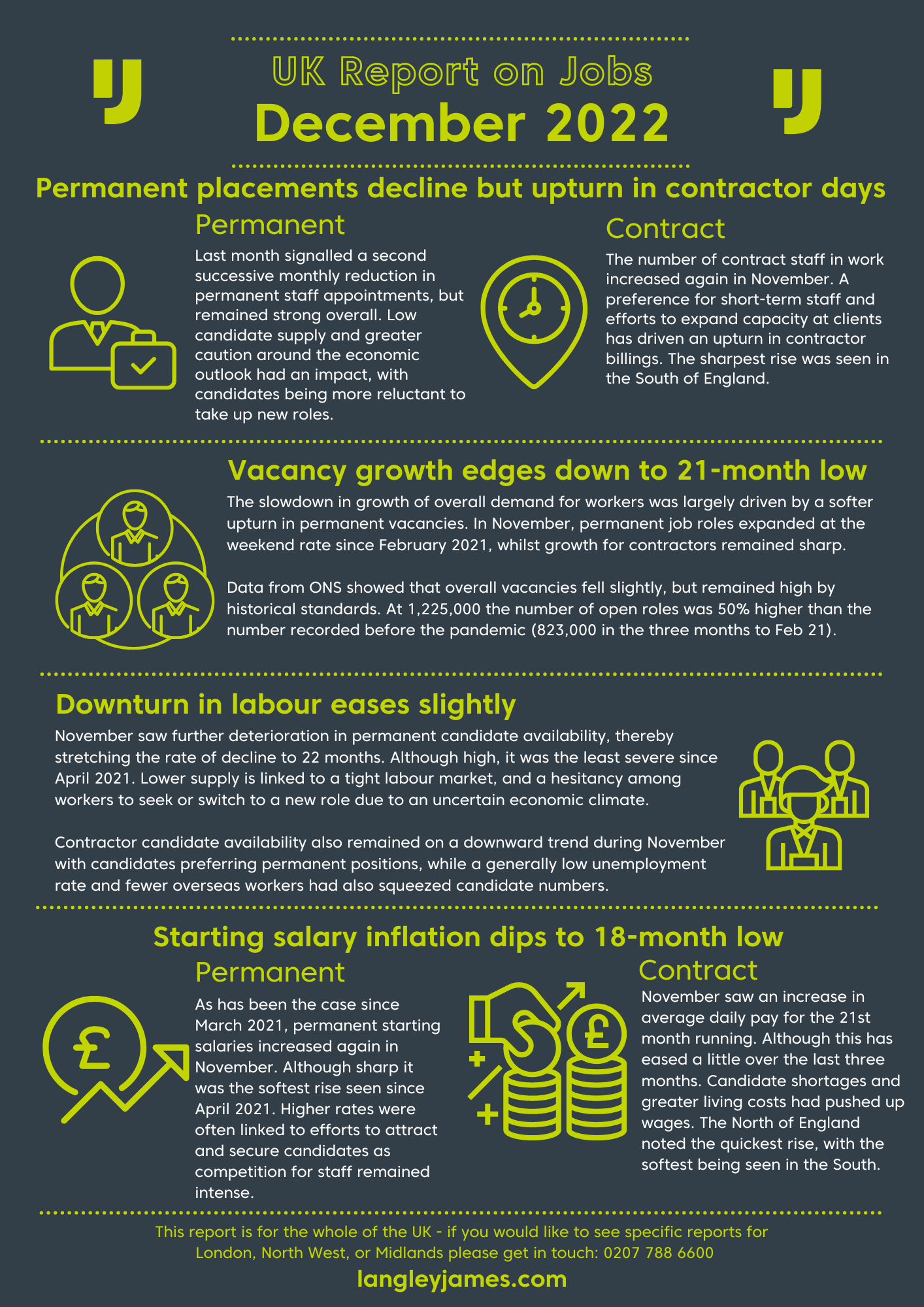
Dec 8, 2022 | IT, IT Market Reviews

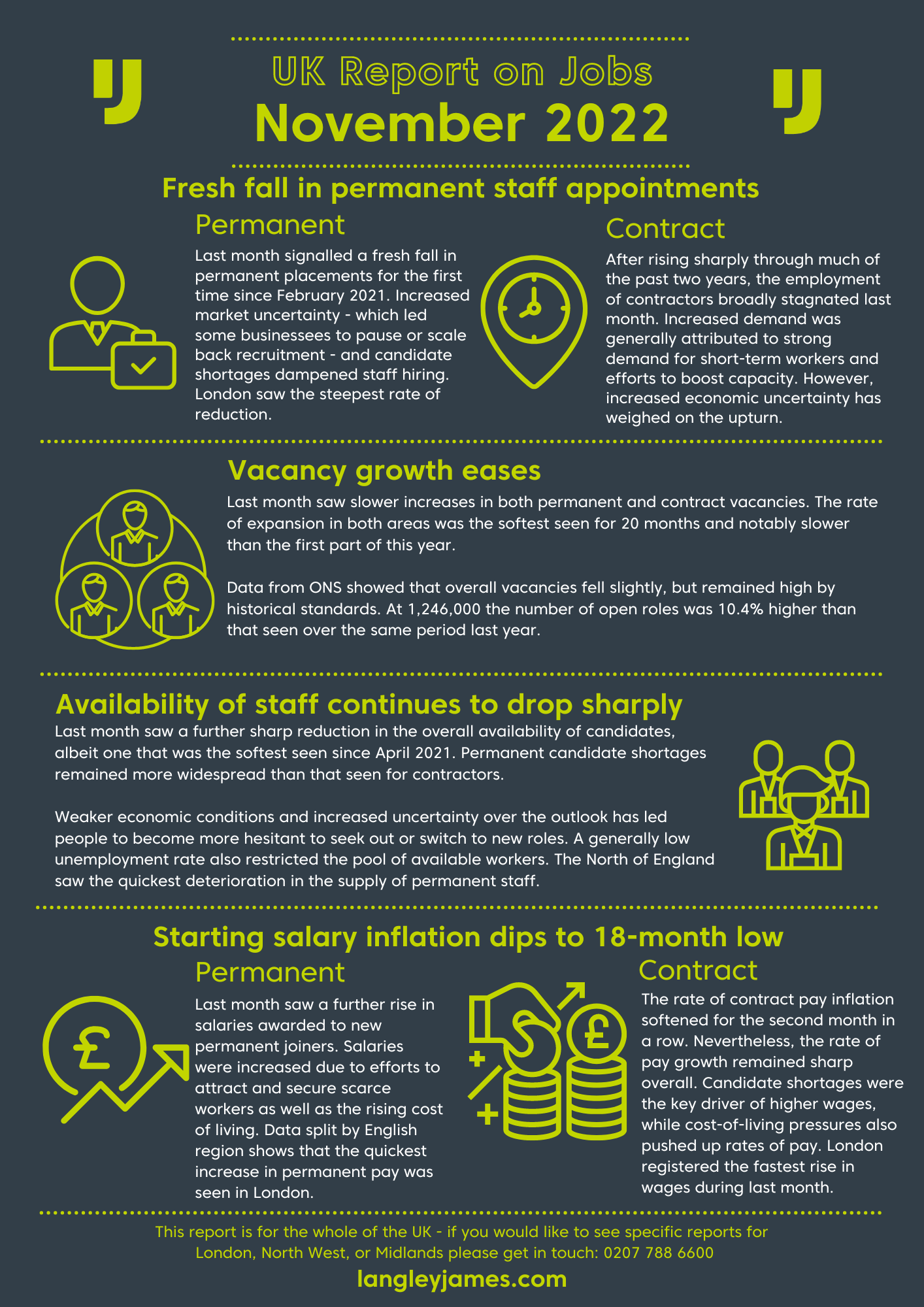
Nov 10, 2022 | IT, IT Market Reviews

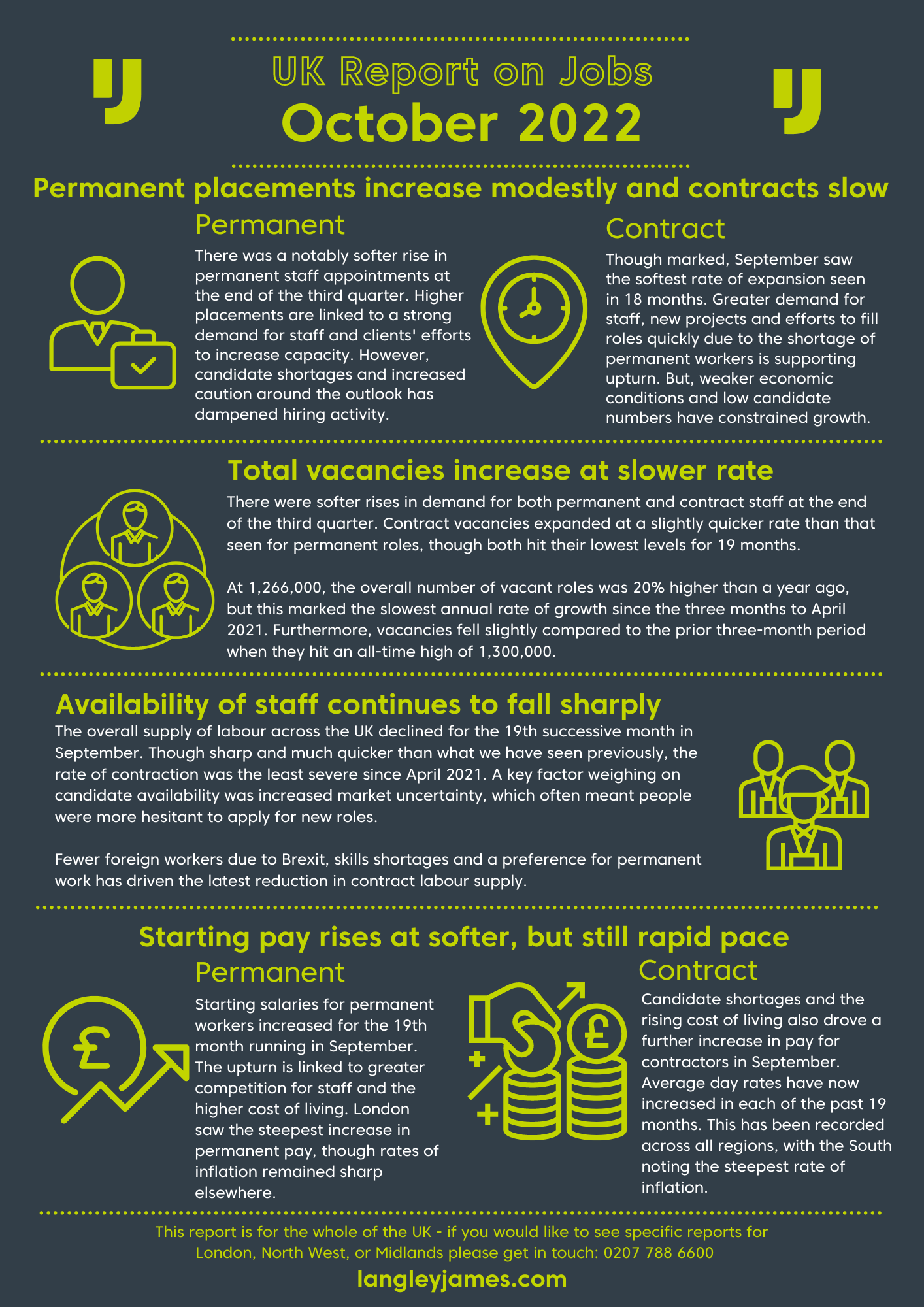
Oct 7, 2022 | IT, IT Market Reviews

Sep 25, 2022 | IT, Tips
‘Quiet firing’ – are you guilty of it? Could it be the cause of your recent resignations? The internet is currently awash with people talking about quiet quitting. This is when an employee literally does the bare minimum to get by without losing their job. It’s become a common issue of late, especially with companies embracing flexible working. But, it can actually go both ways.
What is ‘quiet firing’?
‘Quiet firing’ isn’t actually a new thing. It’s been happening for years. Going unreported and simply being part of the employment landscape. But now it has a name and people are starting to talk about it. Maybe it’s happened to you and you just didn’t realise? ‘Quiet firing’ is essentially when a manager demoralises their employees enough, that they choose to leave. Sometimes, it’s not intentional. And other times, it most certainly is.
When was the last time you took a step back and looked at your current management practices? If, like many other companies, you have gone from managing an on-site team, to managing a part or fully remote team, your management practice has had to change. Even if you haven’t made this transition, there are other issues afoot. With the cost of living incase and desire for career progression, employees are looking for more support than ever from their manager.
Are you guilty of ‘quiet firing’?
This can happen in various ways, such as increasing worlds to unmanageable levels, not responding to requests for promotions or salary increases, or by eliminating opportunities for career growth. But that’s not all. Micromanaging, excluding employees, cutting back hours, or removing soft benefits. All the things will make an employee feel unwanted, under-valued and neglected. And with so many vacancies in the market right now, candidates are in a strong position when it comes to finding a new job.

We encourage companies to look at their management practices and identify any instances of ‘quiet firing’ by poor managers. These are the managers who do not want to invest the time and effort to support, motivate and engage their teams. And sometimes this isn’t intentional. There are time pressures on managers across all areas of IT. It could be that the manager just simply doesn’t have the time to really consider the wellbeing of their team. These trends are causing concern for HR teams who are trying to recruit and retain talent in a tight job market.
Avoiding “quiet quitting’
Interestingly, there is a distinct connection between ‘quiet firing’ and ‘quiet quitting’. If there are members of your team who used to do well but are now showing signs of doing as little as possible, ask yourself this. Why? What is it that has made them feel so disengaged that they have lost to desire to do their very best? People don’t leave jobs that they feel supported in. Jobs that pay sensible salaries, a work-life balance and offer opportunities for career progression.
This year has seen a 24% increase in internet searches for “how to fire someone” compared to last year! And, as much as a 180% increase in the term “when to fire someone”. And with the current skills shortage, it’s surprising to see these increases.
Stop quiet firing, and you’ll avoid quiet quitting!
About Langley James
We have been helping companies to attract and retain the very best IT talent since 1999. But we don’t just simply find the best candidates. We can advise you on the current jobs market conditions. Share data on average IT salaries. Talk to you about the benefits that candidates are looking for. In fact, we do everything we can to help ensure that you get the very best people for your team. Get in touch with our team to find out how we can help you to recruit the best!

Sep 13, 2022 | IT, IT Market Reviews
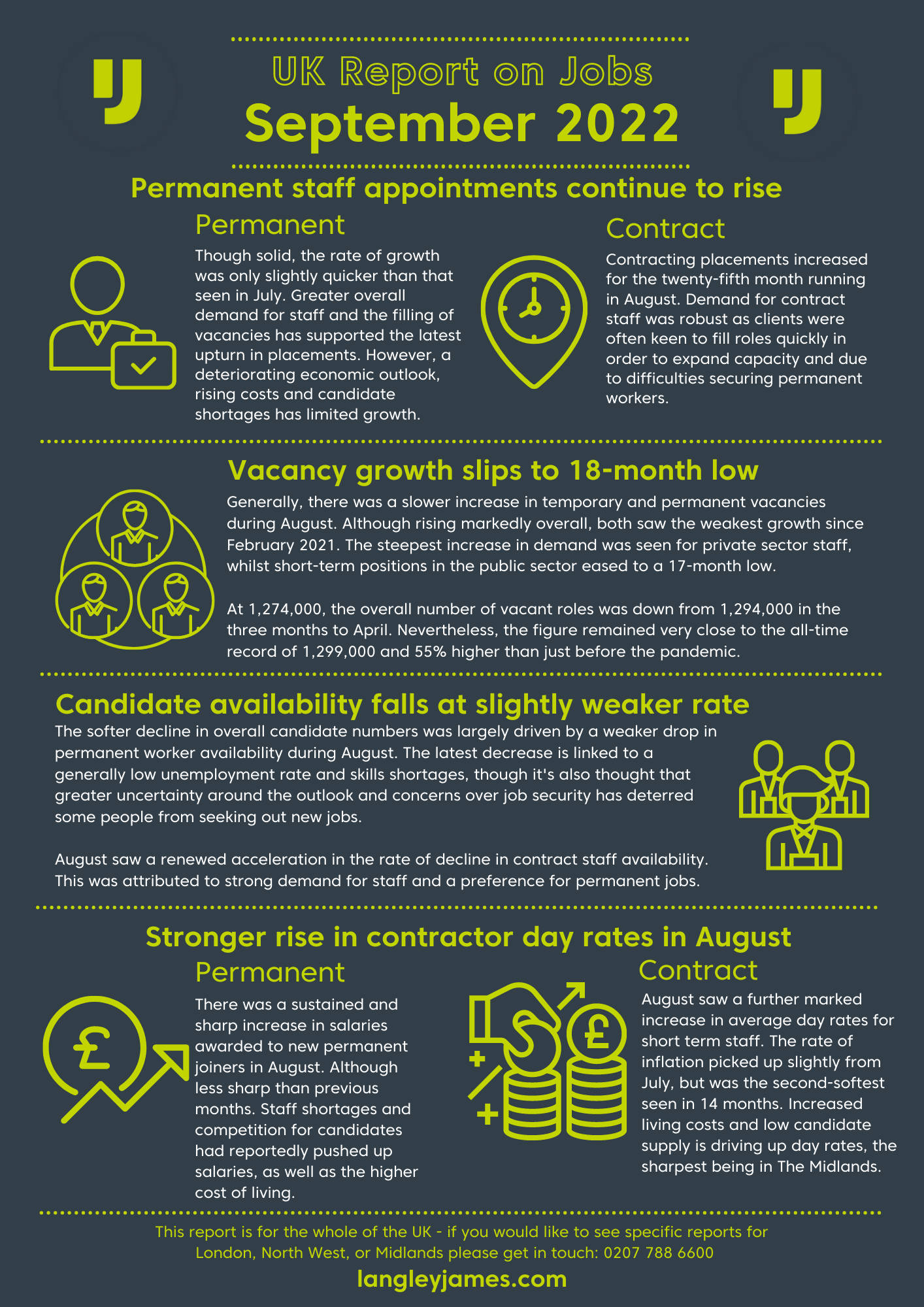
Aug 5, 2022 | IT, IT Market Reviews

Jul 20, 2022 | Hiring Resources, IT, Tips
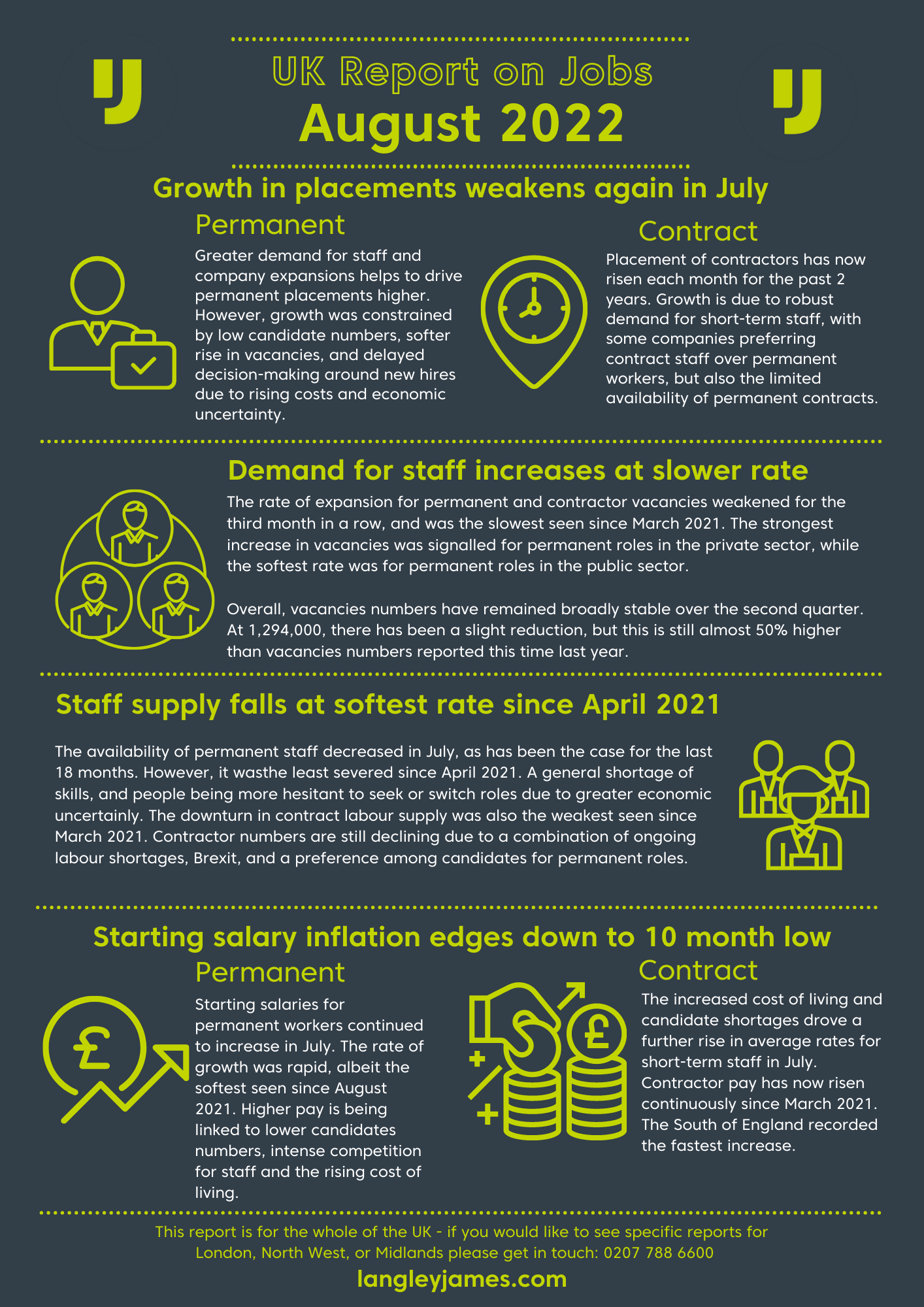
When it comes to attracting candidates, the benefits of offering hybrid working are something you should still consider. As yourself, is it necessary to have your team on site for 5 days? We appreciate that some roles in IT are hard to perform remotely. However, it still seems that most candidates are looking for flexibility and some form of hybrid working.
We’ve all been experienced the benefits of working from home. Saving money and time on commuting, having a better work / life balance. There are many great things about being able to work flexibly. But what about the benefits to you, the employer? What have you got to gain from offering hybrid working? Our expert recruiters share their insight.
Larger pool of candidates
We are living in a time where there is a real shortage of skilled candidates. With vacancies over 1m in the UK and unemployment figures low, it’s getting harder to find the best IT talent. However, if you can offer remote working, your candidate pool suddenly becomes the whole of the UK, or even the World! Think of the diversity this could bring to your team. And the greater availability of exceptional candidates for your IT vacancy.
Improved loyalty is one of the benefits of offering hybrid working
According to various reports, we are in the middle of The Great Resignation. Around the world, workers are quitting their jobs in record numbers – and bosses are still scrambling to figure out how to keep them. However, offering hybrid working can help combat this. Lots of people were working from home during lockdown and let’s be honest, we all got rather used to it. Companies adapted and in most cases, business continued as normal.

But now that we are back in the office, the promise of flexible working is slowly disappearing. But candidates are looking for flexibility. Therefore, if you are genuinely able to offer hybrid, flexible or remote working, you should have a larger pool of candidates to choose from. Plus, if you continue with flexible working, employees are likely to stay with you for longer. Why would they move for another job if it meant going back to an offer 5 days a week?
It focuses on mental wellbeing
Mental wellbeing has been big news recently. There’s a renewed focus on the mental health of our teams. And companies who have a wellbeing policy are more likely to attract more candidates. By offering flexibility in working patterns, or work locations, you will be seen as a company who looks after their employees. It also shows that you have trust in your teams, and this can go a long way.
Are you recruiting?
If you are currently recruiting in IT, you’ve no doubt noticed the huge reduction in applications. That’s where we can come in. We’ve been recruiting IT candidates for over 20 years and have a large database of highly skilled IT candidates. Even in the skills shortage, we are still able to secure exceptional levels of IT talent for our clients. We’d love the opportunity to do the same for you. Get in touch with our team today and see how we can help you to recruit someone worth recruiting.

Jul 10, 2022 | IT, IT Market Reviews

Jul 9, 2022 | Hiring Resources, IT
IT salaries seem like they are on an ever-increasing trajectory. With the demand for staff higher than ever before, and the candidate pool shrinking by the day, it’s no surprise. But what does this actually mean for salaries?
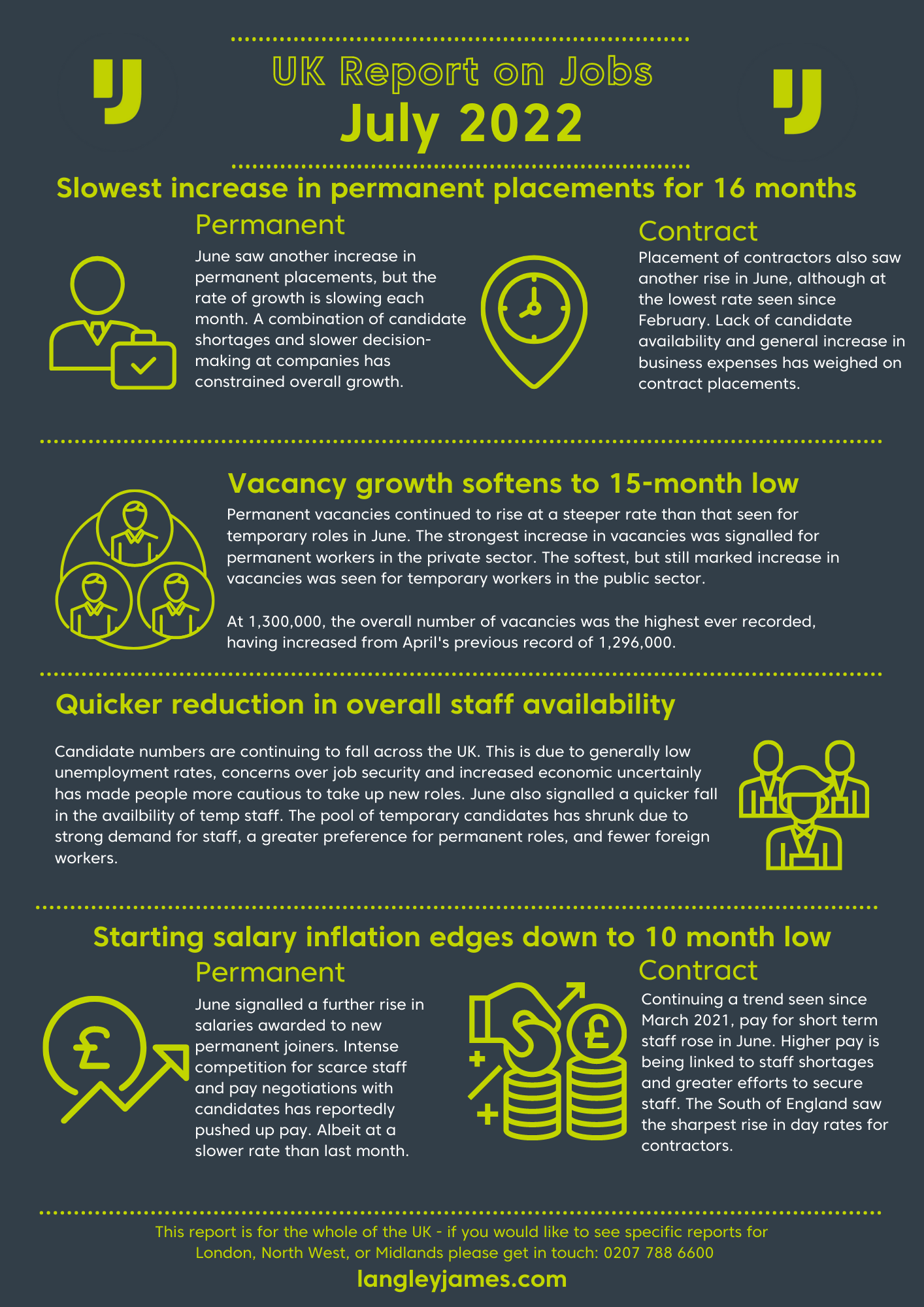
We regularly review the average salaries for the most popular jobs in IT. And we always give an indication if it’s up or down from the previous month. But it’s when you look over a longer period that you really get to see the bigger picture. Some will have you believe that salaries have increased dramatically across the board. This is not the case. Yes, it’s true that some salaries have seen as much as 96% increases. However, there are some areas of IT where salaries have remained broadly the same.
So, we’ve taken a look through the archives to give you a bigger picture view of IT salaries over the last 2 years.
Senior IT leadership roles that saw the biggest increase in IT salaries
There’s no doubt that it’s at the top end of the scale where we’ve seen tha largest jumps in average pay. In September 2020, the average salary for a CTO was £100k. And in our most recent salary survey (July 22), that’s increased to £144k. An easy % increase to work out there! And it’s a similar story for an IT Director. £112k in September 2020 to £150k in July 2022. A 34% increase. And a Head of IT too. £77k in 2020, £90k today. So, if you are looking to hire into your senior IT leadership team, it’s safe to say you’ll have to offer a lot more to attract the best than you did 2 years ago.
Trends that have helped increase average salaries in IT
The world of business has experienced many changes over the last 2 years. The pandemic meant that some business really had to fast track future plans. And this is reflected in the average IT salaries for those jobs most in demand to operate in this new normal. The step change growth in e-commerce when we were all confined to our homes has had a dramatic impact on salaries in this specialism. In September 2020, the average salary for an e-commerce manager was £65k. You’d now have to pay around £84k to secure the same talent.
But it’s not just e-commerce. Business are relying more heavily on data than ever before. Data driven insights have become an essential part of business success. And this is where we reveal the IT role that has seen the largest increase in average salary. A database manager would earn an average salary of just £50k in September 2020. This is now a much larger sum of £96k. That’s a 92% increase!

IT salaries that have remained more static
Whilst all areas of IT have experienced some increase in average salaries. Some have seen little change. However, before we share this information with you, it’s important to consider that these are the average salaries on offer. An overview of the jobs market and demand for candidates. The skills shortage does mean that starting salaries are often higher than that advertised. Take a look at our most recent report on jobs to see the trends.
When researching the change in salaries, we noticed that it’s the less senior roles that haven’t seen too much change. For example, a 1st Line Support role was £28k in 2020. And that figure remains the same today. And it’s a similar story with 2nd line. £35k in 2020 and £26k today. It’s 3rd line that has seen the largest increase in the support specialism. An increase of 9% from £36k in 2020 to £51k in 2022.
Want to know more?
We’ve been recruiting IT candidates since 1999. And we’ve seen a lot of agencies come and go during this time. It’s not enough for an IT recruitment agency to simply advertise your job and share the best applications with you. You could do that yourself! Admittedly, there would be a cost to advertise the roles that could end up costing a lot more than a recruitment fee, but the choice is still there.
At Langley James, we are experts at what we do. Our pure passion for all things IT is seen throughout our exceptional service levels. We work on all our clients’ vacancies as if they were our own. And this is where our market research comes in. We know the market. We know the trends, the average salaries and more. And we make sure that we share this with all our clients to enable them to recruit someone worth recruiting.
Get in touch with our team today to see how we can help with your IT vacancies.

Jun 13, 2022 | IT, IT Market Reviews

Jun 10, 2022 | IT, Tips
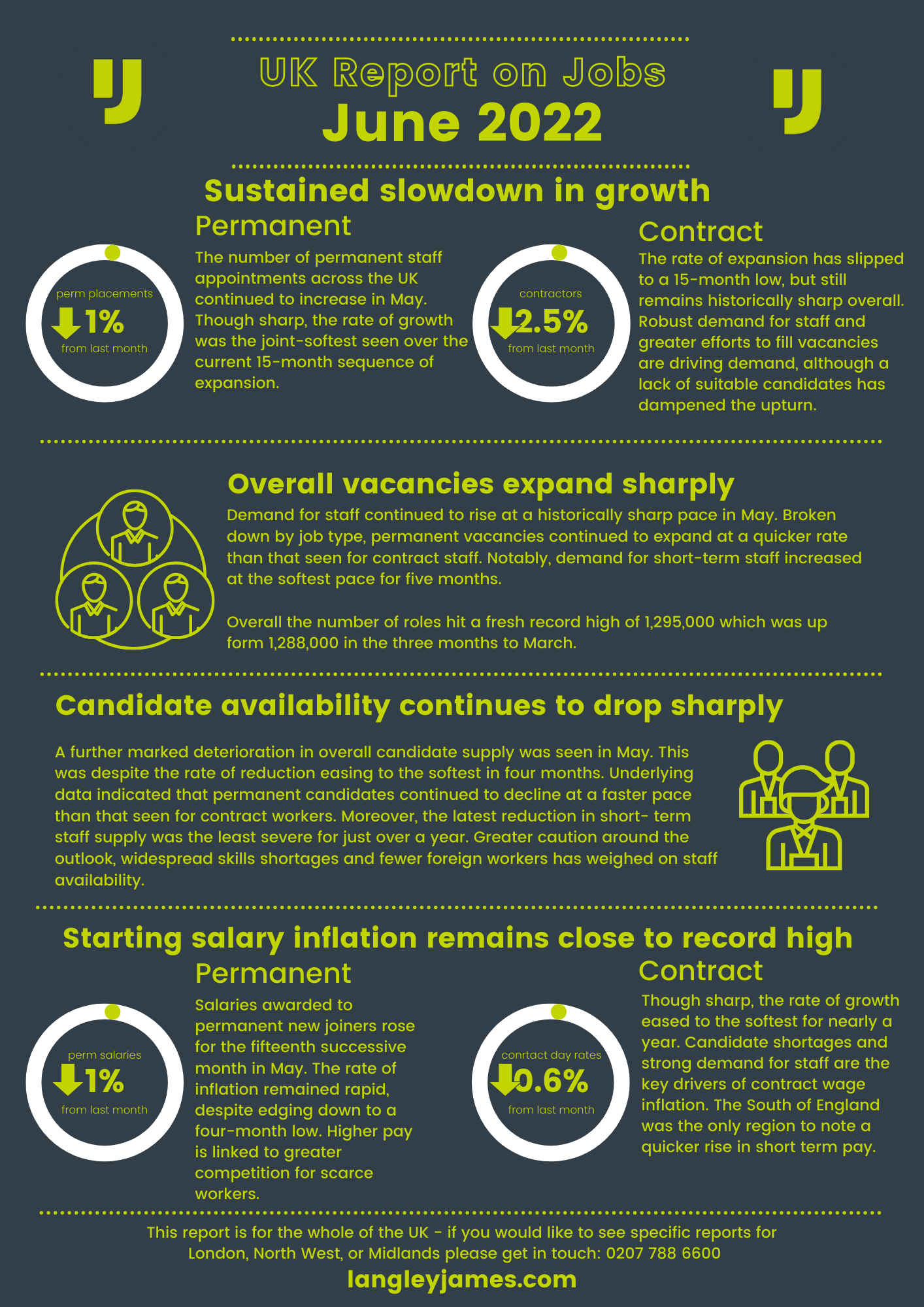
The Great Resignation is well and truly here! According to a recent survey conducted by PwC, 18% of workers cited that they are “very or extremely likely” to change jobs within the year. Plus a further 32% saying they were “moderately or slightly” like to move on. So, what’s causing this great revolt? It’s not just driven by pay, despite this being one big reason due to the cost-of-living crisis. In fact, the PwC study also found that 72% of UK workers are planning to ask for a pay rise in the next 12 months. But another important factor is job satisfaction that now scores high on an IT candidates wish list.
So, let’s look at what you can do to survive the great resignation in your company –
Review your salaries
There’s no getting away from the fact that it’s costing more to get to work than ever before. The cost-of-living is increasing at an alarming rate and people are looking for ways to cope. By reviewing your salaries across the board, you may be able to secure more staff. Get your teams together and ask about their concerns about the cost-of-living crisis. Taking a proactive approach in this situation may create more loyalty from your team. Also – acting early may mean that you actually save money. The increases we are experiencing are not likely to go away for a while. In fact, it’s more likely that they will continue to increase. It’s possible that your team will expect a more significant pay rise the later in the year you deal with it. It’s certainly something to consider.
If you are looking for guidance on salaries, we can help. Each month we produce an IT Salary Guide that shows you the latest average salaries for the most popular jobs in IT.
Look at your company culture
Was your company culture affected during lockdown? What steps did you take to ensure that the culture was still attractive to your teams? There have been some significant changes to the way we work together. By speaking to your teams and listening to what they have to say about the culture, you could save yourself having to replace as many people. What does your team want? Don’t assume! There’s no getting away from the fact that creating a culture in the world of hybrid working isn’t an easy task. But getting it right can make all the difference.

Flexibility can help you through the great resignation
Right now, around two-thirds of people are working remotely. This is either on a full-time or part-time basis. But it’s important to remember that offering remote working isn’t essential to a happy IT team. Flexibility is the key. Everyone will have different needs and it’s important to meet these where you can. It may be that you are more flexible with the working hours. This is particularly helpful to staff with children. Allowing later starts, or even giving time off for the school pickup, for additional hours to be completed from home. These things can make a big different to retaining your team. Think about what can work for you.
Are you offering the right rewards?
It’s more than just a strong basic salary that will secure your team. What else are you able to offer? This may be bonus payments of completion of projects. A bonus for achieving KPI’s on a helpdesk. Whatever your business will benefit from, attaching a reward is likely to not only increase productivity but also engagement too. We appreciate that not every company has a bottomless pot to keep paying out to keep their team. But some rewards don’t have to cost you more. You could offer additional holidays, memberships to platforms like PerkBox, or even a monthly social event. Again, the best way to find out what will be best received is by talking to your teams.
Learning and development
This is something our IT consultants are hearing a lot at the moment. Great candidates are considering leaving their current employer due to lack of skill building. Most candidates in IT are passionate about learning new skills. What can you do to help facilitate that? Are there courses that your teams can attend that will benefit your company? Or maybe some on the job training will help? It’s not only a great way to keep your staff engaged, it’s the ideal way to up-skill your team. This could develop into clear career progression plans. Another area that candidates are particularly interested in right now.
Start pooling candidates – no one will be unaffected by the great resignation
Despite your best efforts, it’s unlikely that you will survive without losing any of your team. But this doesn’t have to be a bad thing. It can be your opportunity to really think about the skills you want. What personality fits best with your team and company culture? But to prevent too much disruption, it’s important to be prepared. Recruiting the right candidate is taking longer than normal. Finding good candidates can be tough, but that’s not all. Counteroffers are happening more and companies are competing for the same candidates. By working with a specialist IT recruitment agency, you will be able to not only interview candidates quickly, but you’ll also know about their other opportunities and gain insights on how to secure them for your company. Get in touch with our team to see how we can help.

May 28, 2022 | IT, Tips
Exit interviews will be more commonplace. With one in five employees expected to change jobs this year, you may have already lost some of your team. Did you hold an exit interview? If you didn’t then you could be missing out. It’s your opportunity to find out things that need to be actioned to help improve your retention rates. No matter the size of your company, it’s likely you don’t really know how your employees are feeling. So, utilising the exit interview for an insiders view is invaluable.
But how do you make sure that you get the best out of your time? You need to carefully consider what you’d like to find out. And more importantly, what you’ll do with it.
First, let’s cover some exit interview do’s and don’ts
Exit Interview Do’s
It’s always best practice to get a member of the HR team to conduct the interview. Your employees may be more honest with HR than with a line manager or director. Your employees will need to feel comfortable that their honesty will be appreciated. It’s important that they don’t feel judged. Reassurance is also key when it comes to confidentiality. An employer is likely to share more if they know it’s not going to be widely shared.
Exit Interview Don’ts
You know the well-known phrase about making assumptions. It’s important not to assume anything. Keep an open mind and don’t allow bias, or even disappointment to creep in. Don’t email a list of questions and expect an honest response. Exit interviews should always be conducted face to face if you are to really benefit. And finally, don’t forget to say thank you. Thanks the employee for their time and their honesty. Remember, they are likely to share some of their experience with their colleagues.

Questions to ask
It’s key that you approach each exit interview individually. Having a set list of questions that you use for every employee isn’t going to give you the answer you need. However, here’s 10 examples to get you started –
- What was it that made you start to look for another role?
- Was it the salary or the culture that attracted you to this new role?
- Do you feel that you were supported in your role?
- Did you feel that you could cope with your workload? – Burnout is on the rise. This is a key question to determine if it’s a problem in your workforce
- Have you been given extra training?
- Did you receive regular feedback from your line manager? – If so, it’s good to ask if it was predominately positive or negative
- Do you feel that you have all the tools you needed to do the role?
- Is the company culture what we promote it to be?
- Do you feel that your contribution was recognised?
- What would be one thing you could change about your role?
Looking to recruit?
If you are performing an exit interview, it’s likely there’s also the need to hire. The jobs market isn’t what it used to be. With more vacancies than ever before, it’s getting harder to find the right candidates. That’s where using an agency comes in. In times like this, it’s important that you are still able to secure the best people for your role. Working with an agency can make it all a lot easier. When you choose to work with Langley James, you get to benefit from our decades of experience and network building. This is where your next hire can be found.
So, if you are looking to recruit into your IT team, get in touch with our IT recruitment experts today and let’s help you to recruit someone worth recruiting.

May 12, 2022 | IT, IT Market Reviews

Apr 26, 2022 | Hiring Resources, IT, Tips
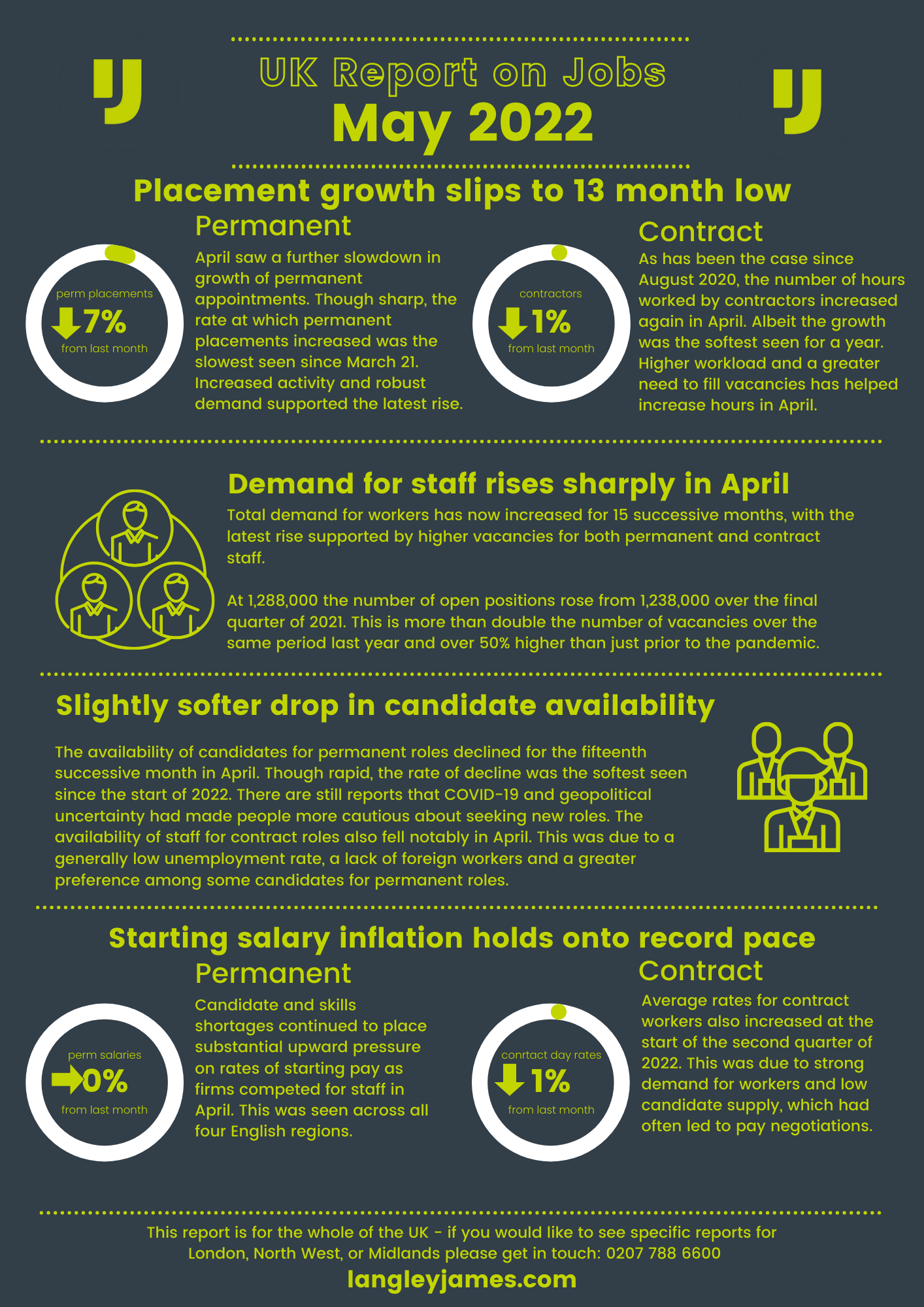
Onboarding IT staff correctly is one of the foundation building blocks in ensuring success when it comes to hiring. Often an area that is daily overlooked, it’s time that things changed! With the IT staff shortage reaching all areas of IT, businesses are starting to invest more in recruitment and retention. So don’t let your hiring process fall at the final hurdle. Our team share their top tips for onboarding IT staff in 2022.
But first, let’s share 2 key stats so that you can see why this is so important.
Here’s our Top 3 Tips for Onboarding IT Staff
Don’t wait until day 1
We’ve all been there. Working your notice period can be a lonely place to be. Plus, with the market being flooded with jobs as it is at the moment, it’s a vulnerable time for all. If you’ve secured a strong candidate, don’t then lose them for the sake of a few emails or calls. Keeping in touch with your new starter during their notice period is vital. Why not use this time to start to introduce them to their team? An email to make an introduction is enough, but you can take it further too. Arranging a virtual lunch with their teammates over Zoom or Team is a great way to make them feel involved before joining. Failing that, reach out to them on LinkedIn and ask their colleagues to do the same.
At Langley James, we pride ourselves on our exceptional levels of customer service. To both our clients and our candidates. That’s why, if you recruit with us, we will be in touch with your new hire each week during their notice period. This helps to alleviate any fears, answer any questions and to generally support them through their notice.
The art of storytelling when onboarding IT staff
It’s another hot topic in the employment market – employees like to join companies with shared values. And whilst their values will have felt aligned during the interview process, it’s important to share the story again when onboarding IT staff. You want your new hire to be professionally invested in your company. You want them to feel a sense of belonging and a sense of achievement. What purpose do you have as a company? Keep this at the forefront when designing your onboarding process. What exciting projects have you already been involved in, or, what do you have in the pipeline. Engaging your new hires with captivating stories about your company will make their first week an exciting one.

Set them up for success
Thinking that spending 10 minutes with your new hire on forms and formalities is enough is a mistake. It always takes time for a new hire to settle in. However, this has, in some cases, been further exacerbated by hybrid working. it can take longer for them to get into the team culture, establish a routine and understand new processes. Your role is to make their first few weeks as easy as possible. With lots of people spending so much time alone over the last couple of years, some may not have the confidence they used to. Make sure that they know where to turn if they have a problem. Let them know about lunch arrangements and even arrange for them to have a lunch buddy for the first week. Whilst this may not be necessary for more senior hires, it will certainly make a difference for more junior and mid-level roles.
About Langley James
We live and breathe everything IT. We know that market and know what it takes to attract the very best IT talent. Why not work with us on your next IT vacancy and experience the difference of working with a specialist who really does know the market. Get in touch with our expert recruiters today and let’s help you to recruit someone worth recruiting.

Apr 13, 2022 | IT, IT Market Reviews

Mar 23, 2022 | HR
It’s almost April, and the time for some key changes to Employment Law. Our team have put together the top 4 things you need to know to help ensure your company stays on top of the new rules.
4 Key Employment Law Changes
Increase in Minimum Wage – 1st April
Whilst April brings new minimum wage increases, there are also rises in other statutory rates. There is a focus on improving family friendly leave rates. Maternity, paternity, adoption and parental bereavement leave are all changing. These rates will increase from £152.97 to £156.66 per week.
Sick pay is all rising from £96.35 to £99.35 per week.
National minimum wage rates will be –
- National Living Wage – £9.50
- 21-22 Year Old Rate – £9.18
- 18 – 20 Year Old Rate – £6.83
- 16 – 17 Year Old Rate – £4.81
- Apprentice Rate – £4.81
Gender Pay Gap Reporting
The deadline for publishing your gender pay gap report is imminent! The deadline for private and voluntary sector employers is 4th April 2022. This report will need to be on your website and on the gender pay gap reporting portal on gov.uk
But you don’t just have to provide the figures. The gender pay gap report also give you the opportunity to provide any details around the gender pay gaps, if you have any. You can provide and explanation and can even include what measures you are taking to reduce the gap. As documents such as this are likely to form part of the decision-making process when hiring, it’s important that it shows you in a good light. Whilst candidates will appreciate that gaps do exist, if you are making proactive steps to reduce this, that could help attract a more diverse workforce.

IR35 ‘Grace Period’
IR35 came into force in April 2021. However, HMRC has taken a light touch to any enforcement notices in what is being called a ‘grace period’. The important thing to know is that this comes to an end on 6th April. Under the new rules, it is the responsibility of the organisation employing the contractor to determine their employment status. Therefore, it’s a great time to review your IR35 compliance and get your status determinations updated if necessary.
If you employ contractors and need help to secure the very best IT talent, we can help. We have a fantastic pool of contractors ready for work. Get in touch with our team to find out what we could do for you.
Employment Law Changes to Flexible Working
Just 2 years ago the way we worked changed practically overnight. Most companies required staff to work from home full time. But as we return to normal and the return to the office now fully underway, it’s important to know the changes to flexible working. Although, it’s important to note that there isn’t yet a fixed date for this to happen.
The current government guidance is to ‘work from where you can’. And in a view to modernise the day we work; they have proposed a change that will impact every company. The proposed plan is to make it possible for employees to request a flexible work pattern from day one. There’s also discussion around the number of requests and employee can make, and the time you should take to respond.
About Langley James
Established in 1999 we connect the right people to the right opportunities across all types and sizes of organisations throughout the UK. Our extensive Network of IT Professionals puts us ahead of the competition. Next time you’re recruiting into your IT team, whether contract or permanent, we’d love the opportunity to help you to recruit someone worth recruiting.

Mar 10, 2022 | IT, IT Market Reviews

Mar 4, 2022 | IT, Tips
The remote interview is here to stay! Despite final restrictions now being lifted, remote interviews are still the first choice for hiring managers and candidates. Not only does it give more flexibility to the candidates, but it also allows you to screen faster and in a more structured way. With the current IT skill shortage, reducing your time to hire can make a big difference when it comes to securing the best IT talent.
So how do you make sure that your remote interview structure is geared for success? Here’s our guide –
Make sure your remote interview has structure
Just as you would in a face-to-face interview, it’s important to have a structure for your remote interview. The advantage of a remote interview is that you can have an out of sight prompt to assist. Decide what’s important and what you would like to discover from each interview stage. Creating a defined structure will not only ensure that you stay on track. It will also help you communicate the process with your recruiter prior to the interview. We’ve created guides on effective interviews before and some of those tips do still apply. However, when it comes to a remote interview, there are some additional things to consider.
It’s all about communication
It’s not just the interview where communication is key. It all starts beforehand. When arranging remote interviews, it’s important to communicate what to expect. You need to share some key information with your recruiter to make sure that the candidate is prepared.
- Who will be in the interview? Will it be a team interview or individual 1-2-1`s?
- What will the candidate need to prepare? What tech will you be using? Are there any tasks to complete?
- Will you be expecting a screen share?
Making sure that the candidate is prepared in advance will allow them to showcase their skills to the best of their ability. Your recruiter should be asking you these questions as a matter of cause.

Be flexible when arranging a remote interview
When arranging remote interviews, it’s important to still be flexible. There are lots of people still working from home. But, whilst that may make you think that they are more freely available, this isn’t always the case. Companies have implemented new remote working practices and monitoring. It’s important to be mindful of this when arranging interviews. However, regardless of this, there’s no doubt that remote interviews are the quickest way to secure the best IT talent.
Test your tech
You’ve no doubt seen this discussed for candidates, but the same applies for companies – probably even more so – and especially in IT! You may be an expert at Zoom or Teams meetings now but testing that everything works before the interview is still good practice. Make sure you are in a quiet area with no interruptions. Check your battery if you are not plugged in. Simple checks can save lots of embarrassment.
Dealing with issues during the remote interview
We’ve probably all been there. We are in a virtual meeting and something really important is being said. And that’s when the connection drops out. But how do you deal with this in an interview? Whilst your connection may be working fine, sometimes you’ll be in a situation where the candidates’ connection is poor. This can be a stressful situation. Not only is the candidate nervous and trying to perform the best – they don’t want to have tech issues to deal with too. If connections are poor, then don’t waste too much time. Suggest that the interview is rescheduled for later in the day. Maybe the candidate can arrange to be somewhere with better connection?
The next steps
If you have stuck to the structured plan for each interview, then you should be able to score the candidates fairly. Identify which areas are more weighted than others. How did each candidate perform? This will help you create a shortlist for a hiring decision or a final interview. But what can you do on the second stage if it’s still a remote interview? Why not assign a task? Something that fits with a key competency for the role. Or maybe even a live task – something they will be required to do if successful.
How Langley James can help
We have been helping companies to recruit the very best IT talent for over 20 years. During this time, we have learnt lots of tips that we can share with you when it comes to interviews, attraction methods and more. If you want to work with a recruiter who really knows their market and can help you recruit someone worth recruiting, get in touch with our team today.

Feb 21, 2022 | Hiring Resources, IT, Tips
IT talent has always been in high demand, but no more so than right now! We are now at the point where many companies are chasing the same scarce talent. Therefore, we are seeing double-digit pay increases in some areas of IT. But where does it end? And what about the companies that are unable to pay inflated salaries? What happens to them?
We’ve researched the current IT jobs market to find ways to enable you to recruit someone worth recruiting, without having to pay 6 figures salaries.
IT Talent Most in Demand
According to data from CIO.com, the 10 most in-demand tech jobs for this year are –
- Database Administrator / Architect
- Information Security Analyst
- Software Developer
- Network & Computer Systems Administrator
- Computer Programmer
- Web Developer
- Information Systems Manager
- Systems Analyst
- Helpdesk / Desktop Support
- Network / Cloud Architects
And we are hearing the same reports from the job boards too. Of the hardest job titles to fill, 8 out of 20 are in the IT sector and are remaining vacant no the job boards for 3 months+. Again, not terribly helpful if you have an urgent IT job to fill.
But this could be a double-edged sword for many companies. Not only are you trying to secure the best candidates (and paying more for them!), but your own teams are also asking for pay rises due to inflation, or even worse, they are offered a considerable increase to move to another company. You then have a decision to make. Is it cheaper to agree a higher salary to keep hold of them? Whilst this does work in some cases, over 80% of people still move on within 6 months of accepting a counter offer. So, think carefully before you react to any resignations.

Shorten Your Time to Hire IT Talent
Is your recruitment process preventing you from securing the best talent? Candidate expectations are changing and to secure the best IT talent, you need to shorten your interview process to just 1 or 2 stages. These stages also ideally need to be remote so that the candidates can fit them into their day. You can always invite the candidate in to receive the job offer at the end of the process. But don’t let a 2- or 3-week interview process stop you from achieving your business goals. Here’s our advice on timescales –
- CV Feedback – 24 hours maximum. Ideally same day.
- 1st interview – within 2 days of receiving CV. Ideally remote
- 2nd interview – if absolutely necessary within 1-2 days of 1st interview
- Offer – within 24 hours of final interview
Whilst sticking to these timescales doesn’t guarantee that you’ll secure your first-choice candidate, it does give you a better chance. However, it also means that you are less likely to be wasting your time on interviews that candidates are quickly going to withdraw from.
Purpose Before Profit
Do you have a company mission? What is it that your business does that helps others? IT talent, especially younger candidates are very selective about who they work for. If an in-demand candidate receives 3 equal job offers, there decision is likely to be based on your purpose. Gone are the days of wanting to work for a ‘growth-at-all-costs’ company. For some companies there is a clear mission. One that can easily be communicated to candidates at interview. However, there are companies that need to be a little more creative when it comes to communicating their mission. Take a look at yours and make sure it’s fit for purpose before interviewing.
How Langley James can help you to secure the best IT talent
Not all recruiters are the same! It’s important to choose carefully who you work with, especially in times of a skills shortage. You don’t want a recruiter who just posts your roles on a jobs board. We’ve shown above that this is no longer the answer! The superstar IT candidates are not to be found in advert response. They are the candidates on databases, in recruiters’ networks, and recommendations. So be sure to ask the right questions of your recruiter next time you are hiring IT talent. We’d be happy to answer any questions you have, show you testimonials and even put you in touch with our clients. Just ask – we are here to help.

Feb 11, 2022 | IT, Management, Tips
Today, discussing leadership style has become an extremely popular area. Many argue that a manager’s leadership style is one of the fundamental elements that determines the extent of both business and employee success. Therefore, it’s important that you understand your leadership approach. You can then decide if it’s working for you, your employees, and the overall business. You want to ensure that you are driving the business to meet its goals and objectives and be the best it can be. Therefore, it might be necessary that you take a step back, evaluate your approach and adapt it accordingly.
Below are five common leadership styles. Have a read and figure out which one best describes you. Hint – there isn’t one best way!
Transactional Leadership Style
This tends to be thought of as the traditional leadership approach. A transformational leader implements strict rules and shows little understanding for people’s circumstances outside of work. For example, people would have to use their holidays to attend doctor’s appointments or attend their child’s sports day. The rewards and punishments your IT team receive are contingent upon their performance. As a result, rules, procedures, and standards are essential in transactional leadership. Your focus is enhancing your own success and development along with that of the organisation. However, in some situations this approach does work well. For example, research has found that transactional leadership tends to be most effective in situations where problems are simple and clearly defined. It also works well in crisis situations.
Transformational
Being a transformational leader means focusing on the needs of others, rather than your own. You treat each employee as an individual. Helping them find a work, life balance that suits them. This can often result in implementing flexible working hours. You’re all about motivating and encouraging your IT team to achieve both their own and the organisation’s goals and objectives. But do so without micromanaging. You strongly believe in trusting your employees to get the job done and the job done well. Give them the opportunity to be creative and look to the future. What’s great about a transformational leader is that they are often extremely passionate, energetic, enthusiastic and love to challenge the status quo. You are a brilliant role model and strive towards setting examples of how things should be done.
Authentic Leadership Style
Authenticity is described as ‘owning one’s personal experiences. For example – thoughts, emotions, needs, wants, preferences and beliefs’. Therefore, an authentic leader must understand their values and act accordingly. Rather than forcing their employees to follow their lead, they show authenticity by inspiring them to do so. Acting with integrity and agreeing on shared values. As a result, authentic leaders can achieve strong employee loyalty and commitment. There are four key components of authentic leadership. Self-awareness, relational transparency, balanced processing, and internalised moral perspective (do the right thing). However, entirely authentic leadership can be hard to achieve as people’s perceptions of what authenticity means can vary on a large scale.

Servant
Servant leaders work to achieve long-term, organisational goals by. They firstly facilitate the growth, development, and general well-being of the individuals in the IT team whilst sharing their power. This approach is great for building strong relationships with your employees. It truly demonstrates that you want to serve their needs. To help them be the best they can be. On the other hand, however, there is a danger that your employees might walk over you. You may find it hard to gain the respect that leaders with different styles can achieve. This is a balancing act so approach with caution.
Laisse – Faire
This is an extremely hands-off approach. Although you provide the tools and resources needed, you offer your IT team very little guidance. You give them complete freedom to make decisions on their own. As a result, people often have a lack of role awareness and poor involvement in the group. This can be demotivating and uninspiring. However, in some situations, this style works well. For example, experienced and highly skilled individuals require very little guidance, and some people appreciate the autonomy. This allows them to feel more satisfied with their work.
Leadership Style Round Up
Globalisation and social media amongst many other things has allowed leaders around the world to witness different culture’s leadership styles. This has prompted them to re-evaluate their own and we are now finding that people are steering away from traditional approaches such as transactional. There is now a huge emphasis on the importance of employee wellbeing. Most would agree that in order to run a successful, profitable business, you must ensure that your entire workforce is happy, fulfilled and motivated. However, it would be extremely difficult to adopt just one approach, therefore, taking different traits from the each of the different styles can help you become a leader that works for you and your business. Being able to do this shows you are diverse and after all, a diverse leader makes for a successful one!
If you enjoyed reading this article, why not follow our LinkedIn page to make sure you don’t miss out on the next!

Feb 11, 2022 | IT, IT Market Reviews

Jan 24, 2022 | IT, Management, Well Being
The 4-day working week has been getting a lot of publicity recently. With some companies signed up to a 6 month trial, and more companies embracing flexible working, what does this mean to you?
It’s been almost 2 years now since we all picked up our desks and relocated them into our homes. But now, as we approach the end of restrictions, the want to be back in the office is returning. However, not full time! According to a recent report, 57% of the UK workforce want hybrid working options. And rather surprisingly, and in a shift from last year, just 5% want to work from home full time. So, the physical workplace is making a return. And then the 4-day week conversation start!
We look at the pros and cons of a 4-day week and what it means for your IT teams.
PRO – The 4-day week and its impact on productivity
You may think that a day less in the office, means losing 8 hours of productivity. In the most cases, this is a total myth! Reducing the working week to 4 days has proven to increase productivity by as much as 40%! There have been numerous pieces of research and reports that support the reduction in the working week. The idea of having 3 days off during the week, instead of just 2, is to regain some work life balance. Your team are more refreshed, have better mental health and will be more productive as a result.
Did you know that the average person is only productive for 3 hours in an 8 hour day? 3 hours! This is the thinking behind a 4-day week. If your IT team is only being productive for 15 hours a week, cutting down to 4 days in theory makes them productive for 4 hours a day. You may think that this is a crazy concept. And we know that for a slim minority who can focus for 8 hours solid, a 4-day week just won’t work. However, for the vast majority it will.
TOP TIP – When someone is focused on their work, an interruption can cost them dearly. Did you know that when you are ‘in the flow’ and someone interrupts you, it takes you 23 minutes to get back into the flow? Whether it’s your emails, phone calls, or just general office chat, minimising interruptions will make your team more productive.
if you want to find out more about this subject, we highly recommend listening to the podcast – The Diary of a CEO with Steven Bartlett. In particular the session with Johann Hari on How to fix your focus and stop procrastinating.

PRO – A key driver for talent retention and happiness at work
Flexible working has always been a key retainer. And none more so in IT teams, particularly when it comes to development roles. With reports of over 60% of UK professionals wanting to change roles this year, 24% site the lack of flexible working for their reason to move on. The labour market, and in particular IT, is experiencing a skills shortage like never before. The UK has lost over 600k people from its labour market, and this means that we need new ways to attract the best people to your business. Being able to offer a more flexible work pattern, or indeed a 4-day week is definitely a perk that will persuade people to not only join, but to stay with your business.
Introducing a 4-day week can also help increase loyalty within your business. When we have more time to do the things that we love, we become happier in ourselves. Therefore, giving your teams that extra time off will mean that they are more committed to you. Studies have shown that it also helps to reduce absence. Those long weekends really do have a positive impact on our wellbeing.
CON – It’s not for everyone!
The 4-day week is only possible if you business is able to adapt to this new way of working. How do you decide what day people have off? Is it all together, or would it be allocated on a rota. This is something to seriously consider. It won’t work for every business, just in the same way that it won’t work for every employee. Some employees are naturally more productive than others. Some are able to be productive for 7 or 8 hours straight! These are the people that a 4 day week would have a negative impact on.
They are your team members that will be more prone to working longer hours in the 4 days and increasing the likelihood of work-related stress. This is an important thing to manage as the wellbeing of your team should be a key priority in 2022. Longer hours can also mean that mistakes will be made too as people rush or get jaded from a long day.
Are you recruiting?
If you are recruiting into your IT team and want some insight and advice into how to attract the best candidates, get in touch. We’ve been helping companies attract fantastic IT candidates for over 20 years and we’d love to do the same for you. Get in touch with our team today on 0207 788 6600 / 01244 566 442
Jan 17, 2022 | IT, IT Market Reviews
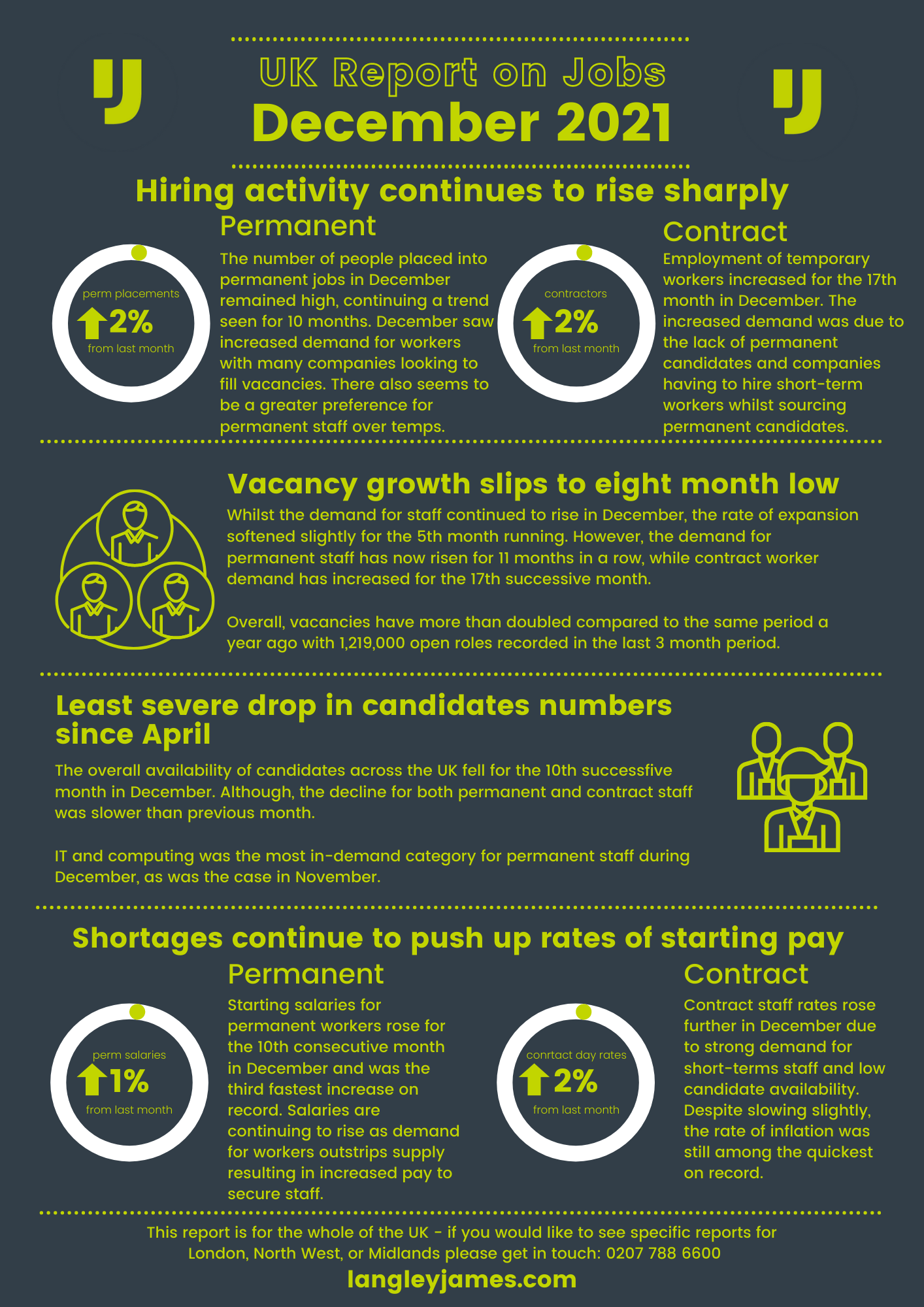

Dec 10, 2021 | IT, IT Market Reviews
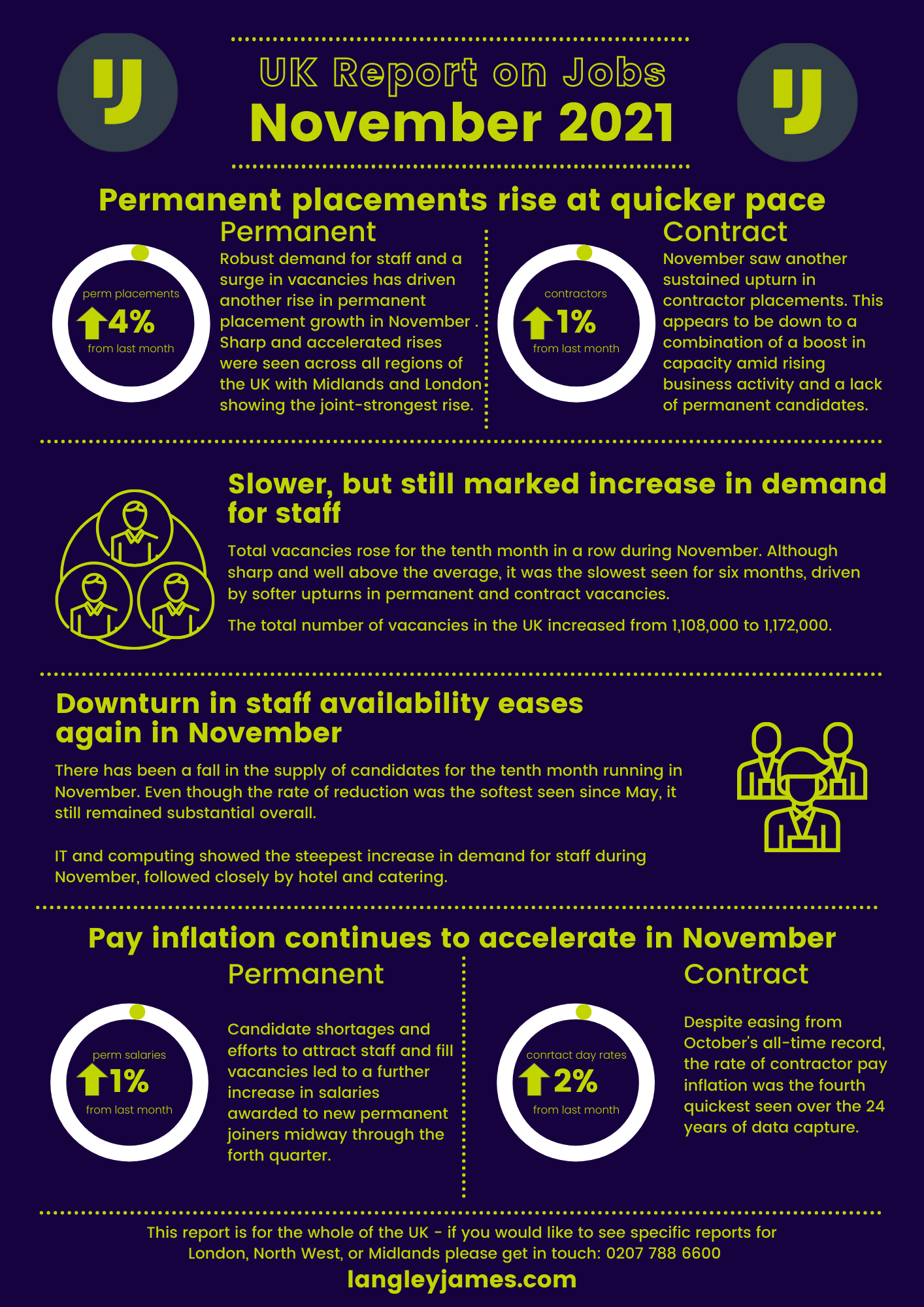

Dec 8, 2021 | Hiring Resources, IT, Tips
Recruiting over the last 12 months has been an interesting ride. Remote working, skills shortages and record numbers of vacancies has all had an impact. But as we creep ever closer to the end of 2021, what will next year bring? We’ve scoured the market to find the most important recruiting facts and stats you need to know for 2022.
More than 76% of UK professionals intend to look for a new job in 2022 (CV Library)
The great resignation is set to continue into 2022, so it really is time to be prepared! Looking after your current team must be high on your priorities or you may spend most of the first half of 2022 interviewing replacements. The top 5 reasons that candidates want to move from their current job are –
- 42.1% want or need a career change
- 41.3% are looking for a higher salary
- 40.7% have delayed changing jobs due to the pandemic – they are now ready to move
- 38.9% are looking for more flexible work options
- 33.2% are experiencing burnout in their current job

Flexible working has changed the face of recruiting
To be able to attract and retain some of the best IT talent, most companies are now offering flexible working, but that’s not all. How we work how we interview, how we hire and how we onboard have changed. So, here’s what to expect for 2022
- 86% of workers want to continue to work remotely at least part time (Glassdoor)
- Candidates are willing to sacrifice up to 12% of salary for flexible or hybrid working
- 61% of candidates expect video interviews to become the norm for 1st stage interviews
- 73% of companies plan to increase freelance or contract hires in 2022. However, except to pay more! Nearly 90% of businesses have been forced to increase contractor rates since April 2021.
Candidate expectations
The power is most definitely with the candidate now. The skills shortage has made sure of that. But when it comes to recruiting the best candidates, there are some things that you need to be aware of –
- 49% of candidates have declined a job offer due to a poor recruitment experience (be sure to partner with a reputable recruitment agency like Langley James instead!)
- Company diversity is important to over 75% of candidates
- If you have a reputable brand, you are likely to receive as many as 50% more qualified applications
- 84% of job seekers use social media for their job search
How to make sure your recruiting plans for 2022 are right
According to LinkedIn, the average time to hire in IT is 44 days. So even if you start to recruit the minute you return from your no doubt well-deserved Christmas break, you’re looking to March for your new starter to join. And if the predictions are right, this process could be set to take even longer next year. This where you need a recruitment partner that you can trust. Someone who can research the market for you and make recommendations to ensure you attract the very best IT professionals. We have been helping companies to recruit IT staff for over 20 years. We’d love to do the same for you. Get in touch with our experienced team today and find out why so many people choose Langley James as their IT recruitment partner.

Nov 21, 2021 | IT, Management, Tips
Someone just handed in their notice. It’s a complete surprise and now you’re stuck. Should you counter offer? Persuade them to stay?
You know that it costs more to recruit someone new than to retain someone on a slightly higher salary. So, offering more money can be enough to make someone stay. But for how long?
We’ve been helping companies navigate IT recruitment for over 20 years. We’ve heard lots of stories when it comes to counter offers. We want to share our advice on why you should always think twice before making that offer.
A counter offer is only ever a short term solution
Did you know that 80% of people leave within 6 months of accepting a counter offer and a staggering 90% within 12 months? This is why a counter offer should only ever be seen as a short term solution. A chance to buy you more time whilst you think what to do next. If your counter offer is a simple salary increase, it’s unlikely to be enough to solve the problem long term.

Why did this person resign in the first place? Was it just money?
There are lots of reasons that people resign for a job, and it’s rarely just about money. There’s always a secondary reason that’s made them make the move. Starting a new job is not something that people take lightly, so remember that your colleague will have thought long and hard about their decision. Sometimes a reason for leaving just can’t be fixed. It could be working hours, location, lack of progression. A salary increase will only mask these issues for a matter of months.
A counter offer can actually reflect badly on your company
You may think that a salary increase will make your colleague feel valued. Think again! It can have the opposite effect. Why have you not offered an increase before? Has this person not been doing a great job? What has it taken for them to resign for you to see their value.? And is it their value that you really see, or do you not want the additional work of recruiting someone new? There’s lots to consider before jumping in with that offer!
How Langley James can help
We won’t pretend that the power is very much in the candidates’ hands right now. But that doesn’t mean that recruiting someone new will be a bumpy ride. Yes, it’s harder to recruit directly. Job adverts are nowhere near as effective as they have been. So, what do you do if someone resigns and they need replacing with someone truly great? This is where we can help. As soon as someone resigns, pick up the phone to us and let’s get the ball rolling. Our extensive database of IT candidates and our network mean that we can act quickly. You could have CV’s, interviews, and an offer all within a week!
Someone new can bring a breath of fresh air to your team. New skills, new experiences, and enthusiasm. So take time to think carefully when someone resigns. Is a counter offer really the answer?

Nov 8, 2021 | IT, IT Market Reviews
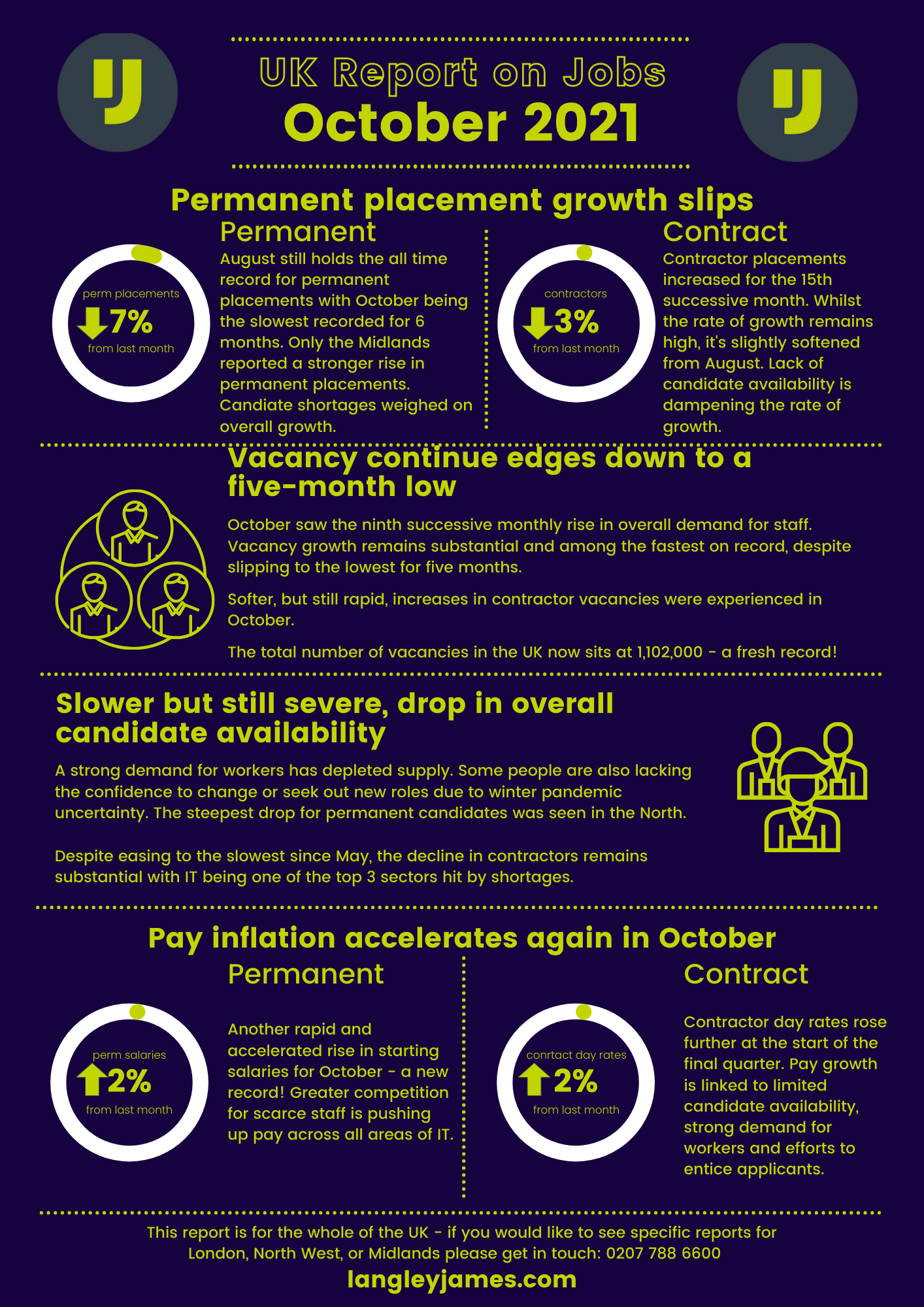

Oct 12, 2021 | IT, IT Market Reviews
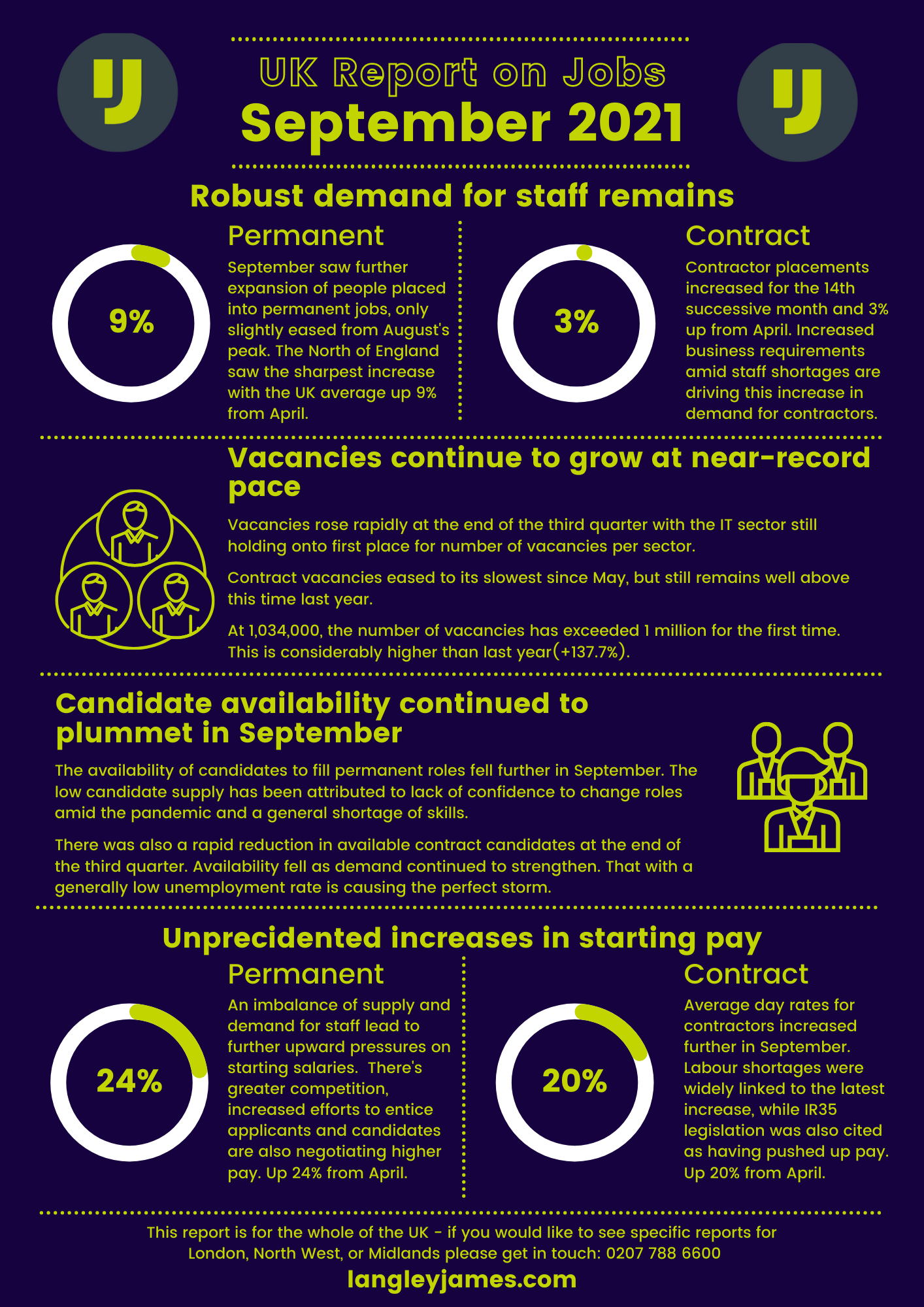

Oct 3, 2021 | IT, Tips
Want to know which are the highest paying IT jobs in the UK right now? The increases in IT salaries are big news at the moment. And the trend is set to continue throughout 2022. So if you are considering a new career, or your next step in IT, you need to know the best route for you. And if salary is an important factor, this is a must read!
Highest Paying Jobs in IT
Our specialist consultants have been collecting data over the last 8 months to share with you the highness paying jobs in IT. Here’s what we found –
Dev Ops Engineer
A fairly new role to the IT market, a DevOps Engineer ties development to operations processes. Hence the term DevOps. You introduce processes, methodologies, and tools throughout the software development lifecycle to help ensure balance. This can cover everything from coding, deployment, and maintenance. A strong DevOps Engineer helps businesses deliver applications quickly and efficiently.
Current Average Salary for a DevOps Engineer – £70,000. Search our latest DevOps jobs
Data Scientist
Data is at the heart of everything we do. Every day, data driven decisions are made in business across the world. Therefore, how a business gathers and uses its data is becoming increasingly important. Therefore, the role of a Data Scientist is to design data modelling processes, create algorithms and predictive models. This is to extract the data that the business needs and automation plays a big part. As well as regular data reporting, there will be various ad-hoc projects to be involved in. A Data Scientist is also key in analysing any results.
Current average salary for a Data Scientist – £75,000. Search our latest Data Scientist jobs

Mobile App Developer
Can also be known as a Mobile Developer or App Developer. However, the responsibilities are the same. A Mobile App Developer designs, develops and implements apps. You specialise in mobile technology and build apps for platforms such as iOS, Google Android, and Microsoft Windows Phone. You will need to be full of great ideas that you can turn into apps for whichever business you work for.
Current average salary for a Mobile App Developer – £63,750. Search our latest Developer jobs
The top 2 highest paying jobs in IT
Cloud Architect
A Cloud Architect is responsible for a company’s cloud computing strategy. You oversee everything from cloud application design and cloud adoption plans, to management and monitoring of the cloud architecture. In addition, you’ll need a passion for new technologies. A Cloud Architect is expected to bring ideas to the table for efficiency improvements by utilising cloud technology.
Current average salary for a Cloud Architect – £100,000. Search our latest Cloud Architect jobs
Information Security Analyst
With companies holding so much mission critical data these days, business are focusing more heavily on information security. And an Information Security Analyst is key to this. You are responsible for taking proactive measures to protect this data and be ‘one step ahead’ of any potential cyber-attacks. An architect analyses data and makes recommendations to an Information Security Administrator. Their main responsibility is keeping the systems up and running.
Current average salary for an Information Security Architect – £80,000. Search our latest Information Security Architect jobs
We have been helping IT candidates find their dream IT job or IT contract for over 20 years. We work with some fantastic companies who are currently offering some really exciting opportunities. So, if you are looking for your next IT job or IT contract, get in touch with our friendly team today – 020 7788 6600

Sep 13, 2021 | IT, IT Market Reviews
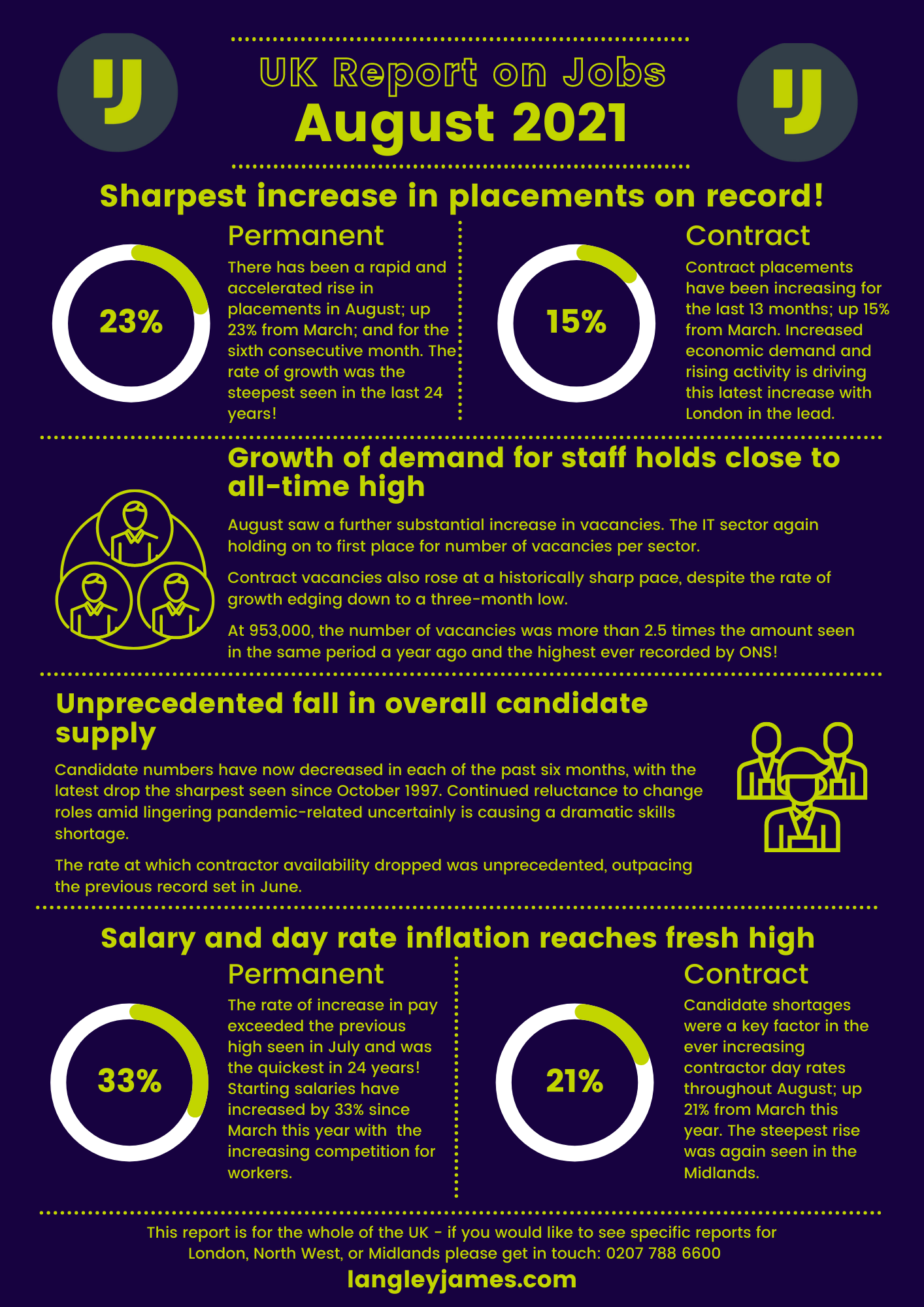

Aug 23, 2021 | IT
If you need to recruit IT professionals right now, you’ve probably already heard. There’s a huge skills shortage across the sector. Attracting candidates is harder than ever as the jobs market increases, whilst the talent pool decreases.
There are less people in the market than in over 23 years! This, combined with some uncertainty of the future of covid and what that means to the security of their pay packets. We find ourselves in a skills shortage like never before.
But don’t worry. There are good people out there. You just need to know how to find them. It’s no longer a case of advertising your job as anyone who has done that recently will tell you that the response has been poor. Candidates need to be attracted to your job. They need a reason to leave the security of their current role in these still somewhat uncertain times.
Here’s our top tips to recruit IT professionals during a skills shortage
Don’t delay
If you have been following our IT jobs market reviews, you will see the trajectory of current vacancies shows no signs of slowing down. And as more and more projects come back to life following the end of restrictions, the market is going to be squeezed even tighter. Even IT professionals who have been furloughed (although we admit there shouldn’t be that many now) may not be the answer. A shocking 11% of people still on furlough are looking for work. What’s happening with the rest?
Our advice is to act now. If you have a project coming up, or if you know of any team changes, start the recruitment process now. It can take longer than normal to find the perfect candidate, so it pays to get ahead. If you already work with a trusted IT recruitment partner, then ask them to start building a talent pool for you. And if you don’t have a partner, give us a call.

Market insight
Before you start to recruit IT professionals, you need to know what’s happening in the market. As part of our commitment to help all our clients attract the best talent, we share the facts you need to know. On a monthly basis, we produce a report on the UK jobs market. Find out what’s happening with vacancies numbers, salaries, skills availability and much more.
It’s also important to get some salary benchmarking information. A lot has changed in salaries over the last few months, and you need to make sure that you stay competitive to attract the best. Find the latest salary guide for your area and see all the salaries and day rates for the most popular jobs in IT.
Partner with a recruiter – someone who knows how to recruit IT professionals
In times like these, a great recruiter is worth their weight in gold. A great recruiter will know how to find your perfect candidate. They have the skills and the technology to search those on and off the market. They have a solid candidate database of IT professionals who may not only be interested in your role but may also be able to recommend others. We know all recruiters are not the same, so here’s some questions to ask when choosing yours –
- What experience do you have of recruiting for our industry – ask for testimonials
- How do you work and what can I expect?
- How do you engage with top talent?
- Do you have a talent pool of suitable candidates?
- What are your terms?
We have helped companies to recruit some truly fantastic IT talent throughout the pandemic and beyond. We’d love to do the same for you. Our fees are just 18% with a 3 month guarantee period to help to give you peace of mind. Get in touch with one of our expert IT recruiters today and find out how we really can help you to recruit someone worth recruiting – 0207 788 6600 / 01244 566442.

Aug 9, 2021 | IT Market Reviews
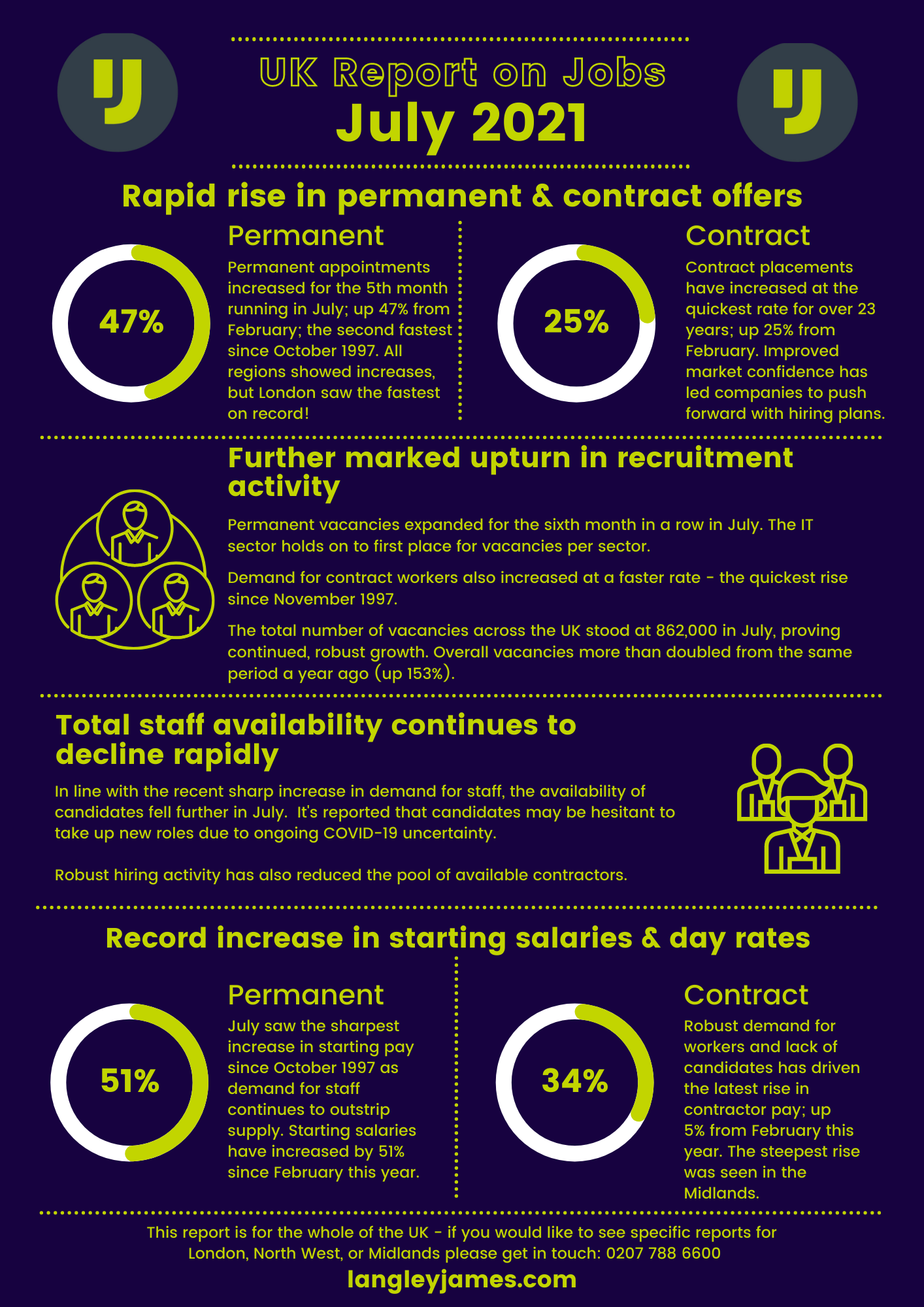

Jul 24, 2021 | Career Resources, Tips
Counter offers can be flattering to receive. And in some cases, it’s the ideal outcome. But it’s a proven fact that 80% of people leave within 6 months of accepting a counter offer and a staggering 90% within 12 months. So clearly this isn’t the answer to making your job any more satisfying.
Our expert consultants share their insight on counter offers and whether they are a good idea or not.
Why do companies give counter offers?
It’s simple. It costs more to recruit someone new than to retain someone on a slightly higher salary. In fact, the cost of replacing a senior member of staff can be as much as twice their salary. So it makes sense that your company will try and keep hold of you.
That, coupled with the current shortage in talent is creating a surge in counter offers. The drop in candidate availability is the most severe in almost 24 years. And there are more jobs on the market too – in fact, it’s the highest in almost 24 years too! In June alone, there were 758,000 open jobs in the UK. Demand for staff has never been higher and companies know how hard it is and how long it can take to replace you.
So, a counter offer may not be a sign that you are valued, it can be simply more a staff retention tool.
Questions to ask yourself
- Why did you start looking for a job in the first place?
- Why did you even start to look for another job if you are happy with your current employer?
- Have you hit a ceiling in progression?
- Are you unsatisfied with your employers approach to flexible working?
- Do you have the desire to learn more and increase your skills?
- Is you employer using outdated technology? / Do you want to get your hands on new technology?

The pros and cons of accepting a counter offer
Here’s just some of the pros and cons to consider before you define that new job offer.
Pros
- Your pay increases without you having to do anything – sometimes resigning is the quickest way to get a pay rise!
- You don’t have to experience the pain of working your notice
- You don’t have to worry about settling into a new role
- No need to make changes to your daily commute – life continues as normal
Cons
- The reasons that you were looking for a job haven’t gone away (it’s very rarely just salary!)
- Your loyalty will always be in question by your employer
- Trust in your employer will fade. Why did they not offer you more earlier? Or make any promises now on the table.
- It’s 80% likely you’ll be looking for another job in 4-5 months
- If you are not updating your tech skills by staying where you are then your CV will become dated
One of the most important things to consider is if accepting a counter offer and staying with your current will actually help you achieve what you want to in your career.
Right now, there are so many opportunities in IT Jobs, both permanent and contract and there’s never been a better time to look for work. So if you are looking for progression, higher satisfaction or something as simple as a better work life balance, get in touch. We have been helping companies with their IT recruitment since 1999 and work with some of the best names in the UK.

Jul 19, 2021 | IT Market Reviews
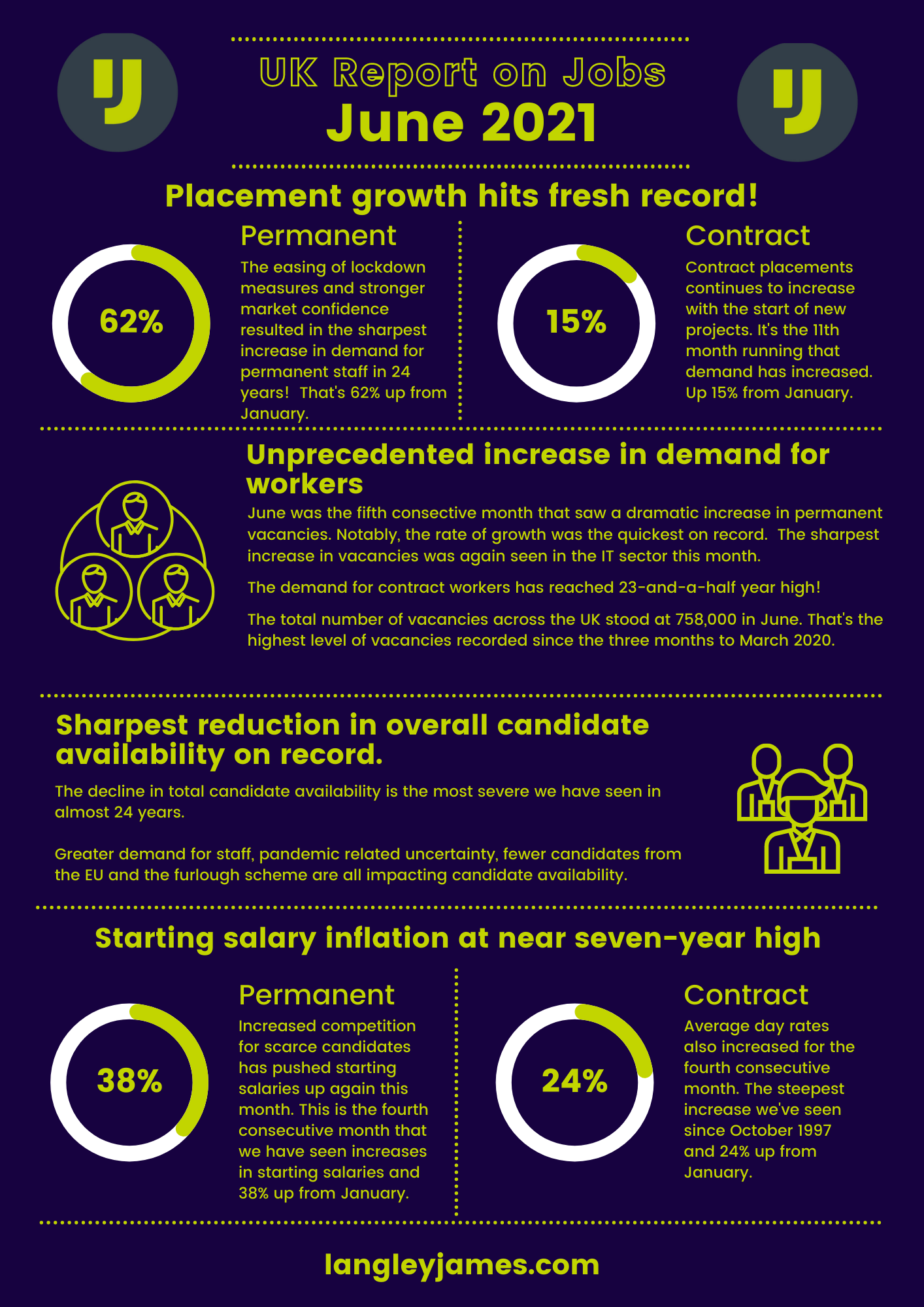

Jul 10, 2021 | IT
What candidates want from a new job has changed significantly for many. The pandemic, lockdown and home working has created a wave of new needs. And now that the jobs market is opening up again, there’s a new problem in the war for talent. If you don’t have your finger on the pulse when it comes to what candidates want, you could be missing out.
We’ve worked with lots of companies throughout the pandemic to help them recruit someone worth recruiting. And now we are advising our clients on what they need to do now to attract the very best candidates. We speak to hundreds of IT candidates each week, and this is what they are telling us.
Salaries
Don’t be fooled into thinking that a mediocre salary is enough to attract the best candidates. When it comes to what candidates want when it comes to salary, you must stretch that little bit further. Or, of course, lower your expectations on what you are looking for from your new hire. Each month we publish a salary guide that shows the average salaries and contractor rates across the UK. It’s a great place to start when it comes to deciding on what you can offer. Are you competitive in the market? Or, what else can you offer on top of salary to attract strong candidates?
We are seeing a huge increase in counteroffers as companies try and hold on to their best staff. The team at Langley James are also seeing multiple offers being delivered to the same candidate. We make sure that we pre-screen all our candidates thoroughly to help prevent this from happening. Finding out what they really want from a new job and helping them find it is the secret to helping make sure you get your first-choice candidate. But it’s not just salary that’s in the list of what candidates want.

What candidates want when it comes to flexibility
Flexible working was something lots of companies were ‘playing’ with pre-pandemic. But as we went into lockdown in March last year, the world of work was turned on its head. Companies were forced to fast-track their working from home policies as we all stayed at home to protect lives. But now, and we write this just over a week before all restrictions are due to be lifted and Boris tells us all to go back to the office, there’s a higher expectation on flexibility.
Not everyone wants to, or even likes to, work from home. But if you consider the benefits and work out a way to still offer this and have your team back in the office then you will have the edge when it comes to candidate attraction. Think about what candidates want when it comes to flexibility. What are the benefits they experienced over the last 18 months? And what can you continue to offer?
For many, there has been the cost saving of the commute. And the additional time gained from not experiencing the rush hour every day. Think about how you could be flexible with start times, or a hybrid office based / home based set up. We appreciate that not every company is able to offer this. So instead, having an open mind to ad-hoc flexibility. This can go a long way when it comes to attracting the best candidates.
Training
Did you learn a new skill during lockdown? The coronavirus-fuelled trend for learning a new skills is more than fleeting, and we all need to be mindful of this when it comes to work. What can you offer that helps to satisfy the need for continuous learning? These are the small things that help you stand out in an overcrowded jobs market.
By offering additional training and development you not only get the edge on attracting the best candidates, but you can also benefit by ups killing your team. Think about what you need in 2-4 years and implemented a training plan now to make sure you are there.
How we can help
If you would like advice on how to make sure you are getting the best candidate for your open job, get in touch. We pride ourselves on working with you and sharing market insight. By sharing this with you we can help you make decisions on what you really need to do to fill your IT job with the right candidate, first time. Don’t just give your job to an agency and hope for the best. Work with a company who have as much interest as you do in filling the job!
We have been recruiting IT experts for permanent and contract roles since 1999 and our team has a huge amount of experience between them. We love what we do and we’re pretty good at it! Experience the difference of dealing with a true specialist – get in touch with our specialist consultants today.

Jun 14, 2021 | IT Market Reviews
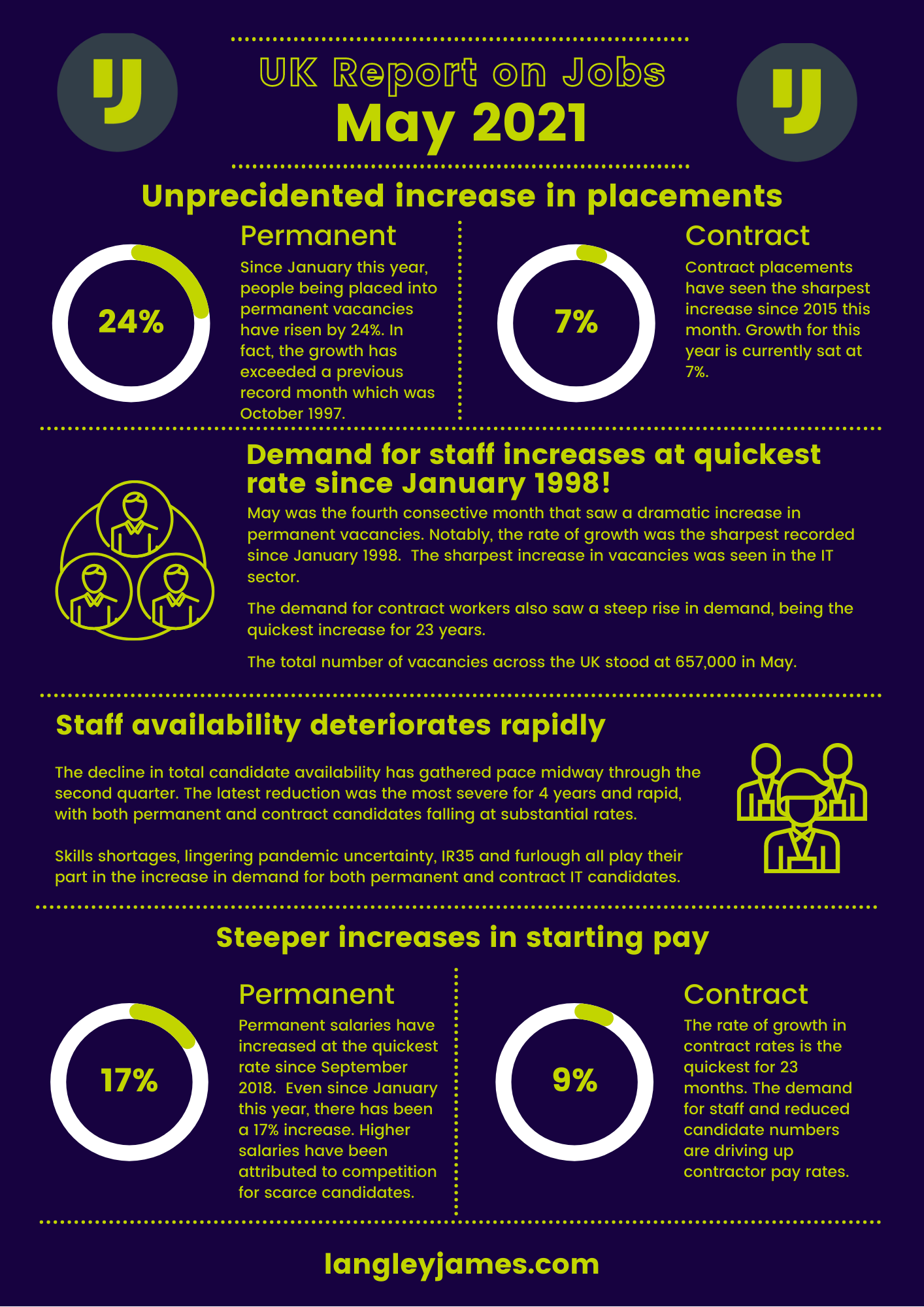

May 25, 2021 | IT
IT recruitment trends change from year to year. But never before have we experienced a year anything like 2020! So, what does that mean for 2021? As the ‘new normal’ continues to dominate our lives, what changes can you expect to see when it comes to IT recruitment?
Recruitment has seen lots of ups and downs over the last 12 months. But with recent reports showing that job vacancies are now above pre-pandemic levels, there’s lots of opportunities out there again. Great news for the UK jobs market, but it does mean that the war for talent is officially on again. The skills shortage hasn’t gone away and there’s only so much a salary can do.
With the rapid move to working from home and utilising more technology, the IT recruitment landscape has had to evolve very quickly. But what does the next 12 months look like? What trends are we likely to see?
Our consultants share their insight into the top 5 IT recruitment trends for 2021 and beyond.
Deliver a great candidate experience
When it comes to IT recruitment, the candidate is very much in control again. Strong candidates are likely to be in the process for multiple job roles and this is where you need to stand out to help you secure the very best talent.
Partnering with a trusted agency is the best first step. In times of a skills shortage, you need to an agency who will be an extension of your employer value proposition. Someone who reflects your values and creates a positive first impression of your company. It’s important that you trust your chosen IT recruitment company. You need them to spark interest and intrigue with their candidates. In an age where an acceptance isn’t just about a good salary, the candidate experience can and will make all the difference.
But it’s not just during the IT recruitment process that the candidate experience matters. Recruiting not only to skills, but to values too is highly beneficial to your company. You want your employees to be happy at work. You want employees who will stay with you for the long-term. And these are candidates that reflect your values. Studies show that greater employee satisfaction correlates directly to greater productivity and greater loyalty.

The remote revolution in IT recruitment
It’s no longer about the office location. The slide in the office, the table tennis table. This all now seems a little 2019. When we look back at the end of 2021 the traditional working environment may no longer be in existence for most. Some companies were already embracing flexible working before the first lockdown. But other had to quickly adapt!
Now, flexible working has become an expectation across many industries. Candidates are looking for a better work life balance, or to be able to optimise their time. This can be a huge benefit to you in the current climate. No longer does location dictate your candidate pool. You can reach further than before and focus on the best available talent, not just locally, but nationally too.
Soft skills
Whilst technical skills will always come first in IT recruitment, it is becoming increasingly important to also recruit with soft skills in mind too. Lots of IT jobs, whilst highly technical, heavily rely on soft skills such as communication and emotional intelligence. With the increase in remote working driving a new distance between employees, your new hires need to be able to still work collaboratively. In a recent study by LinkedIn looking at the most in-demand hard and soft skills creativity and persuasion came out on top.
How we can help
If you would like advice on your IT recruitment for 2021 and beyond, we can help. Our expert team have been recruiting for over 20 years and we love to share our experience. So whether its advice on salaries, benefits or utilising technology to recruit, get in touch.
Jan 25, 2021 | IT
Your Recruitment Consultant’s Interview
Have you considered your Recruitment Consultant to be part of your candidate interview process?
This is the first stage of the interview process.
When you outsource your recruitment to Langley James IT Recruitment, you are outsourcing the early stages of your usual recruitment process which generally includes your 1st Stage Interview.
Our Recruitment Consultants will act on your behalf, to meet, interview and qualify candidates that may be employed by your competitors in line with the job description you provide, we will make recruitment decisions based on the knowledge we have of for your requirements. Our Recruitment Consultant will represent you and your company.
With that in mind, let us clarify how you can optimise this stage of recruitment to ensure your company is properly represented and your shortlist thoroughly vetted before you meet a single candidate.
Share your company knowledge!
If you attempted to recruit directly you might buy some recruitment advertising, sift through the applicants, and select a shortlist using your qualification information. Then, you would invite them to attend an interview where you would explore their suitability against your job description with key questions and explain to them what the job is. If you like them, you will probably enthusiastically describe the business and all the reasons why they should join you, you have that knowledge.
Using Langley James IT Recruitment, you will save time as we will be responsible for most of the process allowing you to focus on other business challenges. The information you provide us with at this early stage is crucial to conduct your 1st stage interview, to a standard that meets your own.
Qualification
Pass on all your early-stage qualification questions to your Recruitment Consultant. Provide examples of the best possible answers so they can match candidate responses accordingly. Context is important here as you might want specific experience and skill application. For example, when you say Advanced Excel skills, what does that really mean?
Describe examples of how the desired skill might be exercised so our Recruitment Consultants can explore a candidate’s experience with more confidence. Be very clear on what is essential and what is desirable so we can prioritise.
We are part of your team!
By giving us as much information as possible it will help Our Recruitment Consultants to feel included and will ensure they represent you and your company in the best possible way. The more information we have the more efficiently we can find you the right people.
Interview Feedback
Do ensure that you gain feedback from our Recruitment Consultants, before setting up your own interview, part of our process is to produce a report when we shortlist, ask for our interview report detailing the reasons why they feel a candidate is suitable. Review the evidence gained from the qualification questions you gave them and build their findings into your own interview plan.
Our Recruitment Partnership
At Langley James IT Recruitment we aim to keep in touch with you throughout the recruitment process, we send out a standard weekly report to update you on our progress, however do feel free to contact us at any time. We understand that things can change, and you may need to refine or change your recruitment priorities and regularly ask for feedback.
Sometimes roles are harder to fill if the salary is not sufficient, the location is non-traditional, or the specification does not sell the benefits of the role. Whatever the problem, do not wait to find out weeks later. Do whatever you can to influence the recruiter interview process and identify changes early.
Jan 8, 2021 | IT
How to Achieve Recruitment Stakeholder Unison
Successful recruitment relies on consistent and concise communication, speed, and decisive action from all stakeholders. The more people involved in a recruitment project, the more complicated it becomes to avoid conflicts of interest that may delay or halt the recruitment process.
The challenge at this time is to act with speed. Having overly cautious organisations with multi-signature-signoff in a highly competitive and fast-moving talent market may result in missed opportunities.
While it is impossible to control everything, stakeholder management can be controlled to avoid losing the best candidate to a competitor when a ‘stakeholder stalemate’ occurs.
Here is are some tips from Langley James
Who is a Stakeholder?
To clarify a stakeholder in terms of recruitment will probably be a mixture of Department Managers, Directors, and HR, on occasion it may involve a supplier or client.
The primary stakeholders will likely be the Line Manager, the Recruiter, and the Candidate. Secondary stakeholders may include senior management or directors, senior team members, HR, key client or customer contacts, or anyone who needs to be considered or consulted with before offering a job.
Motivations, Perspective, and Impact
Disagreement, indecision, and delay, can result in the best candidate for your IT Recruitment role accepting another position. “If only the HR manager and Directors could agree!”. If it were your decision, you would have offered the candidate the job weeks ago. All those hours, all that effort, means repeating the process again.
This scenario may sound familiar to you and is a situation we are often exposed to at Langley James IT Recruitment. Stakeholders often believe and tell us “Candidates who really want to work here will wait”, which doesn’t always end in the best result for an organisation.
To minimise the impact of delay, we recommend that when you have written your amazing job description, ask yourself, who will be impacted by this recruit? Who will benefit? Who will risk failure? Who will make the final decision? Why?
Questioning the recruitment process and the stakeholder’s motivations behind their recruitment decision making will greatly improve your understanding and your ability to manage expectations.
Talk with each stakeholder early in the process, especially the decision-makers and those in the interviewing team, to discover what they believe makes a good candidate. Explore the reasons why and try to guide them away from emotive, personal beliefs, and, instead, towards the actual needs of the business. Importantly, seek clarity on what they believe separates truly essential and desirable skills, experiences, and traits. In our experience at Langley James IT Recruitment, this is at the core of most disagreements and recruitment failures.
Next, we recommend getting them all together in a meeting. Present your findings to the group and share a discussion with the aim of forming a unified, aligned, and realistic candidate profile. The idea here is simple. Pre-empt conflict by seeking agreement early on. You will not regret it.
Too Many Chefs
Multiple stakeholders are commonplace, however, when some or all of them believe their opinion is final, your recruitment plans are destined for problems.
Senior people naturally assume a decision-making role, so to avoid conflicting opinions, we would recommend the best approach is to tackle decision making power and process early on with the backing of a senior-level colleague. Establish ‘roles’ for each stakeholder and make it clear what is expected of them before any interviews take place.
Ideally, the Line Manager should have the final decision, supported by the advice and views of those around and above them. However, in many instances, the final decision tends to lie with the most senior member of the recruitment process. If that is the case, try to drill down to fully uncover the decision maker’s recruiting style, system, and, critically, what they believe will make a good candidate.
Remember, your goal here is to achieve a system of decisions, not endless debate.
Same Page Communication
Unity and agreement are aimed squarely at a solid communication strategy. By getting it right, everyone involved will describe the job opportunity to prospective candidates in the same way, it will reduce the chances of underselling, over-promising, and misunderstanding. Internally, you will feel confident being aware of each stakeholders’ opinions.
Nothing disappoints candidates more than a well-pitched job with an underwhelming reality. Instead, with a strong, well thought out brief, Langley James IT Recruitment can go out to market pitching your job opportunity with accuracy. This means those shortlisted will be well-matched, committed, and more likely to last the distance as they satisfy the considered stakeholders.
Stakeholder Management requires preparation, time, patience, and a lot of listening. Ask the right questions and you will soon be well on the way to achieving a solid recruitment process culture.
Matrix
Langley James IT recruitment recommends that the business produces a recruitment Matrix that lists the required skills and experience from each stakeholder, many of these will overlap and it can be reduced to a shortlist, each skill and attribute should then be given priority status and also weighted as to which skill or attribute is the most important. This Matrix can be then used when interviewing to avoid any bias.
Jan 1, 2021 | IT, IT Market Reviews, Uncategorised
1st Class Interviewing: Part 1 of 12
How to Write a High-Performance IT Recruitment Job Description
The Job Description is the cornerstone of every effective recruitment process. It serves as a blueprint for every role in your business and collectively, they form a complete operational architecture of your entire organisation. It is that important and an IT Recruitment Job Description requires more detail than others with technical objectives as well as broader commercial role objectives.
It is common for historic job descriptions to be passed on and reused resulting in something that is out of date from the start of the process.
The value to your business of having properly defined job descriptions is huge; by offering comprehensive, organised, and easily understood parameters in the form of a job description to guide the candidate and their line managers clarity for the candidate’s responsibilities and accountabilities. To improve on this, a ‘High Performance’ job description will in addition help to inspire a potential candidate to want the role and to understand how they can enjoy it by mapping out career progression and opportunities
In this blog by Langley James IT Recruitment we will present the essentials required to create a “high-performance job description” designed to increase recruitment results and help with the interview process and employee achievement.
What is a Job Description and What Value Does it Offer?
Put simply, the Job Description, or JD, is the foundation upon which your entire recruitment and subsequent management process is built. It is an extremely important document and well worth significant investment from you in both time and resources to get right.
Recruitment
A properly written JD clearly describes the role’s purpose, context, core and secondary role responsibilities, and the skills, experiences and attributes required. IT Recruitment requires more specific technical skill and experience requirement.
A good JD will help Langley James to write an advert and it will attract far more relevant candidates.
Interviewing
A quality JD gives a clear structure for your candidate interviews and will keep the process honest, it will assist in structuring the questions to help you and Langley James to recruit the best people for your role and help you to focus on what is important giving you a ready made script to how present the job and opportunity.
Management
When a new recruit starts the JD will form the backbone of your management plan. Appraisals, KPIs, objectives, goals, training, and progression all stem from an accurate JD to match your expectations with their performance. Getting it right will ensure it serves as a reminder to help you deliver on the promises made during the interview.
Purpose & Goals
The JD should be designed to attract candidates, the initial purpose of the JD is to pitch the opportunity to prospective candidates in a way that clearly communicates your needs while inspiring them to commit to an application, interview or job offer with a compelling and interesting presentation.
The goal is to create as much candidate interest as possible to ensure your vacancy is high on their wish list of applications.
Knowing that, do you think a job title, a list of responsibilities, and skill requirements is enough to compete with other companies fighting to secure the same talent?
The Opportunity
The best way to achieve candidate interest is to sell them the benefits of joining your business focusing on what they will get out of the deal. This is what ‘The Opportunity’ really is. The trick is to focus on the likely motivators of your ideal candidate and speak to them directly, matching their needs to your offering, reinforcing it all with your brand values, culture and company story to convince them of your sincerity and authenticity.
Most candidates are looking for the following from their role
- Life and Career Fulfilment
- Power, Advancement, and Responsibility
- Respect (friends, family, colleagues, management, other professionals)
- Good Health (reasonable stress, positive experience, regular/quality breaks)
- Personal Development (new skills and experiences)
- Family (to look after or to start one)
- Wealth (salary, bonus, benefits)
- Social Interactions (learning opportunities, friends, career advancement, etc)
This is the “what’s in it for me” piece, ensure you review your company and departmental culture and work out how you can deliver on each of these points.
Tone & Style
Getting the tone right is fundamental when you speak to the candidate you want, in the first person, and appeal to their nature. You will be interested in what happen, rather than passive applications, it is more likely to attract applicants who want the job for the right reasons. Global taxi giant Uber absolutely nail this approach:
Uber Needs Partners like you.
Drive with Uber and earn great money as an independent contractor. Get paid weekly just for helping our community of riders get rides around town. Be your own boss and get pad in fares for driving on your own schedule.
Nowhere does the initial JD statement mention anything about Uber as a business or attempts to offer a list of requirements. Instead, it speaks directly to the people they want and clearly tells them what the basic life benefits are in taking the job.
Key Role Responsibilities & Objectives
This section is simple but very important to get right. Accuracy and concise language it essential, focusing on the core objectives and tasks only. Be sure not to go off on tangents detailing the skills and requirements.
Start with the key objective(s). For example, The IT Support Engineer will deliver first class IT services to all users in the business ensuring BAU continuity, reliability, and fast action.
Then list the most important, day to day tasks that will add up to meet the objectives. Outline the most important responsibilities of the job first.
Qualification
With the opportunity piece completed and a well-described vacancy, your interested candidate should be keen to read on and find out if they have the ‘right stuff’ to get the job that they are attracted to. To ensure maximum interest, clarity is key.
Understand the difference between what you want and what you need and stick to the latter. The easiest way to get this right is to write a list and split it into two, detailing what is truly essential (needs) and what is desirable (wants). Then, split the list again into the following categories:
- Skills
- Experience
- Qualifications
- Attributes
This action is key to ensure candidates can accurately self-assess their suitability while also giving you valuable insight into specific candidate strengths and development areas.
Other Parts of the Job Description Process to Get Right
Job Titles
Use the most common, universally recognised job title possible and keep it short. Anything less and you run the risk of confusion at the first hurdle. Avoid unique, playful job titles at all costs. Not only are they often judged negatively, but they completely fail to perform online. Data is searched with common keywords, not your own invention.
Location
We advise that you are very clear on where the role is based, what flexibility exists for remote working, and, if appropriate, where else the candidate may need to travel and if those expenses will be covered by the company.
Eg. IT Managers will be based in our Head Office in Manchester but can work from home up to 3 days per week, expenses are not paid by the company for attending meetings at Head Office as this is not a home-based role.
Remuneration
We advise that companies are completely open about the salary. Believing vague detail will somehow broaden the number of applicants is a common and costly mistake. In reality, candidates are likely to assume the salary to be low. Further, list every single benefit on offer. If you are unsure on details, find out. These details really do and will make a huge difference and form a key part of “The Opportunity” piece. (Follow our IT salary guides for more information)
Organisation
Describe where the role features in the company organisational structure, who the role reports to, and other key interactions or stakeholders. This helps the candidate imagine being in the role and suggests the job’s importance.
A Few Final Tips…
- Ensure all stakeholders have some input into your JD, especially if they are part of the interview process and management setup. Failing to do so may result in conflicts of interest and disagreements that will hinder your recruiting process.
- For obvious reasons – Do not use internal terminology or acronyms.
- Be realistic in your people expectations think what you need and be specific on IT skills and experience but some things will need to be compromised Langley James will always aim to find you the best person available at the time you are recruiting. Being inflexible will reduce your options and delay your recruitment success.
- Where possible get a colleague to assess the JD before using it to ensure it is compliant with the law. Check for discrimination, gender biases, prejudice, employee rights and employment law and remember this is continually changing. Use a reputable source such as The Chartered Institute of Personnel Development CIPD for up to date advice.
- Reduce the language complexity to make it fast and easy to read.
- Be clear, open and honest
- A powerful, multi-functional job description will help you at every stage of your talent attraction, recruitment and management processes. Langley James IT Recruitment can help you form your Job description, give Langley James a call today to help you find someone worth recruiting for your next IT vacancy.
Once completed, it will pave the way towards the next step: The Agency Vacancy Briefing




Recent Comments