
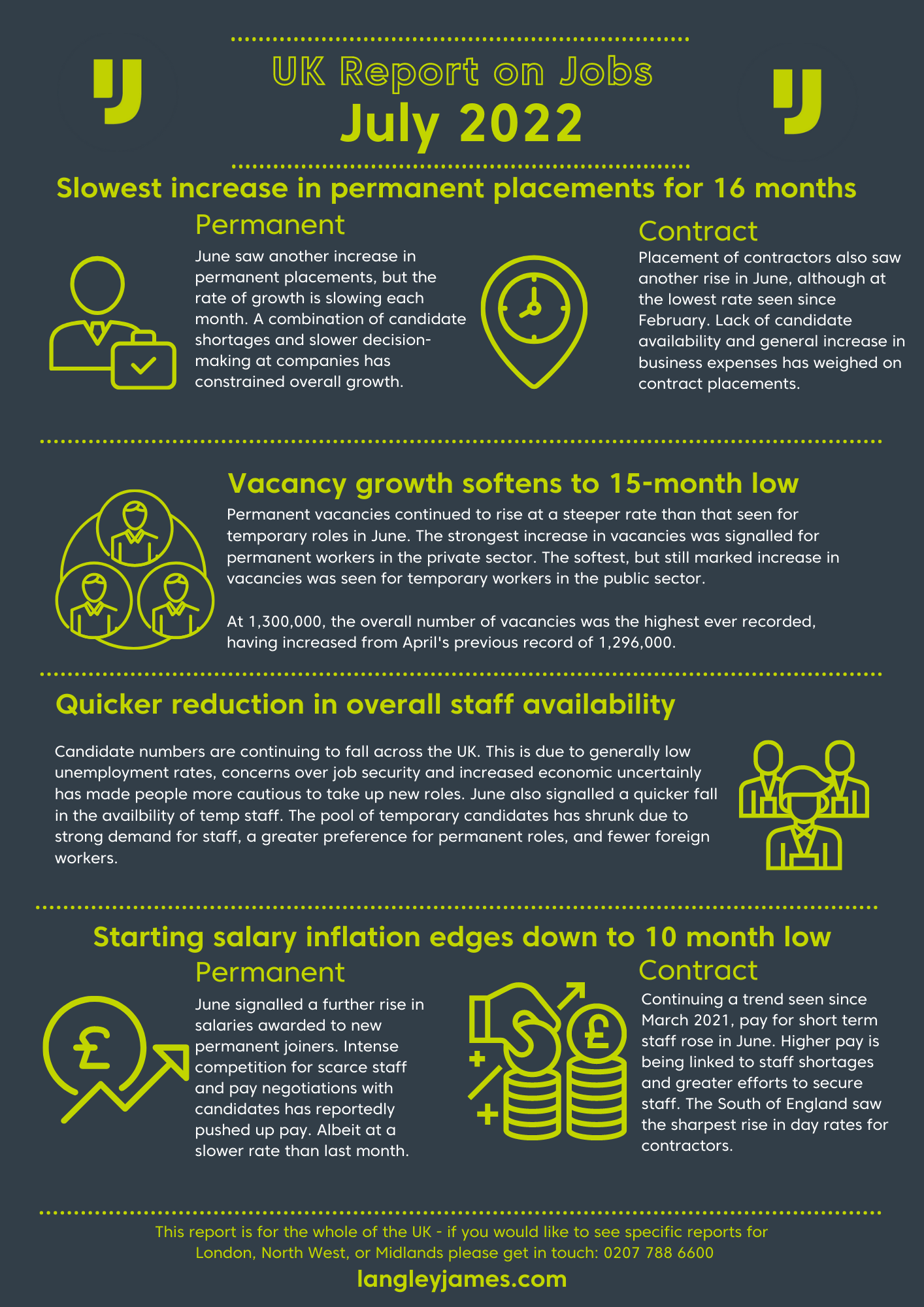
UK Report on Jobs – July 2022

IT salaries seem like they are on an ever-increasing trajectory. With the demand for staff higher than ever before, and the candidate pool shrinking by the day, it’s no surprise. But what does this actually mean for salaries?
We regularly review the average salaries for the most popular jobs in IT. And we always give an indication if it’s up or down from the previous month. But it’s when you look over a longer period that you really get to see the bigger picture. Some will have you believe that salaries have increased dramatically across the board. This is not the case. Yes, it’s true that some salaries have seen as much as 96% increases. However, there are some areas of IT where salaries have remained broadly the same.
So, we’ve taken a look through the archives to give you a bigger picture view of IT salaries over the last 2 years.
There’s no doubt that it’s at the top end of the scale where we’ve seen tha largest jumps in average pay. In September 2020, the average salary for a CTO was £100k. And in our most recent salary survey (July 22), that’s increased to £144k. An easy % increase to work out there! And it’s a similar story for an IT Director. £112k in September 2020 to £150k in July 2022. A 34% increase. And a Head of IT too. £77k in 2020, £90k today. So, if you are looking to hire into your senior IT leadership team, it’s safe to say you’ll have to offer a lot more to attract the best than you did 2 years ago.
The world of business has experienced many changes over the last 2 years. The pandemic meant that some business really had to fast track future plans. And this is reflected in the average IT salaries for those jobs most in demand to operate in this new normal. The step change growth in e-commerce when we were all confined to our homes has had a dramatic impact on salaries in this specialism. In September 2020, the average salary for an e-commerce manager was £65k. You’d now have to pay around £84k to secure the same talent.
But it’s not just e-commerce. Business are relying more heavily on data than ever before. Data driven insights have become an essential part of business success. And this is where we reveal the IT role that has seen the largest increase in average salary. A database manager would earn an average salary of just £50k in September 2020. This is now a much larger sum of £96k. That’s a 92% increase!

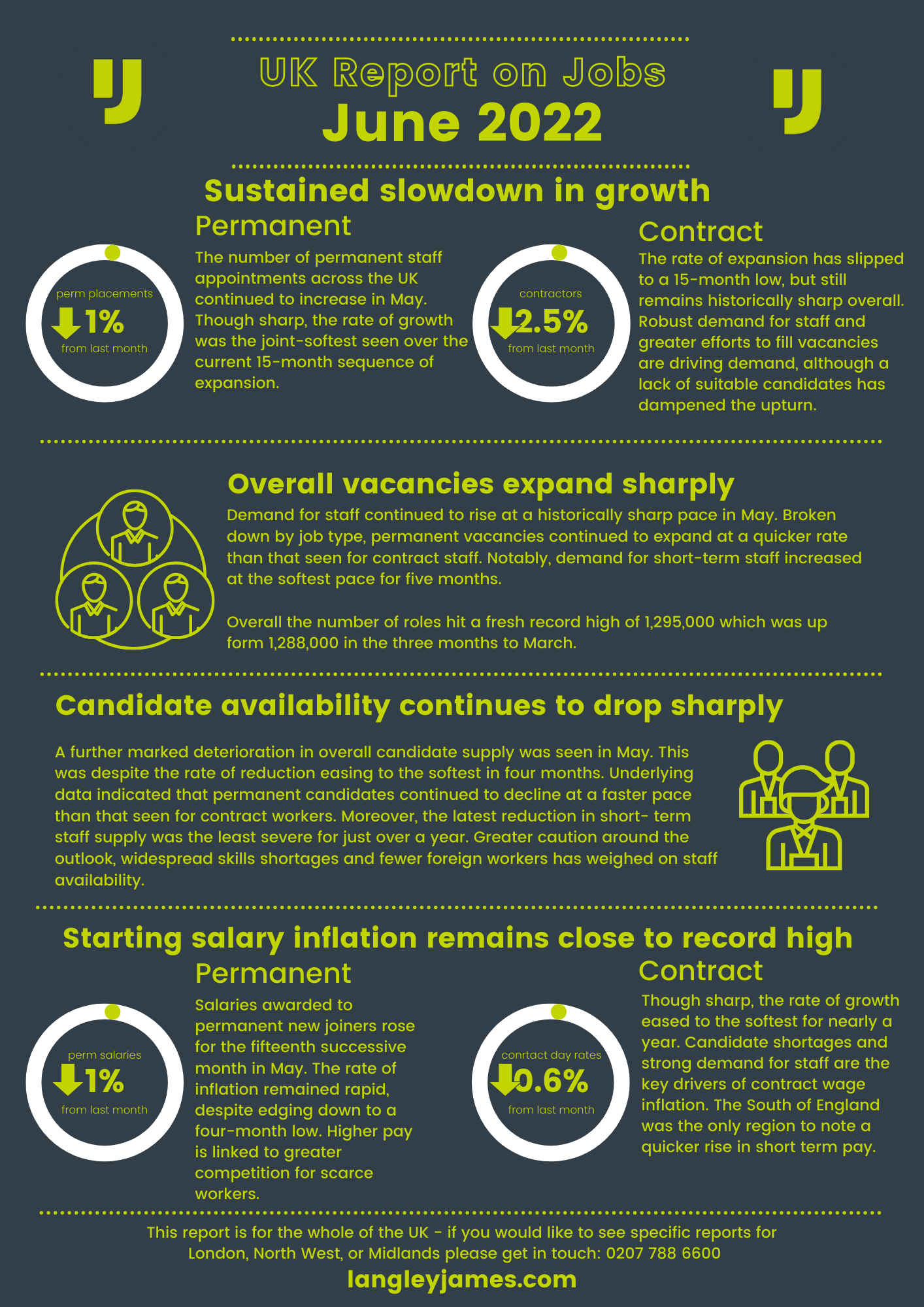
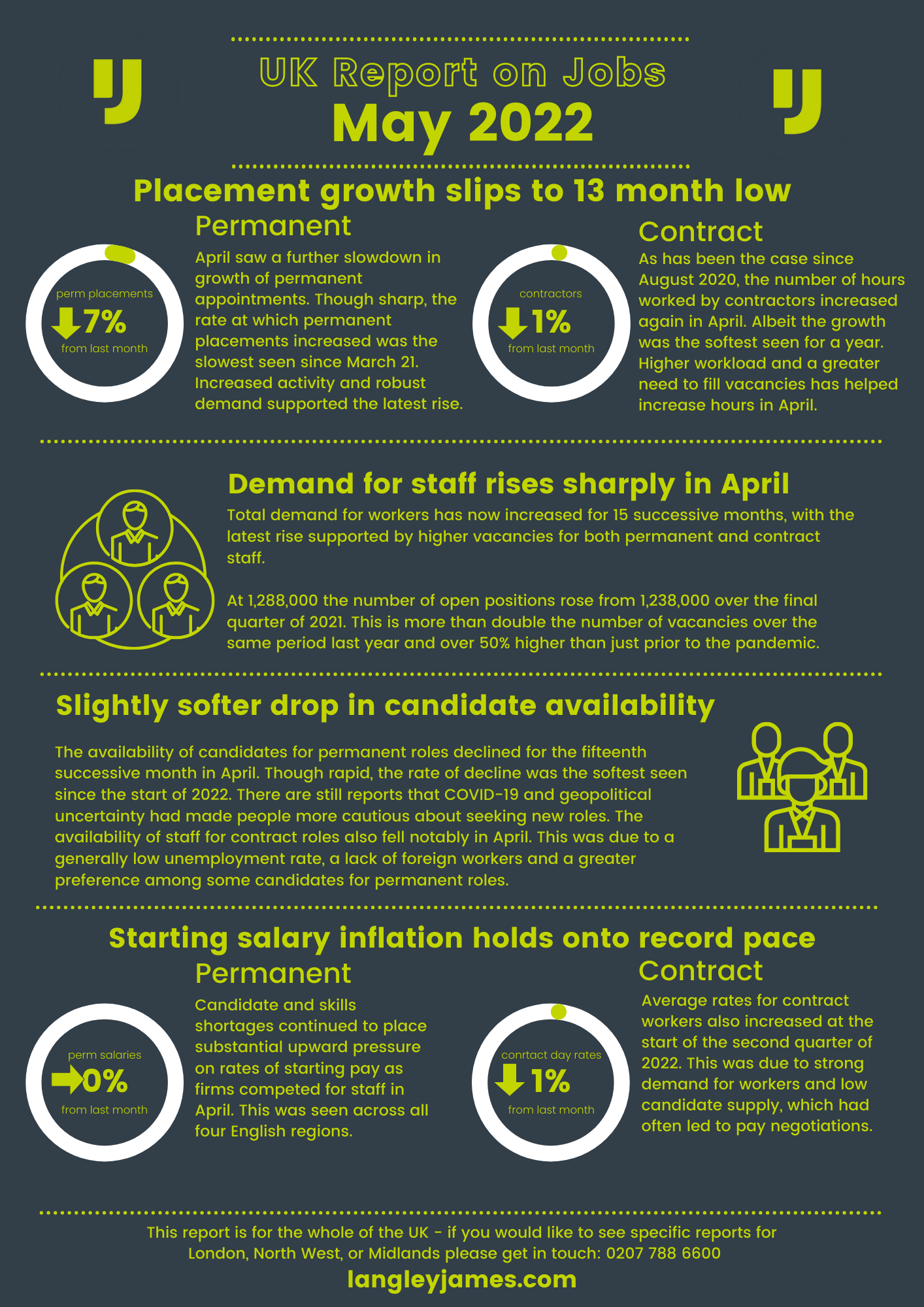
Whilst all areas of IT have experienced some increase in average salaries. Some have seen little change. However, before we share this information with you, it’s important to consider that these are the average salaries on offer. An overview of the jobs market and demand for candidates. The skills shortage does mean that starting salaries are often higher than that advertised. Take a look at our most recent report on jobs to see the trends.
When researching the change in salaries, we noticed that it’s the less senior roles that haven’t seen too much change. For example, a 1st Line Support role was £28k in 2020. And that figure remains the same today. And it’s a similar story with 2nd line. £35k in 2020 and £26k today. It’s 3rd line that has seen the largest increase in the support specialism. An increase of 9% from £36k in 2020 to £51k in 2022.
We’ve been recruiting IT candidates since 1999. And we’ve seen a lot of agencies come and go during this time. It’s not enough for an IT recruitment agency to simply advertise your job and share the best applications with you. You could do that yourself! Admittedly, there would be a cost to advertise the roles that could end up costing a lot more than a recruitment fee, but the choice is still there.
At Langley James, we are experts at what we do. Our pure passion for all things IT is seen throughout our exceptional service levels. We work on all our clients’ vacancies as if they were our own. And this is where our market research comes in. We know the market. We know the trends, the average salaries and more. And we make sure that we share this with all our clients to enable them to recruit someone worth recruiting.
Get in touch with our team today to see how we can help with your IT vacancies.


The Great Resignation is well and truly here! According to a recent survey conducted by PwC, 18% of workers cited that they are “very or extremely likely” to change jobs within the year. Plus a further 32% saying they were “moderately or slightly” like to move on. So, what’s causing this great revolt? It’s not just driven by pay, despite this being one big reason due to the cost-of-living crisis. In fact, the PwC study also found that 72% of UK workers are planning to ask for a pay rise in the next 12 months. But another important factor is job satisfaction that now scores high on an IT candidates wish list.
So, let’s look at what you can do to survive the great resignation in your company –
There’s no getting away from the fact that it’s costing more to get to work than ever before. The cost-of-living is increasing at an alarming rate and people are looking for ways to cope. By reviewing your salaries across the board, you may be able to secure more staff. Get your teams together and ask about their concerns about the cost-of-living crisis. Taking a proactive approach in this situation may create more loyalty from your team. Also – acting early may mean that you actually save money. The increases we are experiencing are not likely to go away for a while. In fact, it’s more likely that they will continue to increase. It’s possible that your team will expect a more significant pay rise the later in the year you deal with it. It’s certainly something to consider.
If you are looking for guidance on salaries, we can help. Each month we produce an IT Salary Guide that shows you the latest average salaries for the most popular jobs in IT.
Was your company culture affected during lockdown? What steps did you take to ensure that the culture was still attractive to your teams? There have been some significant changes to the way we work together. By speaking to your teams and listening to what they have to say about the culture, you could save yourself having to replace as many people. What does your team want? Don’t assume! There’s no getting away from the fact that creating a culture in the world of hybrid working isn’t an easy task. But getting it right can make all the difference.

Right now, around two-thirds of people are working remotely. This is either on a full-time or part-time basis. But it’s important to remember that offering remote working isn’t essential to a happy IT team. Flexibility is the key. Everyone will have different needs and it’s important to meet these where you can. It may be that you are more flexible with the working hours. This is particularly helpful to staff with children. Allowing later starts, or even giving time off for the school pickup, for additional hours to be completed from home. These things can make a big different to retaining your team. Think about what can work for you.
It’s more than just a strong basic salary that will secure your team. What else are you able to offer? This may be bonus payments of completion of projects. A bonus for achieving KPI’s on a helpdesk. Whatever your business will benefit from, attaching a reward is likely to not only increase productivity but also engagement too. We appreciate that not every company has a bottomless pot to keep paying out to keep their team. But some rewards don’t have to cost you more. You could offer additional holidays, memberships to platforms like PerkBox, or even a monthly social event. Again, the best way to find out what will be best received is by talking to your teams.
This is something our IT consultants are hearing a lot at the moment. Great candidates are considering leaving their current employer due to lack of skill building. Most candidates in IT are passionate about learning new skills. What can you do to help facilitate that? Are there courses that your teams can attend that will benefit your company? Or maybe some on the job training will help? It’s not only a great way to keep your staff engaged, it’s the ideal way to up-skill your team. This could develop into clear career progression plans. Another area that candidates are particularly interested in right now.
Despite your best efforts, it’s unlikely that you will survive without losing any of your team. But this doesn’t have to be a bad thing. It can be your opportunity to really think about the skills you want. What personality fits best with your team and company culture? But to prevent too much disruption, it’s important to be prepared. Recruiting the right candidate is taking longer than normal. Finding good candidates can be tough, but that’s not all. Counteroffers are happening more and companies are competing for the same candidates. By working with a specialist IT recruitment agency, you will be able to not only interview candidates quickly, but you’ll also know about their other opportunities and gain insights on how to secure them for your company. Get in touch with our team to see how we can help.

Exit interviews will be more commonplace. With one in five employees expected to change jobs this year, you may have already lost some of your team. Did you hold an exit interview? If you didn’t then you could be missing out. It’s your opportunity to find out things that need to be actioned to help improve your retention rates. No matter the size of your company, it’s likely you don’t really know how your employees are feeling. So, utilising the exit interview for an insiders view is invaluable.
But how do you make sure that you get the best out of your time? You need to carefully consider what you’d like to find out. And more importantly, what you’ll do with it.
First, let’s cover some exit interview do’s and don’ts
It’s always best practice to get a member of the HR team to conduct the interview. Your employees may be more honest with HR than with a line manager or director. Your employees will need to feel comfortable that their honesty will be appreciated. It’s important that they don’t feel judged. Reassurance is also key when it comes to confidentiality. An employer is likely to share more if they know it’s not going to be widely shared.
You know the well-known phrase about making assumptions. It’s important not to assume anything. Keep an open mind and don’t allow bias, or even disappointment to creep in. Don’t email a list of questions and expect an honest response. Exit interviews should always be conducted face to face if you are to really benefit. And finally, don’t forget to say thank you. Thanks the employee for their time and their honesty. Remember, they are likely to share some of their experience with their colleagues.

It’s key that you approach each exit interview individually. Having a set list of questions that you use for every employee isn’t going to give you the answer you need. However, here’s 10 examples to get you started –
If you are performing an exit interview, it’s likely there’s also the need to hire. The jobs market isn’t what it used to be. With more vacancies than ever before, it’s getting harder to find the right candidates. That’s where using an agency comes in. In times like this, it’s important that you are still able to secure the best people for your role. Working with an agency can make it all a lot easier. When you choose to work with Langley James, you get to benefit from our decades of experience and network building. This is where your next hire can be found.
So, if you are looking to recruit into your IT team, get in touch with our IT recruitment experts today and let’s help you to recruit someone worth recruiting.


Onboarding IT staff correctly is one of the foundation building blocks in ensuring success when it comes to hiring. Often an area that is daily overlooked, it’s time that things changed! With the IT staff shortage reaching all areas of IT, businesses are starting to invest more in recruitment and retention. So don’t let your hiring process fall at the final hurdle. Our team share their top tips for onboarding IT staff in 2022.
But first, let’s share 2 key stats so that you can see why this is so important.
We’ve all been there. Working your notice period can be a lonely place to be. Plus, with the market being flooded with jobs as it is at the moment, it’s a vulnerable time for all. If you’ve secured a strong candidate, don’t then lose them for the sake of a few emails or calls. Keeping in touch with your new starter during their notice period is vital. Why not use this time to start to introduce them to their team? An email to make an introduction is enough, but you can take it further too. Arranging a virtual lunch with their teammates over Zoom or Team is a great way to make them feel involved before joining. Failing that, reach out to them on LinkedIn and ask their colleagues to do the same.
At Langley James, we pride ourselves on our exceptional levels of customer service. To both our clients and our candidates. That’s why, if you recruit with us, we will be in touch with your new hire each week during their notice period. This helps to alleviate any fears, answer any questions and to generally support them through their notice.
It’s another hot topic in the employment market – employees like to join companies with shared values. And whilst their values will have felt aligned during the interview process, it’s important to share the story again when onboarding IT staff. You want your new hire to be professionally invested in your company. You want them to feel a sense of belonging and a sense of achievement. What purpose do you have as a company? Keep this at the forefront when designing your onboarding process. What exciting projects have you already been involved in, or, what do you have in the pipeline. Engaging your new hires with captivating stories about your company will make their first week an exciting one.

Thinking that spending 10 minutes with your new hire on forms and formalities is enough is a mistake. It always takes time for a new hire to settle in. However, this has, in some cases, been further exacerbated by hybrid working. it can take longer for them to get into the team culture, establish a routine and understand new processes. Your role is to make their first few weeks as easy as possible. With lots of people spending so much time alone over the last couple of years, some may not have the confidence they used to. Make sure that they know where to turn if they have a problem. Let them know about lunch arrangements and even arrange for them to have a lunch buddy for the first week. Whilst this may not be necessary for more senior hires, it will certainly make a difference for more junior and mid-level roles.
We live and breathe everything IT. We know that market and know what it takes to attract the very best IT talent. Why not work with us on your next IT vacancy and experience the difference of working with a specialist who really does know the market. Get in touch with our expert recruiters today and let’s help you to recruit someone worth recruiting.

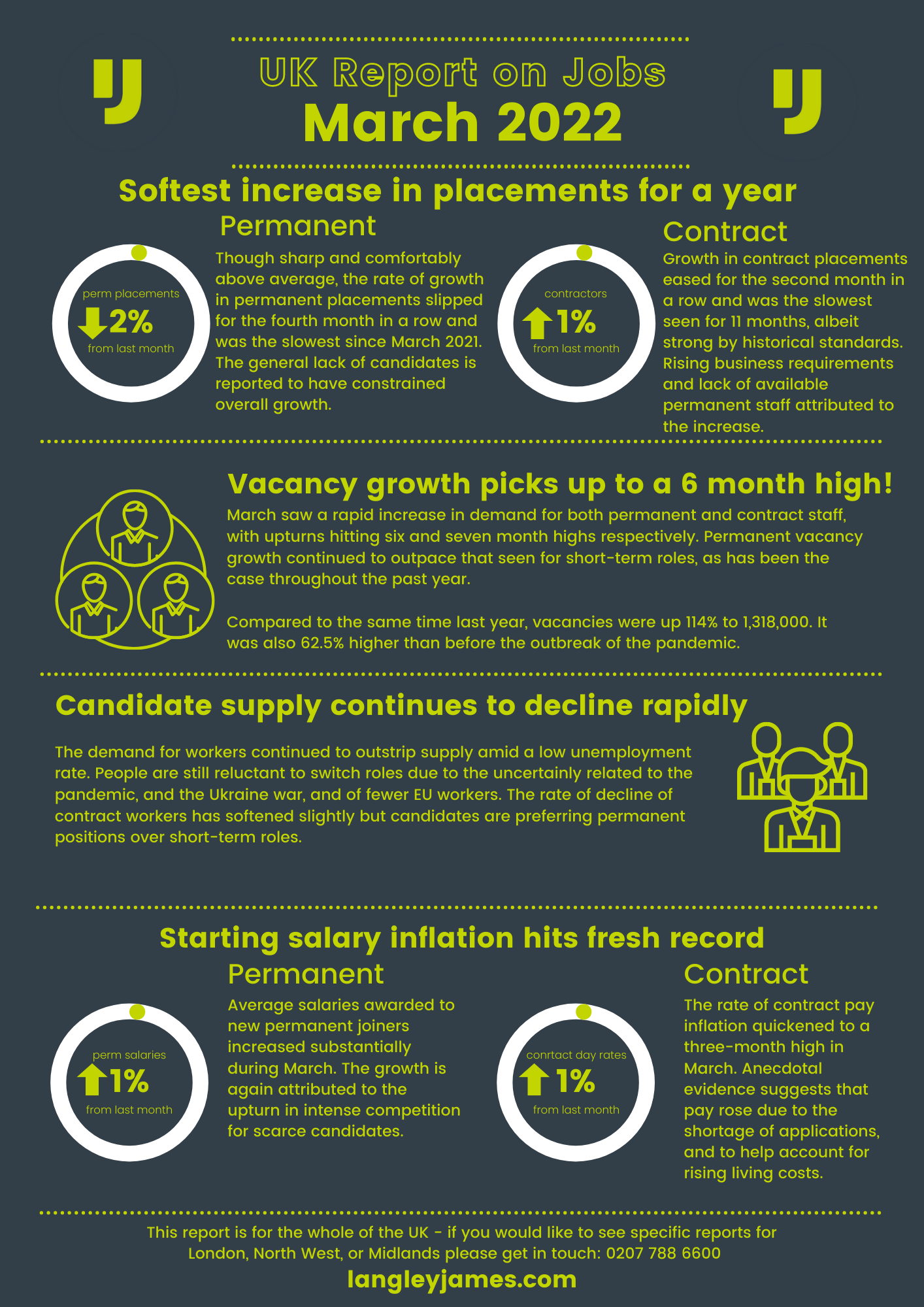

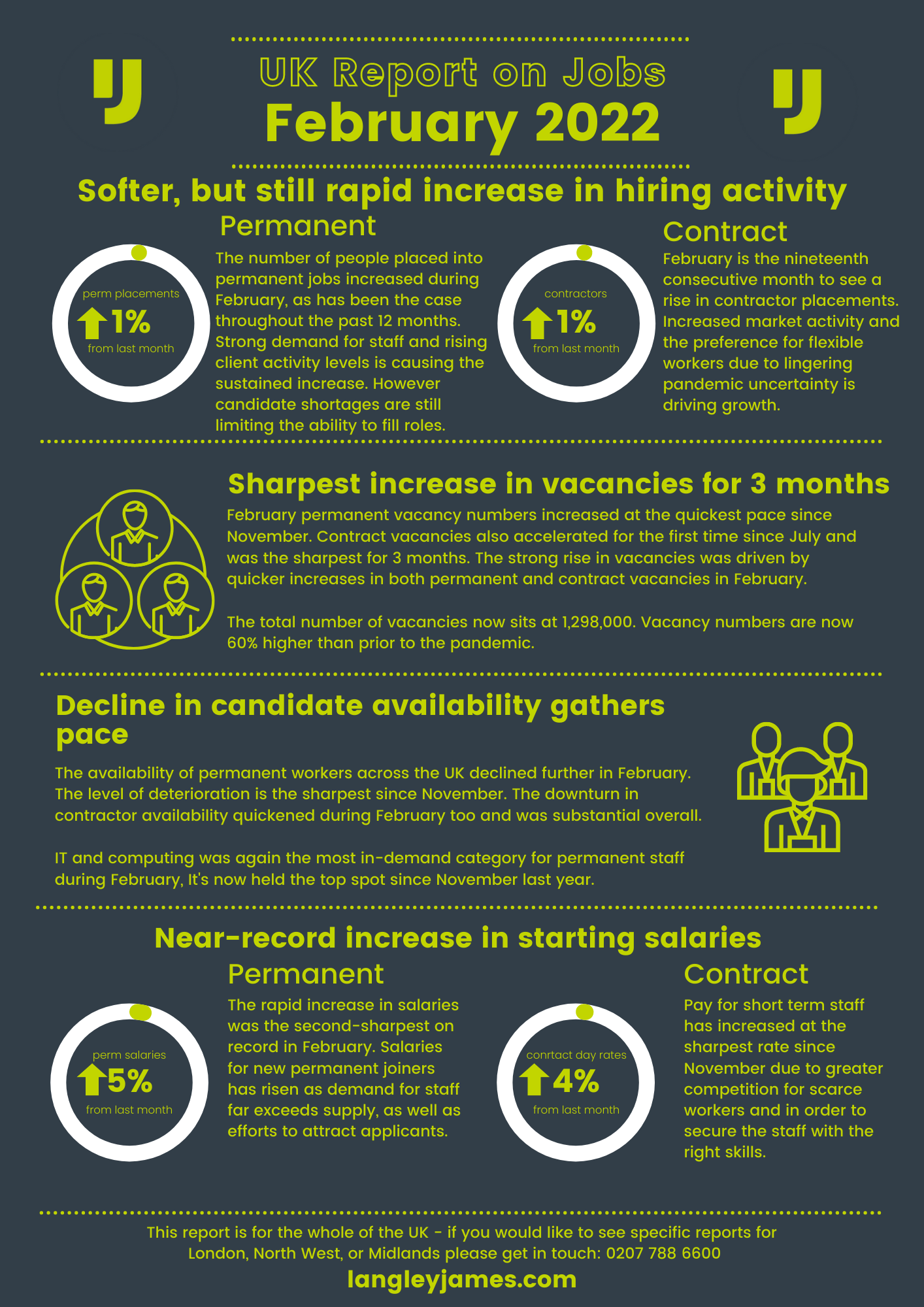

The remote interview is here to stay! Despite final restrictions now being lifted, remote interviews are still the first choice for hiring managers and candidates. Not only does it give more flexibility to the candidates, but it also allows you to screen faster and in a more structured way. With the current IT skill shortage, reducing your time to hire can make a big difference when it comes to securing the best IT talent.
So how do you make sure that your remote interview structure is geared for success? Here’s our guide –
Just as you would in a face-to-face interview, it’s important to have a structure for your remote interview. The advantage of a remote interview is that you can have an out of sight prompt to assist. Decide what’s important and what you would like to discover from each interview stage. Creating a defined structure will not only ensure that you stay on track. It will also help you communicate the process with your recruiter prior to the interview. We’ve created guides on effective interviews before and some of those tips do still apply. However, when it comes to a remote interview, there are some additional things to consider.
It’s not just the interview where communication is key. It all starts beforehand. When arranging remote interviews, it’s important to communicate what to expect. You need to share some key information with your recruiter to make sure that the candidate is prepared.
Making sure that the candidate is prepared in advance will allow them to showcase their skills to the best of their ability. Your recruiter should be asking you these questions as a matter of cause.

When arranging remote interviews, it’s important to still be flexible. There are lots of people still working from home. But, whilst that may make you think that they are more freely available, this isn’t always the case. Companies have implemented new remote working practices and monitoring. It’s important to be mindful of this when arranging interviews. However, regardless of this, there’s no doubt that remote interviews are the quickest way to secure the best IT talent.
You’ve no doubt seen this discussed for candidates, but the same applies for companies – probably even more so – and especially in IT! You may be an expert at Zoom or Teams meetings now but testing that everything works before the interview is still good practice. Make sure you are in a quiet area with no interruptions. Check your battery if you are not plugged in. Simple checks can save lots of embarrassment.
We’ve probably all been there. We are in a virtual meeting and something really important is being said. And that’s when the connection drops out. But how do you deal with this in an interview? Whilst your connection may be working fine, sometimes you’ll be in a situation where the candidates’ connection is poor. This can be a stressful situation. Not only is the candidate nervous and trying to perform the best – they don’t want to have tech issues to deal with too. If connections are poor, then don’t waste too much time. Suggest that the interview is rescheduled for later in the day. Maybe the candidate can arrange to be somewhere with better connection?
If you have stuck to the structured plan for each interview, then you should be able to score the candidates fairly. Identify which areas are more weighted than others. How did each candidate perform? This will help you create a shortlist for a hiring decision or a final interview. But what can you do on the second stage if it’s still a remote interview? Why not assign a task? Something that fits with a key competency for the role. Or maybe even a live task – something they will be required to do if successful.
How Langley James can help
We have been helping companies to recruit the very best IT talent for over 20 years. During this time, we have learnt lots of tips that we can share with you when it comes to interviews, attraction methods and more. If you want to work with a recruiter who really knows their market and can help you recruit someone worth recruiting, get in touch with our team today.

IT talent has always been in high demand, but no more so than right now! We are now at the point where many companies are chasing the same scarce talent. Therefore, we are seeing double-digit pay increases in some areas of IT. But where does it end? And what about the companies that are unable to pay inflated salaries? What happens to them?
We’ve researched the current IT jobs market to find ways to enable you to recruit someone worth recruiting, without having to pay 6 figures salaries.
According to data from CIO.com, the 10 most in-demand tech jobs for this year are –
And we are hearing the same reports from the job boards too. Of the hardest job titles to fill, 8 out of 20 are in the IT sector and are remaining vacant no the job boards for 3 months+. Again, not terribly helpful if you have an urgent IT job to fill.
But this could be a double-edged sword for many companies. Not only are you trying to secure the best candidates (and paying more for them!), but your own teams are also asking for pay rises due to inflation, or even worse, they are offered a considerable increase to move to another company. You then have a decision to make. Is it cheaper to agree a higher salary to keep hold of them? Whilst this does work in some cases, over 80% of people still move on within 6 months of accepting a counter offer. So, think carefully before you react to any resignations.

Is your recruitment process preventing you from securing the best talent? Candidate expectations are changing and to secure the best IT talent, you need to shorten your interview process to just 1 or 2 stages. These stages also ideally need to be remote so that the candidates can fit them into their day. You can always invite the candidate in to receive the job offer at the end of the process. But don’t let a 2- or 3-week interview process stop you from achieving your business goals. Here’s our advice on timescales –
Whilst sticking to these timescales doesn’t guarantee that you’ll secure your first-choice candidate, it does give you a better chance. However, it also means that you are less likely to be wasting your time on interviews that candidates are quickly going to withdraw from.
Do you have a company mission? What is it that your business does that helps others? IT talent, especially younger candidates are very selective about who they work for. If an in-demand candidate receives 3 equal job offers, there decision is likely to be based on your purpose. Gone are the days of wanting to work for a ‘growth-at-all-costs’ company. For some companies there is a clear mission. One that can easily be communicated to candidates at interview. However, there are companies that need to be a little more creative when it comes to communicating their mission. Take a look at yours and make sure it’s fit for purpose before interviewing.
Not all recruiters are the same! It’s important to choose carefully who you work with, especially in times of a skills shortage. You don’t want a recruiter who just posts your roles on a jobs board. We’ve shown above that this is no longer the answer! The superstar IT candidates are not to be found in advert response. They are the candidates on databases, in recruiters’ networks, and recommendations. So be sure to ask the right questions of your recruiter next time you are hiring IT talent. We’d be happy to answer any questions you have, show you testimonials and even put you in touch with our clients. Just ask – we are here to help.

Today, discussing leadership style has become an extremely popular area. Many argue that a manager’s leadership style is one of the fundamental elements that determines the extent of both business and employee success. Therefore, it’s important that you understand your leadership approach. You can then decide if it’s working for you, your employees, and the overall business. You want to ensure that you are driving the business to meet its goals and objectives and be the best it can be. Therefore, it might be necessary that you take a step back, evaluate your approach and adapt it accordingly.
Below are five common leadership styles. Have a read and figure out which one best describes you. Hint – there isn’t one best way!
This tends to be thought of as the traditional leadership approach. A transformational leader implements strict rules and shows little understanding for people’s circumstances outside of work. For example, people would have to use their holidays to attend doctor’s appointments or attend their child’s sports day. The rewards and punishments your IT team receive are contingent upon their performance. As a result, rules, procedures, and standards are essential in transactional leadership. Your focus is enhancing your own success and development along with that of the organisation. However, in some situations this approach does work well. For example, research has found that transactional leadership tends to be most effective in situations where problems are simple and clearly defined. It also works well in crisis situations.
Being a transformational leader means focusing on the needs of others, rather than your own. You treat each employee as an individual. Helping them find a work, life balance that suits them. This can often result in implementing flexible working hours. You’re all about motivating and encouraging your IT team to achieve both their own and the organisation’s goals and objectives. But do so without micromanaging. You strongly believe in trusting your employees to get the job done and the job done well. Give them the opportunity to be creative and look to the future. What’s great about a transformational leader is that they are often extremely passionate, energetic, enthusiastic and love to challenge the status quo. You are a brilliant role model and strive towards setting examples of how things should be done.
Authenticity is described as ‘owning one’s personal experiences. For example – thoughts, emotions, needs, wants, preferences and beliefs’. Therefore, an authentic leader must understand their values and act accordingly. Rather than forcing their employees to follow their lead, they show authenticity by inspiring them to do so. Acting with integrity and agreeing on shared values. As a result, authentic leaders can achieve strong employee loyalty and commitment. There are four key components of authentic leadership. Self-awareness, relational transparency, balanced processing, and internalised moral perspective (do the right thing). However, entirely authentic leadership can be hard to achieve as people’s perceptions of what authenticity means can vary on a large scale.

Servant leaders work to achieve long-term, organisational goals by. They firstly facilitate the growth, development, and general well-being of the individuals in the IT team whilst sharing their power. This approach is great for building strong relationships with your employees. It truly demonstrates that you want to serve their needs. To help them be the best they can be. On the other hand, however, there is a danger that your employees might walk over you. You may find it hard to gain the respect that leaders with different styles can achieve. This is a balancing act so approach with caution.
This is an extremely hands-off approach. Although you provide the tools and resources needed, you offer your IT team very little guidance. You give them complete freedom to make decisions on their own. As a result, people often have a lack of role awareness and poor involvement in the group. This can be demotivating and uninspiring. However, in some situations, this style works well. For example, experienced and highly skilled individuals require very little guidance, and some people appreciate the autonomy. This allows them to feel more satisfied with their work.
Globalisation and social media amongst many other things has allowed leaders around the world to witness different culture’s leadership styles. This has prompted them to re-evaluate their own and we are now finding that people are steering away from traditional approaches such as transactional. There is now a huge emphasis on the importance of employee wellbeing. Most would agree that in order to run a successful, profitable business, you must ensure that your entire workforce is happy, fulfilled and motivated. However, it would be extremely difficult to adopt just one approach, therefore, taking different traits from the each of the different styles can help you become a leader that works for you and your business. Being able to do this shows you are diverse and after all, a diverse leader makes for a successful one!
If you enjoyed reading this article, why not follow our LinkedIn page to make sure you don’t miss out on the next!
Recent Comments