
“Act Now for 2021 IT Recruitment”

An economic boom is on the horizon. Don’t delay your recruiting plans – act now or risk being left behind. 

A little direct? Perhaps, but it is all too common at this time of year for businesses to start planning for the New Year, instead, take action now and start your recruitment campaigns now putting you ahead in January when many more businesses will then begin their recruitment campaigns.

2021 is set to be one of, if not, the most competitive years, when many projects that had been delayed will be caught up with. Morgan Stanley projects strong global GDP growth of 6.4% for 2021 while the excitable mainstream media predicts the start of a “roaring twenties” era for us all. With so many sectors expected to rebound at the same time, never, in modern times at least, has the commercial playing field been so level for so many. Titans will fall and minnows will rise as our riled and turbulent economy starts to settle into a fresh new order. 

The question is, are you ready for the most aggressive commercial race of our age?

A Level Playing Field Means Fierce Competition for Talent and Resources

If most markets are set for simultaneous phases of rapid growth – being first having never mattered more. In critical areas of the IT recruitment market, COVID-19 has had little effect on talent shortages and so, come 2021, after the initial feeding frenzy is over, do not expect IT recruitment to be easy or less time-consuming. The best advice is to act now and get in touch with us before the frenzy begins.

career growth

Rising National Unemployment Rates Won’t Mean More IT Candidates

Don’t be lulled into a false sense of security believing that rising unemployment means it’s a talent buyers’ market. Sure, if you are recruiting a team of production operatives or account managers, then yes, you’ll be able to simply post an advert and watch the CVs flood in. However, if you are chasing a first-class .Net Developer, BI Analyst, or Cloud Infrastructure Engineer you’re in for a shock. In 2021, demand for niche talent will rise sharply making it even harder to attract and secure the best people. Even if you are not quite ready to recruit, act now, and start the process. Contact Langley James in advance to start building talent pools and setup some early conversations to get ahead of the game.   


Review Your Recruitment Process ASAP

2020 has caused hiring freezes, multi-signature procurement decisions, and cautious, fear-driven process extensions. In short, current business action is slow. Most recruitment assignments that do make it past the ‘sign-off’ stage are faced with increased process stakeholders, extended candidate interview hurdles, and general hesitation. Given what we have discussed above, how competitive do you think your recruitment process is? 

Let’s be clear – you are competing with Hiring Managers with flexible budgets and the power to offer a candidate a job during or immediately after an interview. In talent, short areas such as IT, skill assessments, psychometric testing, and 3+ interview stages are luxuries that will slow you down and significantly reduce your chances of securing your candidate. We’re not saying make knee-jerk, ill-informed decisions. Far from it. Instead, be very clear on what you need, what you’re able to compromise on, invest time into creating a robust, high value but lean interview plan, and prepare to make offers quickly should you need to. 

Plan for Competition with a Strong Offer Strategy 

Before the sign off stage, talk to us at Langley James about the market and local talent competition. In skill short, high demand niche areas, failing to plan for recruitment competition is foolish. Assuming that going back to your management team, post-signoff, for more money is undesirable, pre-empt the inevitable with an offer strategy that includes an ability to negotiate and raise offers. In 2021, competition is going to be fierce.

To ensure your salary budget is in line with the market have a look at our salary guide which we publish monthly, these are the average salaries of what candidates are seeking and roles are advertised, you may need to consider paying more that the average, but we understand that is easier said than done as it may knock out the whole IT department salary budget.

Expect Attack

While you read this, your employment competitors are already plotting to attack the talent market, which will include them trying to entice your staff. They too have powerful recruitment partners with extensive candidate networks and persuasive pitches. Putting off your battle plans until the new year gives them the advantage. By the time you’re ready to hire, they will have already engaged the market and may have already met many candidates some of which may be your own staff. Our advice is to start planning today and start taking decisive action.   

Bottom Line – It’s December 2020 right now with plenty of working days until the 24th so, get ahead of the rat race and meet some candidates while they are available. With digital interviewing, it has never been so easy to put an hour aside to talk, so call Langley James and make a start. You will not regret it.

Give real thought to your existing processes and talk to us about them. They are meant to make your business run smoothly and efficiently so if your recruiting process is slowing you down causing a commercial disadvantage, consider changing it. The process is not law and is yours to change! 

Speed is of the essence. Take action today. 

5 + 5 =

All You Need To Know About IT Contractor Interviews

The Difference Between an IT Contractor Interview Vs Permanent Employee Interview

IT Contractor interviews are different than interviews held for a permanent employee. Generally, line managers will not be carrying out psychometric tests, or second and third interviews. As a line manager, you may only have an hour to assess whether to hire the contractor.

In the interview, the IT contractor is likely to sell their skills, professional contractors are normally well prepared, knowing they have about an hour to win the contract.

As a line manager, you will be analysing if the IT contractor has the right skills, experience, attitude and personality to fit with the existing team and whether they have sufficient skills and experience to warrant their fee.

If a line manager invests time in getting the most out of the contractor interview, and remember that they are not recruiting an employee, they are probably more liking to make more effective contractor recruiting decisions.

Before the interview – preparation

The IT contractor has been invited to interview because their CV ticked all the boxes, but CV’s can be misleading by asking the right questions a line manager can identify if the IT Contractor is right for the project, recruiting the wrong IT Contractor can be an expensive mistake.

career growth

 IT contractor interview Questions

Line Managers should consider asking the following questions during an interview with an IT Contractor

  1. Talk to me about when you have used these skills in another project, what went right and what could have gone better
  2. Give me an example of when you have used your own initiative to make a different to a previous project?
  3. How do you feel about working alone or with a team?
  4. What is your expectation on being managed?
  5. Talk to me about different business cultures you have worked in during previous contracts and what have you done to ensure that you fitted in to the team.
  6. Tell me how you ensure you achieve your deadlines
  7. How have you made a difference to a project you have previously worked on.
  8. How do you ensure you understand the projects requirements fully?
  9. Tell me about a time when  a project you have worked on has gone wrong and how you have overcome it.
  10. What do you know about this organisation?
  11. What do you know about this project?
  12. Do you have any evidence of your impact on a previous projects profitability and how it impacted on the business.

IT Contractor and their Communication Skills

During the interview, a line manager will also establish if the IT Contractor has strong communication skills. The main factors they will look for include;

  • Do they have good eye contact?
  • Do they answer the question that was asked or do they go off on a tangent?
  • Do they listen or do they justify what they want to say?
  • What is their body language saying?
  • Do they ask questions that are relevant?
  • Do they use silence?
  • Is the contractor skilled for the position? Can they achieve what we need them to?
  • Can they work on their own and use their initiative?
  • Are they likeable and will fit into our organisation’s culture?
  • Are they clearly focused on project delivery?
  • Do they have good communicate skills?
  • Can they offer some added value, more than the other candidates, which could help give the organisation an edge?
  • Do they try hard to understand the project requirements, by asking lots of questions?
  • Do they seem keen and a hard worker and prepared to get really stuck in?
  • Do they appear to be genuinely interested in the project?
  • Are they a positive person who will motivate others or a negative merchant of doom?
  • Are they a good listener?
  • Do they know anything about our business/organisation and the market sector?
  • Is the contractor commercially aware?

A good IT contractor will have the same checklist to work through from their perspective and will be trying to reassure the interviewer that they are the best person for the job.

What sends alarm bells ringing?

As a line manager, you will be likely to recognise during the interview that the contractor might not be the right person for this particular contract, or that they might not fit in with your organisational culture. Common warning signs include:

  • The IT contractor focuses too much on how the role would be good for them rather than the client
  • The IT contractor does not really address the organisations problems or explain how their skills and experience will solve them
  • The IT contractor may exaggerate or boast.
  • The  IT contractor is a bad listener, talks too much, and doesn’t directly answer questions
  • The IT contractor interrupts the interviewer 
  • The IT contractor has obviously not prepared for the interview and lacks understanding
  • The IT contractor demonstrates a lack of commercial awareness 
  • The IT contractor lacks interest in the organisation and project and demonstrates poor knowledge.

Making your IT Contract Recruitment decision

IT contractors that have long term successful contracting careers will also have good selling skills in addition to their core expertise. 

At the end of the interview, an experienced and prepared IT contractor will normally ask for the business and attempt to close the deal, assuming of course that they want to work on the project.

As a line manager if you are not ready to make a decision at the interview you can schedule a time to get back to the, however, remember that a good contractor, even in depressed market conditions, will almost certainly have other options. So, do take time to deliberate over the decision, but do not prevaricate.

Once the contract offer has been made, the negotiation stage begins once again preparation is very important.

Langley James IT Recruitment has been established since 1999 and specialises in recruiting IT Contractors throughout the UK across all business sectors contact Langley James on  0207 788 6600  

6 + 4 =

How to Retain Your IT Staff Before It’s Too Late

Act Now to Retain Your IT Staff Before its Too Late

As we race towards the end of a somewhat eventful 2020, we’ll soon be bracing ourselves for the annual surge in people all over the country reflecting and deciding to change jobs. Twice a year, in January and September (ish), people return to work following a break with new-found and ambitious plans to further themselves and their careers. With less than a month to go before Christmas, here are some immediately actionable IT staff retention ideas highlighting what to address before it’s too late. 

Job Role Growth and Progression

It is human nature that we want to better ourselves. The strive for growth is a natural progression all employees go through during their careers.  It would be unrealistic to expect an employee not to toy with the idea of moving on to a better position, whether it be within your company, or elsewhere, no matter how loyal they are. Internal flexibility is a favorable attribute that, if you have the means to implement, is likely to enhance employee retention.

This is the idea of being open to moving employees around and letting them find their talents and discover what they are best at. You may find that an employee you originally placed in one role, finds their niche and performs to a higher standard elsewhere just by giving them some flexibility to try their hand at new projects. Obviously, it is not always possible to offer that level of flexibility to employees, depending on the size and scale of the business. In this case, challenge your staff, and provide them with a higher level of responsibility. This will alleviate the tedium and create a feeling of purpose and worth.

career growth

Work-Life balance

Although it may be frowned upon by some employers, it should come as no surprise when people say they would prefer to work only standard or flexible hours so that they can spend more time focused on other commitments.

It can be easy for employers to overlook the bigger picture – a poor work-life balance will not only impact employee but their spouse, family and many other aspects of their life. According to the Mental Health Foundation, over a quarter of employees in the UK feel depressed due to their work-load, and a further 58% feel irritable because they struggle to maintain a healthy work-life balance.

Workload plays a significant part in employee satisfaction and ultimately can influence an employee’s decision on whether they stay or leave. Projects are often time-oriented, do not assume that if an employee continues on with tasks beyond scheduled working hours that it is because they love their job and want to be there, which of course can be the case, but not in all instances. A feeling of pressure will profoundly impact upon an individual and force them into working beyond their contentment. If an employee is showing signs of stress and continue working beyond what is expected of them, then perhaps it is time to discuss with the individual ways to manage their time more effectively. 

lack of recognition

Lack of Recognition 

Measuring how appreciated an employee feels is one of the most difficult things to gauge, but one of the most important. According to a recruitment survey conducted a few years back, a simple “thank you” to your employees is worth £1,608 a year. Lack of recognition or appreciation can cause an employee to feel undervalued and unsure of how they are performing, which can ultimately lead to anxiety and stress. People perform to a much higher standard when they feel valued and a boost in confidence can have a staggering impact on the standard of work produced by your employees. If you are finding that employees are disengaged, yearly appraisals simply will not suffice. Higher engagement levels will greatly benefit both you and your employees. Making small alterations such as implementing an open door policy, and setting goals and targets for your staff to reach, will get conversation flowing, and feedback and recognition can be easily carried out. 

“The Job wasn’t what I expected”

This is the age-old tale of someone who has taken a job with certain expectations, and has been left feeling disappointed, or worse, misled when the role they undertook was not as it was expected to be.

As a recruitment agency, when we ask why people are looking to move, a large number respond with “the job didn’t meet my expectations”. Often the problem is that the job description that was presented to the employee doesn’t match the role. The ambiguity of a role prior to an employee starting with your company can be far more critical than you would anticipate. People place a large amount of trust in the employer to provide them with the most accurate depiction of what they will be undertaking as part of their new role. Often it can simply be that the employee has misunderstood the job role, however, sometimes the employer has deliberately misled them into a job.

To prevent your employees from making a move, take measures to ensure that they have a clear picture of what is expected of them. If you have a resentful employee, address it now before the situation becomes irreversibly toxic.    

Training and Development 

If someone is feeling dissatisfied with their ability to complete their duties due to lack of knowledge, satisfaction levels will suffer and you are likely to lose them from your team. Providing training and development at work poses great benefits to both you and the employee. It is crucial in keeping your employees engaged while, at the same time, benefiting you with duties and tasks being completed to a greater standard. Enhancing knowledge through the appropriate training will increase confidence, and ultimately help you to retain staff. It will give the employee the opportunity to address weaknesses and to improve on those weaknesses before they make the decision to leave on their own accord.

The bottom line – ignore these things at your peril. It can be easy to miss the red flags, especially if you have a large team, however, staff job satisfaction is an emotional issue and requires an emotional, empathic response. Best advice would be to assume that everyone might be dissatisfied and to explore everyone’s situation equally. Tackle it now and you stand a good chance of cooling your staff’s motivations to leave. 

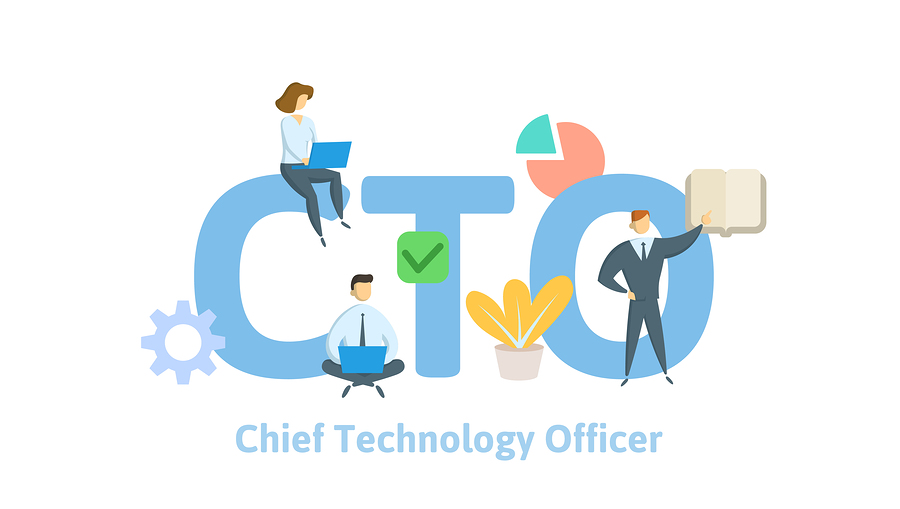
Top 3 Chief Technology Officer Interview Questions

Top 3 Chief Technology Officer Interview Questions

Top 3 Chief Technology Officer Interview Questions

What is the Chief Technology Officer? 

A Chief Technology Officer (CTO), sometimes known as a chief technical officer or chief technologist, is an executive-level position in a company or other entity whose occupation is focused on the scientific and technological issues within an organisation. 

Salary research specialist PayScale says popular skills for Chief technical officers, include expertise in software architecture, leadership, IT management, product development, and project management. However, Chief technical officers are increasingly praised for their knowledge of pioneering areas of technology, such as digital products, technical vision, and research and development (R&D).

Indeed, most hiring managers know they have to look beyond a job candidate’s technical qualifications when staffing for a Chief technical officer role. To get this kind of insight, businesses need to come up with a set of thoughtful interview questions to ask top candidates. Likewise, candidates need to understand what types of questions will be expected of them when they apply for a Chief Technical officer job role. 

In order to help provide insight into the types of questions which will determine whether a candidate has the appropriate skills and knowledge for your business, here is a list of the top 3 must ask Chief Technology interview questions. 

1) What experience do you  have working with developers?

When Contrary to popular beliefs, not all Chief technology officer candidates have a working knowledge of managing software development projects, and those that do will have their own personal styles and approaches to overseeing team operations – whether it be from a distance or having a hands-on approach. 

Answers to this question will provide the company with insights into your management styles and how this accordingly fits with their expectations. As for the company hiring, this interview question is extremely important to render whether this candidate’s style of management fits in with the existing practices and norms in place within the business. 

For the Employer: 

Analyse their previous work managing development teams and the specific examples of leading successful development projects. 

For the Candidate:

In order to answer this common interview question accordingly, it is advantageous to cite your previous role and experience managing development teams. Provide specific examples and the overall outcome of these projects in order for them to gauge your approach. You should consider what skills you have brought to the table and how effectively you managed the team to stay on task and get the job complete. Do you have a developing background, if so, did you actively participate in the developing process?

Example: “I come from a web-developing background, so I like to take a hands-on approach with my development team managers to stay in the loop with the ongoings of the project and provide assistance when required”. 

2) What experience do you have with software development or programming languages? 

The role of a Chief Technical officer differs from company to company. There are several types of Chief Technical officers and typically, the software development companies choose the one that perfectly aligns with their business needs and objectives. The most dominant Chief Technical officers in the field are technical and operational. 

  • Technical Chief Technical officers are considered to be programmers. They will have a vast knowledge of software development and experience knowledge in programming, software architecture design and cloud-based infrastructure configuration. 
  • Operational Chief Technical officers are those who do not have any coding background knowledge or experience. Their skills revolve around finance, mentoring,  project management and so forth.  

Consequently,  candidates who are from a technical Chief technical offices background will most likely have had experience managing their IT departments and take a more hands-on approach. A Chief technical officer from management or operational background will often leave details to their managers. Thus, asking this interview question enables you to gauge these issues. 

For the Employer:

 Look for their interests in the technical details of information technology and the candidate’s ability to articulate and confidently respond to the question. Personal side projects with appropriate examples are also important responses to suss whether their skills and experience is admirable for your business practices. 

For the Candidate: 

If you have taken a technical leadership type of approach in your previous job role, discuss your appreciation of utilising tools and technologies. Usually a software development company requires the CTO to have appropriate knowledge of creating an MVP which is expected to roll out in the target market. Discuss your ability to coach, mentor, train and support your staff in previous projects, sharing your experience knowledge to help those novices in the team easily adopt company culture. 

Answering from an operational perspective, mention distinct examples of when you have worked with teams using software development or programming languages, establishing a strategy and managing the development process in the best possible way. 

Example: ‘I come from an operational background, so I’m not an expert in programming. Although, I have first-hand experience in understanding how good managers leader developer teams by working closely with them to achieve a common goal”. 

3) How will you keep up to date with current trends in technology?

Technology is an ever-changing industry. It is therefore vital for companies to employee someone who recognises the need to stay up to date on the technical developments within the industry. Thus, this interview question investigates whether the candidate is a suitable fit with an organisation. They should choose examples that relate to managing a business, especially an IT department. 

For the employer:

 Analyse their interest in continuing education in addition to their knowledge of current technology trends. Explore their management philosophy and whether they are a “cultural fit” to the organisation. 

For the Candidate: 

One of the responsibilities as a technical CTO is selecting the appropriate mobile or web development stack. They should easily identify the best technologies that have a great influence on project stability, scalability, and maintainability. Consequently, researching trends and products within the IT sphere is vital for this job role to ensure the company is adapting to the newest innovations – a landscape that is dramatically changing on a continuous basis.    

Even if you do not maintain the necessary skills to put these technological innovations into practice, it is still extremely vital that you are aware of the current technological flow. A CTO needs to follow all critical trends that bombard the IT sphere and you will have to consider what the competitors do in order not to miss out on something essential. Having knowledge of existing and current trends and confidently articulating this will demonstrate to a company your ability to research as well as your genuine interest in this field of work.  

Example: “This year I enjoyed reading ABC Technology Trends. It opened my eyes to the need to adopt proven technologies and the risks of buying into the leading edge too soon.”

9 + 4 =

Outplacement Support For Vulnerable Employees

Outplacement Support For Vulnerable Employees

How can you help support employees leaving your business

Possibly looking to downsize your workforce. So, what can you do as an employer to support those leaving your business?

Making people redundant is never easy, and when you have loyal individuals who have been with you for a long time, you probably want to give them as much help as you can.  

One way to do this is to provide them with outplacement support – help in the form of CV writing, job hunting, interview guidance, self-employment, or even retirement planning.  You may be experienced in these areas and want to provide this help yourself, but the uneasiness of the situation means few employees will take up your offer as they feel uncomfortable over the situation. 

Kubler-Ross Change Curve in Business

Employees feel a range of emotions, plotted out by Kubler-Ross – an American psychologist.  She highlighted the changes in emotions and the rollercoaster of feelings they may be experiencing, with at the very worst apathy and depression creeping in.

Self-doubt is often the route cause of this most extreme feeling.  When an employee sends out a CV to over 50 companies and they do not even get a reply from any, they lose self-confidence and feel as if they have no future. But the reality is that their CV is not highlighting what an employer is looking for or they are not up to speed on modern job-hunting techniques. Consequently, they need professional guidance.

Kubler-Ross's Transition Curve For Busienss

Outplacement Providers To Support Employees

Modern job hunters often do not realise that recruiters in 2020 spend as little as 15 seconds reading a CV.  A survey conducted by ‘The Times’ highlighted for school leavers is even less: 8.8 seconds.  

Also, candidates found on CV databases (including LinkedIn) fill over 60% of the vacancies with only 20% of jobs these days being commercially advertised.

Going back 15 years we talked about the ‘hidden job market’. 25% of jobs were being filled by speculative approaches, 25% of vacancies through networking.  There is a new hidden job market that modern-day job hunters need to guide through.  

To really help employees who are exiting your business, it is often best to bring in independent but qualified individuals to; work with your existing staff, listen to their fears, be non-judgemental, and above all, be supportive and practical.

Langley James has recently teamed up with an established outplacement provider who has supported several thousand job hunters back into work and can now provide your staff with the support they need to move forward. Their practical and straight forward approach quickly focuses on job hunt activity, with their consultants taking a very ‘hands-on’ approach, rewriting or even writing from scratch a CV, optimising CV for CV sifting software used on CV databases.  

In a recent CIPD survey, it highlighted that over 60% of employers now use interview competency (behavioural) based questions.  Their consultants are all highly experienced interviewers and able to help individuals build up scenario-based answers prior to interviews, feeding back on both content and structure of S.T.A.R. based answers.  

Operating both the UK and the Republic of Ireland, they are currently providing their support online using screen-sharing technology.  The level of online support they are giving is as good as their consultant sitting beside an individual, but a lot safer for both concerned. If you would like more information please get in contact by filling in your personal details in our form below and our team will be happy to help… 

7 + 8 =

Do You Background Check Your Candidates?

Do You Background Check Your Candidates?

Most candidates research key personnel of a prospective employer prior to an interview however, with an increasing amount of personal information being made available online employers are now just as likely to check whether or not a candidate is hiding any skeletons in their closet.

It may be an exaggeration to say the internet is awash with deceitful individuals and businesses but high-profile cases of dishonesty and even outright criminal activity reinforce the need to ensure comprehensive background checks are carried out before any commitment is made.

Many employers now include an online search of candidates as part of their recruitment process. It is free and quick and it can often provide valuable insight into a candidate, both good and bad, which can help an employer to base a hiring decision on more than just a relatively brief meeting with a highly polished candidate during an interview.

The practice of researching candidates prior to interview raises a number of legal and moral questions but here is a list of online resources that can be used to gather information held in the public domain.

  • Popular social media applications may be the first place an employer will search for information relating to a candidate but certain sites, such as Facebook and Twitter have security settings that limit the amount of information shown.
  • Industry-specific rating websites are becoming more popular; www.ratedpeople.com caters specifically for trade’s people but the IT industry is starting to use the same concept for IT contractors with sites such as MadGigs.
  • Professional networks such as LinkedIn can be used to check the accuracy of the details on a candidate’s CV, to gauge how well regarded a candidate was by previous employers and colleagues and to see if a candidate has a history of contributing to discussions in their field.
  • A simple Google search can often uncover images or a personal blog that may be full of thoughtful and well-written posts or conversely poorly written posts that demonstrate low critical thinking skills.

Employers should be prepared for what they might find but it makes sense to utilise such a rich source of information in order to make more informed hiring decisions.

Our expert IT recruitment consultants are here to take the pressure off you when recruiting someone new, permanent or contract. We liaise with candidates with the utmost care to ensure that their candidate experience is a positive one. Call us on 0207 788 6600 and let us help you Recruit Someone Worth Recruiting.

Langley James Hires .Net Development Recruiter

Langley James Hires .Net Development Recruiter

New Net Development Recruiter

Leading IT Recruitment Consultancy, Langley James has appointed Richard Jones as Principle Consultant focused on .Net Professionals in London and the Home Counties. 

Richard brings with him a wealth of experience gained from a 10-year career in the recruitment industry. Most recently, Richard completed a very successful 3.5 year period as a Senior Consultant for Scantech within the IT and Cyber Security teams. He has worked in the recruitment sector since 2010 and previously held agency positions at IT recruiters Jam and Korus.

In addition to his recruitment prowess, Richard is a world-class sailor having competed internationally and is currently ranked number 2 in the world.

“We’re very pleased to welcome someone of Richard’s calibre to the team. Expanding our Software Development team with a .Net specialist recruiter compliments our service range neatly and will pave the way for further expansion into IT’s key talent short sectors.” Commented Kieran Delaney, Sales and Marketing Manager.

This year, Langley James celebrates its 20th birthday. In that time the business has grown into one of the UK’s most respected IT recruitment agencies working with a wide range of clients up and down the country. Focused mainly on IT Infrastructure, Software Development, Security and Support, Langley James has built a reputation for being able to provide strong, quality shortlists within just 72 hours of instruction.

“We owe much of our success to our focus on candidate attitude, client culture fit and career motivation. Most IT professionals can write a decent CV containing all the right keywords for our databases to search for, however fact matching only gets a recruiter so far. Our clients know that a Langley James candidate will not only possess all the essential qualifying criteria but will also likely match their unique vibe. Interviewing is a challenging skill that takes a great deal of practice to get right so, training and team sharing is at the heart of everything we do.” James Toovey, MD said in a recent interview.


Our expert IT recruitment consultants are here to take the pressure off you when recruiting someone new, permanent or contract. We liaise with candidates with the utmost care to ensure that their candidate experience is a positive one. Call us on 0207 788 6600 and let us help you Recruit Someone Worth Recruiting

What’s Your Interview Style?

Most managers settle on their own style of interviewing but is it wise to have just one approach?

If you’re responsible for hiring IT personnel, whether you work for a tech firm or are responsible for recruitment within the IT department, getting the interview right could be crucial to employing the right person for your team. Now, we’ll do our very best to help source the best suited and most well skilled candidates, but it’s down to you to make the final decision, and the type of interview you prepare for your eager new candidates is vital for providing you with the information you need to make this decision.


Regardless of the route you take with your interviewing no doubt there will be a traditional face-to-face interview involved somewhere along the line. There are options here too; maybe you’re happy using Skype, or perhaps you’d like to get other managers involved in the process and conduct a panel style interview? However you choose to conduct this stage of interview it’s a fundamental step that allows you to meet candidates and assess their ability to fit within the culture of your team and organisation as a whole. However, here are some explanations, tips and examples of some of the most popular IT interview styles.

Scenario Testing
Scenario testing involves creating a scenario that the candidate is likely to face in their role to test their skills and how they deal with the situation. Ideally there’d be five characteristics to scenario testing; 1 – there needs to be a story that is; 2 – motivating; 3 – credible; 4 – complex; and 5 – easy to evaluate. In some interviews you may choose to use test cases, which tend to be a single step, but the scenario test covers a number of steps that would be involved somehow in the ‘business process flow’ and tests a situation from end to end.

Technical Testing
Technical interviewing will usually be specific to your business or function and will depend entirely on what your organisation does, the programmes and software it uses and the role in which you are recruiting for. However, it’s not at all unusual for an IT interview to include some form of technical testing. Presenting candidates with a diagram or snippet of code for analysis would test how they put their knowledge into action but also should give you an insight into their thought process and how they approach tasks or problems.

Competency Based
Competency based questions delve into a candidate’s story based evidence to support claims of experience or expertise. Generally interviewers will ask ‘tell me about a time when…’ or “give me an example of…” questions. They’re a great opportunity to understand the context and application of skills and experience seldom learnt from a CV. Also, questions like ‘how have you succeeded in a team project’ will allow you to find out more about the candidate’s personality, professional style and likes and dislikes. 

Portfolio Based
Interviews for certain roles may benefit from the candidate presenting a portfolio of work. Particularly in web design or more creative roles.

Our expert IT recruitment consultants are here to take the pressure off you when recruiting someone new, permanent or contract. We liaise with candidates with the utmost care to ensure that their candidate experience is a positive one. Call us on 0207 788 6600 and let us help you Recruit Someone Worth Recruiting.


Send us details of your vacancy!        Send us your CV!        Rear More Articles!

The Importance of Updating Job Titles & Descriptions

When was the last time you reviewed your company job titles and descriptions (and I mean all of them)? Maybe it’s not top of your list right now, but it’s good practice to have a process for making sure there is regular review of both job titles and job descriptions.

Lets begin with job titles. It goes without saying that they need to be clear and easy for those in the industry to understand, and in technical roles this is often of even more importance. General consensus is that being familiar and specific without being too general is the best route to take. However, perhaps you are a young company in the media or new technology sector and you want to attract individuals with new ideas and a bit of an edge? In this case you might want to adapt the strategy of firms such as Apple, who name their in-store technical support teams ‘Geniuses’ or Starbucks who have used ‘Coffee Master’ as a title for some of their customer service members. These kind of titles are fun and give the employee a sense of pride in what they do while helping the customer to trust them. This isn’t going to work for everyone so before you start renaming your team as ‘Digital Dynamos’ and ‘Ninja Analysts’ think about your company culture and the personality of the personnel you’re aiming to hire.

Job titles are key for a number of reasons. As well as outlining responsibilities, they can be used for setting goals and measuring performance. Long standing roles may have been filled by one person for many years with them assuming new responsibilities or leaving out tasks that didn’t work as well. Or you may have seen a number of people in and out of the same role, each taking a slightly different slant on the position. Both instances would leave the original job description outdated and not fit for purpose.

If any problems were to occur, from either your point of view, or that of the employee the job description may well be referred to. Strict adherence to an outdated job description by the employee would of course be counter productive and could help the employee in filling a complaint or grievance. An up to date and accurate job description however could work in your defense or favour. A great time to update job descriptions is during an employee’s annual review, but do it more often if you need to – this might be the case if you’re a growing or changing organisation. Regularly use it and refer to it, this way you’ll be more likely to keep it up to date.

Keep job descriptions as short as possible, you don’t want them to be an operational manual on how to do the job, but you do want to them to include all the vital skills and competencies. As well as skills and qualifications, competencies are just as important and highlight aspects such as teamwork, leadership and communication. Rather than simply stating that the individual must be a ‘good communicator’ be more specific and expand a little on the most important areas.

You’re shaping your organisation with your job titles and descriptions, which tasks are covered by which employees and what is expected of everyone. Make sure you have strong job descriptions and that you make time to ensure they’re accurate and up to date, and if you can, incorporate them into day-to-day business.