Nov 19, 2024 | IT, IT Market Reviews, Uncategorised
Soft Skills gaining importance in IT Recruitment
Adaptability is a priority in IT Recruitment…
IT Recruitment experts have been persuading employers to weigh a candidate’s soft skills over their hard skills when recruiting. Employees can learn technical skills on the job, while things like collaboration or creativity are often more challenging to nurture.
Until recently, there has been little focus on soft skills. Plus, in a pre- Covid candidate-driven market, it was difficult to find good candidates without adding more requirements
Now mid pandemic, the stakes could not be higher. In no time at all, the lowest unemployment rate in recent history transform into one of the highest as the pandemic runs rampant through the economy.
The impact on recruiting has been high. Most companies are recruiting on more restricted budgets with fewer resources. Suddenly, a soft skill like adaptability is one of the best qualities a candidate can have.
Employers’ priorities have changed. Maybe it took a pandemic to finally prioritize soft skills.
Leading up to the pandemic, soft skills were always a factor for recruiting decisions, but they were not essential requirements. Traits like adaptability and flexibility have always been requested in a candidate, but not necessarily compulsory.
In this current market, employees who are not adaptable or flexible, open to frequent changes in priorities, and can demonstrate a history of that, are not being offered the job!
So what does adaptability look like?
- Willing to help with tasks as needed, even if someone was hired for something different
- Taking over a colleague’s role
- Working on a different project than qualified for.
In today’s new paradigm, flexibility, strong communication skills, and the ability to adapt as working conditions evolve are the most important qualities a candidate can have. This is a shift in priorities that we at Langley James IT Recruitment are seeing across many sectors.
A survey carried out in July 2020 of 700+ recruiters on everything from how they were using their time during COVID-19, to whether or not they were on a hiring freeze. The results demonstrated a resilient picture during this crisis. When it came to skills prioritised in recruiting, over 60% of respondents agreed that they will need to recruit employees with skills that were not necessary pre-pandemic. These included:
- Adaptability (68%)
- Communication (60%)
- Technology proficiency (58%)
- Resilience (47%)
- Change management (28%)
Why are these skills considered “new” by recruiters in 2020? Experts have been practically screaming this to employers for years to prioritise such skills.
Maybe it took extreme external pressure to change old habits and priorities. With Businesses across all sectors are facing new levels of uncertainty, we are seeing soft skills come into their own. The challenge going forward, though, will be how to screen for them.
The Impact on Screening
Perhaps another reason why recruiters have been slow to prioritise soft skills is that these skills can be tricky to measure. Employers need to standardise screening for soft skills through a mixture of behavioral interviewing and automated assessments during their hiring process to help recruit managers address and measure capabilities accordingly. Here are three best practices we at Langley James IT Recruitment have found can help:
- Apply empathy. It’s important to screen for adaptability, but you also have to show candidates your business is adaptable and empathetic, too. While the pandemic has resulted in a plethora of candidates to the market, that doesn’t mean recruiting will be easy. Most employees want to feel safe in their place of work and know that their employer will look after them if they get sick.
- Apply behavioral interviews. Communication is part of daily work, and the best way to know if a candidate has good communication skills is to understand how they handled situations in the past. Behavioral interviewing allows you to do just that and role-play to understand those experiences.
- Apply automation. Automated assessments allow for reduced bias and the ability for recruiters to cast a wider net.
It is difficult to predict whether the prioritisation of soft skills will become normalised after COVID-19, . The workplace is changing and the things that make people human — empathy, creativity, resilience, and emotional intelligence — will always remain the greatest assets as employees.

Oct 30, 2024 | Tips
Are you sick of throwing your job postings into the abyss of job boards and waiting for a miracle? We thought so. Because let’s be real, it’s not the most effective way to score the top IT, Tech or AI talent out there.
Here’s why:
The best candidates are not on the job boards
And, the best candidates are not actively looking for jobs. One of the biggest problems with job boards is that they are passive. They rely on candidates to actively search and apply for jobs. However, the best candidates are often not actively looking for jobs. They may be open to new opportunities, but they’re not going to spend hours sifting through job board postings. This means that you’re missing out on a large pool of potential talent if you’re only relying on job boards.
Job boards don’t drive qualified candidates back to your company
Job boards are a terrible way to find qualified candidates. They’re great at finding people who are looking for jobs, but not so great at finding the right ones.
The problem is that job boards don’t really care about your company or the type of person you need. They just want to get as many applicants as possible in front of employers to justify their fee. So when you post an opening on one of these sites, it’s likely that lots of unqualified people will apply. And there goes your time wasted sifting through irrelevant CVs! Worst still, what if no one applies, (and this does happen!) – what then?
Only 1 in 20 applicants are actually a fit
As you may have noticed, there are a lot of people looking for jobs on job boards. And as you also might have noticed (if you’ve ever applied for one), most of them aren’t qualified. The result? You get a lot of low-quality candidates–people who don’t meet your requirements or have any relevant experience.
Many companies have tried these boards to find their next IT employee, only to find that they end up with more low-quality applicants than good ones. They then wonder why this keeps happening! So let’s go back to what we said earlier – job boards are great sources of passive candidates. However, when it comes down to actually finding the best people in your industry and getting them interested in working for your company, job boards just don’t cut it anymore.

Good candidates get lost
Job boards are crowded, and your job posting can easily get lost in the noise. Candidates may scroll past your posting or not even see it at all. This means that even if you do get good candidates applying, they may not be the right fit for the job or your company. You’re not getting the cream of the crop, and you may end up settling for a candidate who is just okay. You’re better than that!
It can even lower your employer brand
You might be thinking, “but my company has a great employer brand”. And you’d be right – it’s likely that you do have a great employer brand. But it’s probably not as good as you think it is if you use job boards. Job boards are not a good way to attract candidates; they’re a way to get them in front of your eyes so you can reject them later on. Job boards also aren’t effective at building relationships with candidates. Something that’s key in a skills crisis. The lack of personal approach is a problem.
So even if there are some great candidates on the boards, is you advert enough to tempt them? Worst still, in today’s market where applications are few and far between it can mean advertising your vacancy multiple times. You go and do the same thing, and expect a different result. But advertising your role multiple times screams that there’s something wrong, That you are unable to fill the vacancy and this worries candidates and will prevent them from applying.
What to do instead of using job boards
When it comes to finding the best talent for your IT, Tech or AI team, working with a recruitment agency like Langley James can be a game changer. Not only do we have years of experience sourcing candidates and matching them with top companies, but we also have access to a much larger pool of potential hires than you would find on a job board. But that’s not all.
There’s lots of other advantages to working with a recruiter.
- Recruiters have relationships with a wide range of candidates who may not be actively looking, but who would be a great fit for your company. We can help you tap into this pool of hidden talent and find the perfect candidate for your team.
- We can do much of the legwork for you. We take the time to review CVs, screen candidates, and present you with a shortlist of top contenders. This not only saves you time, but it also ensures that you’re only interviewing candidates who are a great fit for the role.
- In addition to having access to a wider pool of candidates and saving you time, recruiters can also help you navigate the complex world of IT hiring. We understand the ins and outs of the industry and can help you identify the skills and experience that are most important for your specific role. We can also help you develop competitive compensation packages and negotiate with candidates on your behalf.
At the end of the day, while job boards can be a useful tool in your recruitment arsenal, they’re far from the best way to find top IT, Tech or AI talent. Working with a recruitment agency like Langley James can help you tap into a wider pool of candidates, save you time, and help you navigate the complexities of the hiring process. So if you’re serious about finding the best talent for your team, reach out to us today and let us help you find your next superstar.
Oct 30, 2024 | IT
When it comes to recruiting, it is essential to make the right choice and this means being able to attract talented individuals. Attracting talent is not just about instructing a number of agencies. The right agency will be able to not only attract candidates from a multitude of different areas and networks in the right places, but also represent your company in a way that will ensure they want to join, especially in competitive times such as these. Highly qualified and experienced individuals now have their pick when it comes to joining a company, so it is important to choose the right recruitment partner for you.
Clear Job Description
Job descriptions are often thrown together quickly and without a lot of thought, but this can be a major error to make. Often, job descriptions are simply an exhaustive list of duties and expectations whereas the focus really needs to also be on what you can offer the candidate. Don’t forget the WIIFM – What’s In It For Me. Make sure you are clear about any incentives you can offer, including salary increments, bonuses and flexible working. This is the first thing a candidate sees from your company and it’s a really important first impression. Don’t lose the best people with a poor spec – we are happy to offer advice and guidance.
Quick Response
Don’t wait for weeks after the closing date of your application to get back to the agency regarding the candidates as this is the sure-fire way to lose good people. You should endeavour to respond to applications within 24 hours and get interviews set up within a day or two. With the market as it is at the moment, talented candidates looking for new roles are having back to back interviews and choosing from up to 5 offers within a week! They have a lot of choice, so the quicker you act, the more professional you will look and the more likely you will secure your next superstar.
Positive Interviewers
Choose your interview panel wisely. If you have two positive, energetic interviewers, they will instantly make the company appealing. Remember that an interview should be a 2 way conversation and is as much about the candidate asking questions as it is the interviewer. It’s a fine line between really selling the role and delving into the technical requirements – getting the balance right is the challenge. You may want to read more in our Taboo Interview Questions blog.
On-boarding
The last thing you want is to go through the whole hiring process, only for the candidate to leave after the first few days. This is frustrating and it can also be damaging to the reputation of your company. The first few days are imperative for helping to ensure people join your business and stay, so introduce a strong and engaging induction process. Make sure candidates know their way around and the departments they will be involved with. Introduce them to people and don’t leave them wandering around aimlessly. Simple steps like making sure they have someone to spend lunch with can go a long way to getting the best out of them and to help ensure high retention levels and a strong reputation.
For these and other advice to attract the best people to your company in this highly competitive market, why not give us a call on 0207 788 6600 and find out why so many companies chose Langley James as their trusted recruitment partner.

Oct 14, 2024 | IT, Tips
ForMi is a digital tool that for assists delivering effectice performance reviews to assist in development of your people in a way that empowers them to take ownership, builds and strengthens and support wellbeing

ForMi is a digital tool for delivering effective performace reviews
The application has been developed for businesses that want a committed and engaged workforce that are motivated to improve, have clear direction and are provided with equal opportunities.
Professional development activity is the foundation to achieving this but too often the coordination and administration of it becomes over bearing and consequently its effectiveness is eroded.
It is available as an App and a desktop solution, ForMi does all the things you would expect of a professional development tool (e.g. captures goals, achievements, documents review process etc.) but does this in an innovative way that negates the usual delivery challenges.
Does this sound familiar ?
“My reviews aren’t frequent enough.”
“Feedback and goals just get put in the drawer and forgotten about until the next review”
“As a manager. I just don’t have the time to complete all the reviews I’m supposed to”
“Reviews just focus on what I’ve done and not what I can do in the future”
“Reviews are too subjective and don’t eveidence my achievements”
“Feedback just comes from my manager which gives a too narrower view”
“Conversations just focus on ares of weakness, rather than capitalisinfg on my strengths”
“Trying to manage and develoop people working remotely is a real challenge”

ForMi Appraisal tool overview

ForMi Appraisal too overview2
ForMi is a person-centred planning and outcome recording tool for employees or individuals receiving personalised support. The system makes the whole planning, goal setting and review process come alive and gives ownership to the individual as far as possible which in turn motivates them to achieve and develop.
Features
- Record a Person-centred strength-based personal profile
- Set high-level individualised goals
- Record baseline rating of each goal on 0-10 scale
- Identify any relevant standardised KPIs or outcome frameworks
- Tag personalised goals against standardised KPIs
- Add actions and link to high-level goals
- Set up individualised Circle of Support for each Supported User
- Record Story in words and pictures on a timeline
- Record and manage regular reviews to rate progress and outcomes
- Set up Story Wall to capture achievements beyond programme end
Benefits
- Supported individuals take maximum control of their own plan
- The organisation manages the process through an online control panel
- Individual’s progression is recorded in real time via an App
- Professionals and others work together in a joined-up way
- Personalised goals can be mapped against any standardised KPIs
- Evidence of progression is both quantitative and qualitative
- Story Wall allows individuals to keep a record of achievements
To find out more and get a demo of ForMi contact James – jt@langleyjames.com
www.here2there.me.uk/formi/business

Oct 14, 2024 | IT, Tips
Ministers have unveiled the Employment Rights Bill to help deliver economic security and growth to businesses, workers and communities across the UK.
Employment Rights Bill
- Legislation introduced in Parliament to upgrade workers’ rights across the UK, tackle poor working conditions and benefit businesses and workers alike
- Ahead of International Investment Summit, government reveals landmark reforms in under 100 days to boost pay and productivity, showing the benefits of a ‘pro-business, pro-worker’ approach
- New balance for early months of a job at heart of pragmatic reforms to help drive growth in the economy and support more people into secure work
- Employment Rights Bill will end exploitative zero-hour contracts and unscrupulous fire and rehire practices, while establishing rights to bereavement and parental leave from day one
On Thursday 10th October ministers have unveiled the Employment Rights Bill, introduced within 100 days of the new government coming to office, to help deliver economic security and growth to businesses, workers and communities across the UK.
Getting the labour market moving again is essential to economic growth with one in five UK businesses with more than 10 employees reporting staff shortages. Flexibility, for workers and businesses alike, is key to answering this challenge and is at the heart of the legislation to upgrade the law to ensure it is fit for modern life and a modern economy.
The existing two-year qualifying period for protections from unfair dismissal will be removed, delivering on the manifesto commitment to ensure that all workers have a right to these protections from day one on the job.
The government will also consult on a new statutory probation period for companies’ new hires. This will allow for a proper assessment of an employee’s suitability to a role as well as reassuring employees that they have rights from day one, enabling businesses to take chances on hires while giving more people confidence to re-enter the job market or change careers, improving their living standards.
The bill will bring forward 28 individual employment reforms, from ending exploitative zero hours contracts and fire and rehire practices to establishing day one rights for paternity, parental and bereavement leave for millions of workers. Statutory sick pay will also be strengthened, removing the lower earnings limit for all workers and cutting out the waiting period before sick pay kicks in.
Accompanying this will be measures to help make the workplace more compatible with people’s lives, with flexible working made the default where practical. Large employers will also be required to create action plans on addressing gender pay gaps and supporting employees through the menopause, and protections against dismissal will be strengthened for pregnant women and new mothers. This is all with the intention of keeping people in work for longer, reducing recruitment costs for employers by increasing staff retention and helping the economy grow.
A new Fair Work Agency bringing together existing enforcement bodies will also be established to enforce rights such as holiday pay and support employers looking for guidance on how to comply with the law.
Deputy Prime Minister Angela Rayner said:
This government is delivering the biggest upgrade to rights at work for a generation, boosting pay and productivity with employment laws fit for a modern economy. We’re turning the page on an economy riven with insecurity, ravaged by dire productivity and blighted by low pay.
The UK’s out-of-date employment laws are holding our country back and failing business and workers alike. Our plans to make work pay will deliver security in work as the foundation for boosting productivity and growing our economy to make working people better off and realise our potential.
Too many people are drawn into a race to the bottom, denied the security they need to raise a family while businesses are unable to retain the workers they need to grow. We’re raising the floor on rights at work to deliver a stronger, fairer and brighter future of work for Britain.
Business Secretary Jonathan Reynolds said:
It is our mission to get the economy moving and create the long term, sustainable growth that people and businesses across the country need. Our plan will give the world of work a much needed upgrade, boosting pay and productivity.
The best employers know that employees are more productive when they are happy at work. That is why it’s vital to give employers the flexibility they need to grow whilst ending unscrupulous and unfair practices.
This upgrade to our laws will ensure they are fit for modern life, raise living standards and provide opportunity and security for businesses, workers and communities across the country.
Alongside the legislation, a ‘Next Steps’ document for the Make Work Pay Plan has been published outlining the government’s vision and long-term plans and setting out our ambitions for the plan to grow the economy, raise living standards across the country and create opportunities for all.
Ending one-sided flexibility
The legislation will level the playing field where all parties understand what is required of them and good employers aren’t undercut by bad ones.
The bill will end exploitative zero hours contracts, following research that shows 84% of zero hours workers would rather have guaranteed hours. They, along with those on low hours contracts, will now have the right to a guaranteed hours contract if they work regular hours over a defined period, giving them security of earnings whilst allowing people to remain on zero hours contracts where they prefer to. According to TUC research nearly two thirds of managers (64%) believe ending zero hours contracts would have a positive impact on their business.
Ending unscrupulous employment practices is a priority for this government and none more so than shutting down the loopholes that allow bullying fire and rehire and fire and replace to continue. The government is closing these loopholes and putting in place measures to give greater protections against unfair dismissal from day one, ensuring that the feeling of security at work is no longer a luxury for the privileged few.
This bill turns the page on the previously ineffective, costly and conflicting approach to dealing with industrial relations that has brought so much disruption to businesses and livelihoods. lt repeals the anti-union legislation put in place by the previous administration, including the Minimum Service Levels (Strikes) Act legislation that failed to prevent a single day of industrial action while in force.
Employment Rights Minister Justin Madders said:
We know that most employers proudly treat their staff well. However, for decades as the world of work has changed, employment rights have failed to keep pace, with an increase in one-sided flexibility slowing the potential for growth in the economy.
The steps we’re taking today will finally right these wrongs, working in partnership with business and unions to kickstart economic growth that will benefit them, their workers and local communities.
From tackling fire and rehire to ending exploitative zero hours contracts, we are delivering a modern economy that drives up living standards for families across the UK.
Supporting working families
Too many people find that the current system isn’t compatible with the realities of everyday life, whether that’s raising children or supporting a loved one with a health condition. The government wants to make sure that everyone can get on in work and not be held back because work isn’t compatible with important family responsibilities.
That is why the government will:
- Change the law to make flexible working the default for all, unless the employer can prove it’s unreasonable.
- Set a clear standard for employers by establishing a new right to bereavement leave, with the entitlement sculpted with the needs of employees and the concerns of employers at the forefront.
- Deliver stronger protections for pregnant women and new mothers returning to work including protection from dismissal whilst pregnant, on maternity leave and within six months of returning to work.
- Tackle low pay by accounting for cost of living when setting the Minimum Wage and remove discriminatory age bands.
- Establish a new Fair Work Agency that will bring together different government enforcement bodies, enforce holiday pay for the first time and strengthen statutory sick pay. It will create a stronger, recognisable single organisation that people know where to go for help – with better support for employers who want to comply with the law and tough action on the minority who deliberately flout it.
Beyond the bill
The Make Work Pay Plan doesn’t stop with this bill. Continuing to reform employment rights in line with changes to the economy and labour market is critical to maintaining growth, prosperity and opportunity. As an outlook to the future, the government has also today published a Next Steps document that outlines reforms it will look to implement in the future.
Subject to consultations, this includes:
- A Right to Switch Off, preventing employees from being contacted out of hours, except in exceptional circumstances, to allow them the rest and get the recuperation they need to give 100% during their shift.
- A strong commitment to end pay discrimination by expanding the Equality (Race and Disparity) Bill to make it mandatory for large employers to report their ethnicity and disability pay gap.
- A move towards a single status of worker and transition towards a simpler two-part framework for employment status.
- Reviews into the parental leave and carers leave systems to ensure they are delivering for employers, workers and their loved ones.
Responding to the government’s initiative, these businesses and employee groups have said:
Shirine Khoury-Haq, CEO of the Co-op, said:
We support the Government’s ambitions to strengthen rights for workers and value the co-operative approach to involve employers in the reforms. As the UK’s largest consumer co-operative, Co-op has long supported colleagues to have good working lives, with policies like our leading bereavement leave, day one right to request flexible working arrangements, and menopause support already in place. The positive impact of these policies is clear to see.
Being able to support colleagues when they need it, and in particular women, parents and carers, helps retain valuable talent and makes good business sense. We look forward to continuing to work with Government to make work pay and to deliver economic growth.”
Paul Nowak, TUC General Secretary, said:
After 14 years of stagnating living standards, working people desperately need secure jobs they can build a decent life on.
Whether it’s tackling the scourge of zero-hours contracts and fire and rehire, improving access to sick pay and parental leave, or clamping down on exploitation – this Bill highlights the Government’s commitment to upgrade rights and protections for millions.
Driving up employment standards is good for workers, good for business and good for growth. While there is still detail to be worked through, it is time to write a positive new chapter for working people in this country.”
Jane van Zyl, CEO at Working Families, said:
As campaigners for better rights for working parents and carers, we’re pleased there is hope on the horizon for the millions who stand to benefit from the transformational changes in the proposed Employment Bill.
Establishing workplace rights from day one and making flexible working the default could be the key to unlocking labour market mobility, with the promise of getting the economy moving and ensuring parents and carers are not held back in their careers. In addition, we welcome any strengthening of legislation that helps protect pregnant women and new mothers against losing their jobs unfairly at a vulnerable time in their lives.
The proposals in the Plan to Make Work Pay have the potential to remove barriers in the workplace, give a better start for new parents and reduce gendered roles in caring. The message it sends that worker’s rights matter, and the willingness to address inequalities, is very promising.”
Simon Roberts, Chief Executive of Sainsbury’s, said:
As one of the UK’s largest employers we put our colleagues at the heart of everything we do. We see the clear link between engaged, motivated colleagues and business performance and that is why we have increased colleague pay by over 50% in the last 5 years.
We share the Government’s vision of making work pay, enabling growth and driving productivity. We welcome today’s announcement and Government engagement with business to date and look forward to seeing progress on business rates reform, which would deliver real benefits for our colleagues, customers and communities.”
Peter Cheese, Chief Executive of CIPD, the professional body for HR and Learning & Development professionals, said:
We share the Government’s ambition to raise employment standards and job quality through the Employment Rights Bill as part of the wider Make Work Pay agenda.
The changes being proposed represent the greatest update in employment legislation in decades. We’re pleased to see the ongoing commitment from Government to engage with the business community to work through the important details to ensure they have a positive impact for both employers and workers.”
Jemima Olchawski, CEO of Fawcett Society, said:
Today’s draft employment bill is a win for women. Fawcett and our members have campaigned long and hard to see government chart a new course for inclusive economic growth and to improve women’s working lives. We share this government’s ambition to ensure all women can thrive at work and fully contribute to the economy.”
Mark Reynolds, Mace Group Chair and Chief Executive, said:###
Ensuring British workers are supported with strong employment rights benefits everyone – employers as well as employees. This package of reforms is a welcome insight into the Government’s plans and show that they have engaged extensively with businesses and taken a pragmatic approach. We’re pleased to support it; both on behalf of Mace and the wider construction industry. We look forward to working closely with the Government as they take these plans forward.”
Brian McNamara, CEO of Haleon, said:
It is crucial that the Government continues to engage with the business community on such an important piece of legislation and we welcome the dialogue to date. Haleon is committed to creating an inclusive culture that provides all employees with equal opportunities. This is central to our company strategy and will be core to our future success.”
Greg Jackson, CEO of Octopus Energy, said:
In formulating these proposals it’s clear that the government has listened to both workers and employers to create protections against bad practices while enabling good businesses to invest in growth and training. For example, the probation period will allow progressive employers to give a chance to people without typical experience or educational backgrounds, opening up new opportunities for them in great careers.”
Chris O’Shea, CEO of Centrica, said:
As the largest Unionised workforce in the energy sector, we are pleased to see the Government publish their landmark legislation providing more rights and flexibility to employees.
At Centrica, we offer a range of policies to support our 21,000 colleagues including flexible working and health and wellbeing support from day one, a leading 10 days paid carers policy, our Pathway to Parenthood which offers comprehensive financial support towards fertility treatment alongside paid leave to for any fertility, adoption or surrogacy appointments, and additional support for neurodivergent colleagues. It’s the right thing to do and we want to help our employees and share best practices with others. Our experience shows that there is a clear business case for doing this with savings from increased retention and ensuring colleagues don’t have to take unplanned absences.”
Helen Dickinson OBE, CEO of the British Retail Consortium, said:
As the country’s largest private sector employer, employing three million people, the industry stands ready to work with government to ensure these reforms are a win:win for employers and colleagues, and maximise employment opportunities, investment, and growth. Many of the expected provisions, including stopping exploitative contracts and offering flexibility in employment, are things that responsible retailers already do. Introducing these standards for everyone means good employers should be competing on a level playing field. We look forward to engaging the government on the details, including around seasonal hiring and the use of probation periods.”
Kate Nicholls, CEO of UKHospitality, said:
I’m pleased the Government has recognised the importance of flexibility to both workers and businesses. This is crucial for hospitality, which employs 3.5m people and provides countless flexible roles for working parents, students, carers and many more.
We look forward to continuing our engagement and consultation with the Government on its plans, which are not without cost, to get the details right for all parties.”
Allison Kirkby, Chief Executive, BT Group, said
BT Group believes that a strong economy is one that works for everyone, and has already adopted many of the measures that will be covered by this legislation. It will be crucial to get the details right, to avoid unintended consequences and keep the UK competitive, and we welcome the constructive, consultative approach that the Government is taking.
Benjamin Knowles, CEO of Pedal Me, said:
Fair employment is central to an equitable society – so we’re pleased to see these regulatory changes including strong measures to tackle the undermining of fair employment through the gig economy, levelling the playing field.
If you’re looking for the best possible candidates for interview, get in touch with our team today. We specialise in permanent and contract IT recruitment, helping companies just like you source the very best candidates!

Aug 19, 2024 | HR, Management
Why Shouldn’t I use a Recruitment Agency?
What do you think about recruitment agencies? (deep breath)
This question conjures up all kinds of emotional reactions among HR and Line Managers, and attitudes vary massively. Many consider recruitment service suppliers to be a vital component of their hiring strategy while others insist agencies are an overpriced and unnecessary indulgence. In fact, the spectrum of opinion is so wide that it begs the question; are people using agencies in the right way?
To ensure you experience the best possible value for money from your agencies, here are 3 reasons not to use a recruitment agency:
1 – When your own costs are likely to be significantly less than an agency fee
It seems obvious, but you’d be surprised how little people think about the true costs of recruiting. Every hire is different so, to make the right commercial choice, create a list of direct and indirect costs associated with making a new hire and compare it to the cost of outsourcing the recruitment process – Direct costs could include vacancy advertising, social media promotion, job boards, your hourly rate, the hourly rates of anyone else involved in the search and so on. Remember to consider the entire process from job spec to start date and the costs of repeating the whole thing or having to widen the net for harder to fill vacancies.
Meanwhile, indirect costs might include a loss of productivity or the financial impacts on the business while the vacancy remains unfilled and, what higher-value tasks you and your team could be doing instead of focusing on recruitment. In short, hire directly when you’re confident you can do it quickly and efficiently with a minimal impact on your day-to-day business activities. When the impact on your time and your bottom line is too steep, reach out to an agency for support.
2 – When your vacancy requires common skills and broad professional experiences
Imagine a fairway on a golf course leading to the green, with the rough on either side containing all kinds of obstacles; tall grass, rocks, trees and alligators (of course).
Every mainstream vacancy in your business sits on the fairway – think Administrators, Customer Service Reps, Production Operatives, Receptionists, etc. Given the size of the candidate pool, these vacancies can generally be filled directly and relatively quickly using conventional methods such as local/online advertising, word of mouth, social media etc.
Meanwhile, challenging vacancies that call for in-demand industry expertise or niche skills sit squarely in the rough. Candidates here are much harder to attract and even harder to secure, the recruitment process can often be far longer and, as such, will likely cost a great deal more in both time and money. A standard, stand-alone, advert will give you a narrow, limited snapshot of the talent market’s active jobseekers. Candidate choice is likely to be much better with a specialist agency as they spend each and every day of the year searching for passive and active niche candidates, have huge contact databases and far bigger talent attraction budgets.
3 – When you just want to do it yourself
Some hiring managers simply like recruitment, have the time, and genuinely enjoy doing it by themselves. If that’s you, fair enough. Recruitment can indeed be fun, that’s why we do it! You might have proven methods, bigger budgets, internal resources, and a brand that attracts the best talent without much effort. We have several clients who use our services just once a year, at best, for the odd incredibly niche IT vacancy but do 95%+ of their recruiting themselves. In almost every case, their workforces are predominantly made up of the same type of professional and so routinely attract and recruit them directly, often as trainees. If only we could all be so lucky!
Bottom line? Outsource to a professional only when it’s likely to be hard or commercially risky to do it yourself. Remember that recruiting directly isn’t free. Monetary cost and lost time can easily mount up so, make a sensible decision on a case-by-case basis.
You might wonder why we are telling you this – aren’t we talking ourselves out of a job? Perhaps we are, but only for those roles you don’t really need our help with. We want every client we have to truly value our services, and that’s why we routinely encourage people to use us in the right way – outsourcing only when it makes sense to do so.

Aug 18, 2024 | Hiring Resources, Tips
The race to attract IT talent is on! But if you are a company with a smaller budget, paying an increased salary is not always possible. Plus, with the cost of running a business increasing on what seems like a weekly basis, budget pressures are being seen across the board. But it isn’t all bad news. There are ways that you can still attract IT talent without increasing your salaries.
Here’s our thoughts –
Need to attract IT talent? It isn’t all about pay!
Despite what the news is reporting about IT salaries right now, candidates don’t usually accept a job purely based on salary. Great news for companies on a budget! Each and every business is unique. Whether it’s location, office environment, or team members, identifying what makes you different is key when it comes to attracting talent. And if you don’t know the answer to this question, you can ask your team. Do you currently run a company survey? If not, maybe it’s time you did. You can find out a lot about what makes your company special, why people stay, and sometimes why people are looking to leave. Why are you losing staff. If indeed you are? You’ll find that it’s not all pay related. Same applies to attracting candidates.
Take a look at your workplace culture
Diverse workplace cultures are key. In fact, Glassdoor report that 3 in 4 job seekers say that diversity is a key consideration when accepting a position. But it’s not just when it comes to attracting IT talent. A recent report states that companies who focus on diversity in the workplace are 36% more likely to have above average financial returns for their industry. But it’s not just improvements in business performance that you will experience. What about the human element? A diverse and inclusive company atmosphere can help you to attract new talent. Additionally, it can help you to retain the team you have.

Benefits are possible for all
We understand that not all businesses can afford the more traditional benefits like healthcare, contributing to pensions etc. There are other ways to be able to offer benefits to your teams. It’s now common practice for many companies to offer flexible, hybrid or remote working. Things like this will still make a difference. Candidates now expect flexibility. Is this something you are offering? There are also lots of other things you can offer. Candidates are very keen to be able to upskill. Whether that be with official on-the-job training, or external training courses. This doesn’t have to be seen as an extra cost. What skills can your company benefit from. Alternatively, what skills do you have in-house that you can pass on to a new starter?
Are your employee reviews preventing you being able to attract IT talent?
With the number of vacancies in the UK at record highs, the power is well and truly in the hands of the candidate. This means that great candidates are receiving multiple offers at the same time. Therefore, they are likely to do their due diligence before choosing which role to accept. When was the last time you looked at your online reviews. Websites like Glassdoor are a great source of information for any prospective candidate. What does your profile say about you. It’s important to respond to any reviews online – both positive and negative. This shows that as an employer you take your employee satisfaction levels seriously. With more 3 in 4 job seekers saying that culture and diversity are important when choosing a new job, is it time that you made some changes?
Use an IT recruiter
Would you like help to recruit the best IT talent? Is it time to engage with a specialist IT recruiter? Partnering with an agency is a great way to help ensure that you are able to attract the best IT talent in the market. Additionally, someone who fits within your budget. There are many benefits to working with a recruiter –
- Advertise your vacancies across a range of job boards
- A strong database of candidates – built over the last 20 years
- Access to all the CV databases of the major job boards
- Proven shortlisting process to identify top talent
- Advice on the market / salaries / benefits etc
If you would like to know more about how partnering with Langley James can help you recruit someone worth recruiting, get in touch with our team today.

Jun 20, 2024 | Tips

UK’s low productivity linked to remote work – but you must do what is right for your firm.
According to new labour market research from the Office for National Statistics (ONS), there is a clear link between lower national levels of productivity and the rise in working from home.
From 2019 to 2022, productivity in the capital fell by 2.7%, with the Northwest of England seeing the strongest growth of 7.9% over the same period. Economists are attributing the decline to the shift to remote work, and argue that decreased engagement, motivation and in-person coordination has damaged productivity in the city.
There’s been a lot of noise about the benefits and risks of working from home. And the recent stats from the ONS do paint a picture of the risks involved. But ultimately, employers need to decide if they’re going to mandate their workforce back to the office based on their own personal data, culture, and the needs of their staff.
If the pandemic and the shifts in workplace flexibility has taught us anything, it’s that every employee has individual needs, and every company has their own needs too. Depending on the industry an organisation is in, their culture, and a myriad of other factors that make the firm what it is, these elements determine whether remote work leads to productivity.
It’s easy to get distracted or anxious by the news that remote work is linked to low productivity on a national level, but that doesn’t mean it’s true for your own organisation. That’s why coming up with ways to measure the productivity of your own firm and basing your decision on this is the most important thing you can do.
But it doesn’t stop there. Considering what your workforce wants is also an important piece of the puzzle, or you could risk losing talented people – in the middle of a skills crisis – if they jump ship for another firm offering flexibility.
The bottom line is that it’s an individual choice on if flexibility works or not, and so don’t be side-tracked or brainwashed by the idea that remote work is bad for business, because for many firms it’s the complete opposite – you just need to figure out if that’s the case for your company.

We’d love to discuss your IT & HR recruitment needs and help you find your next superstar. Please call us on 0207 788 6600 or email us at langleyjames@langleyjames.com and one of our consultants will be happy to advise you. You can also follow us on Facebook.

Jun 12, 2024 | Tips
Langley James Recruitment.
Guide to HR roles and responsibilities.
HR isn’t one-size-fits-all – it’s a spectrum of roles tailored to strategic goals and company culture.
At Langley James IT Recruitment, we’ve been matching HR mavens with their ideal roles since 1999, and we’re here with pointers to guide you through the HR maze.
The below guide is designed to assist you, as an overview of HR roles and responsibilities.

Human Resources Director is responsible for creating and implementing HR policies and activities of the organisation. They also manage the HR staff, overseeing all employee-related initiatives, from recruitment and onboarding to managing performance, promotion, and conducting exit interviews.

Head of HR Manage the execution of the HR Strategy and core areas of the HR department including Recruitment, Employee Relations, Workforce Administration, Employee Engagement, Payroll, Reward and Recognition, as well as maintaining and improving HR systems and management of the HR budget.

HR Business Partner work closely with business leaders and line managers to diagnose people priorities, create people plans, and help implement organisation-wide people approaches. They have an excellent knowledge of the business, a good understanding of all the areas in the people profession, and often act as the point of people expertise for a specific business area.

HR Manager is in charge of the human resources department. They oversee those who perform HR tasks such as finding and hiring new talent. From there, they onboard talent and ensure that the HR file is complete and complies with company procedures and state and federal laws. But the HR manager does more than just hire and onboard people. They work with existing staff to train and develop them into higher positions in the company. A good HR manager is an integral part of the company’s talent growth.

HR Consultants provide a wide range of services for small and large businesses alike, including professional consulting, education, training, and solutions. An HR consultant will perform diverse tasks such as research, analysis, planning and counselling with the aim of advising management on HR structures, policies and procedures. They may also provide HR outsourcing services as required.

HR Analyst is an interdisciplinary role within the human resources department that deals with HR-related matters through technological tools. It is a vital position since, according to every HR analyst job description, they manage all the essential digital records, assist with any HR-related queries, and analyse HR data to provide rapid solutions to any challenges.

Senior HR Adviser is responsible for supporting and actioning day-to-day people-related issues. Those issues will include, recruitment and retention, performance management, employee onboarding, absence management and support, trade union liaison, organisation design, grievance and disciplinary management.

HR Advisor, gives counsel to companies regarding their human resource policies and procedures. Their main duties include offering guidance on employee recruitment and retention, evaluating employee performance and maintaining employee relations.

HR Executive, is a junior-mid-level professional. They oversee recruitment, people management, strategic planning, and organisational human resources policies. They are part of the HR management team and are crucial to the organisation’s success.

HR Coordinators are professionals who complete administrative duties for the HR department. They assist HR managers with a number of roles including recruitment, maintenance of employee records, payroll assistance and administrative support to all employees.

HR Assistants duties are more than likely to include recruiting, hiring and training new and existing staff, as well as planning programs to improve employee welfare. HR assistants also manage payroll, maintain employee records and ensure the HR department runs smoothly day to day.

HR Data Analyst, play a vital role in supporting data-driven decision-making and providing valuable insights to the Human Resources function. Their primary focus is collecting, analysing, and interpreting HR data to identify trends, patterns, and opportunities for improving HR processes and initiatives. This role requires a strong analytical mindset, proficiency in data analysis tools, and the ability to translate complex HR data into meaningful reports and presentations.
We’d love to discuss your HR recruitment needs and help you find your next superstar. Please call us on 0207 788 6600 or email us at langleyjames@langleyjames.com and one of our consultants will be happy to advise you. You can also follow us on Facebook.

Jun 10, 2024 | Tips
Sharp contractions in permanent placements and temp billings
Substantial rise in staff supply
Pay pressures ease
Commenting on the latest survey results, Emma Gibson, Office Senior Partner for KPMG Reading said: “The region’s labour market is still largely at a standstill as employers delay investment decisions – including recruitment – until business confidence returns. “Starting salaries are beginning to rise again, as cautious employers carefully recruit essential skills that they cannot do without and are prepared to pay a premium to secure
the best candidates. “Until business confidence improves, prudent employers are focused on retaining staff and upskilling their existing workforce to be in the best shape to seize on growth opportunities as the economy continues to improve.” Neil Carberry, REC Chief Executive, said: “The jobs market looks like it’s on its way back across the UK with clear improvements nationwide. Permanent hiring remains weak in the South, but the rate of decrease eased further from March. The temp market is yet to join the national road to recovery but that may come next month. “There is potential energy stored in the economy, as employers are feeling more confident. Political certainty and falling interest rates should add to lower inflation and help this turn into movement over the course of the rest of the year. REC members report that clients are ready to hire, but hesitant. These numbers suggest that caution may be starting to abate. “Pay growth remains steady, reflecting both settlements made by employers for their staff, but also the substantial National Minimum Wage rise in April. “No attempt to drive growth will succeed without the next government addressing people issues within its first 100 days. This must include reform of the Apprenticeship Levy to cover high-quality, modular training, and a long-term cross-departmental strategy to tackle labour and skills shortages, owned by the Cabinet Office but delivered locally. As the specialists in jobs, recruiters are ready to help, whoever wins on July 4.”
Staff appointments
Recruitment consultancies report on the number of people placed in permanent jobs each month, and their revenues (billings) received from placing people in temporary or contract positions at employers.
Sustained decline in permanent placements
Recruiters based in the South of England registered a drop in permanent staff appointments in May. The rate of decrease, while easing further from March’s recent record, was still rapid overall. According to anecdotal evidence, the latest decrease was attributed to a market slowdown, fewer vacancies, and political uncertainty. Of the three monitored English regions that posted a reduction in permanent placements, the South of England recorded the strongest fall.
Sharper fall in temp billings
A fourth consecutive monthly decline in temp billings was recorded across the South of England in May. The rate of decrease was the most pronounced since July 2020 and sharp overall. Respondents often linked the latest decrease to reduced client activity and the non-renewal of contracts. Other than the South of England, only London recorded a fall in temp billings.
Staff availability
Recruitment consultants are asked to report whether availability of permanent and temporary staff has changed on the previous month.
Growth in permanent staff supply ticks up to six-month high
A rapid and accelerated improvement in the availability of permanent staff was recorded across the South of England in May, thereby stretching the current run of increasing supply to 15 months. The rate of growth quickened for the fourth straight month to the fastest since November
2023, and surpassed the UK-wide average. Surveyed recruiters linked the latest uptick to redundancies and fewer vacancies.
Temp staff availability rises at strongest pace in eight months
Similar to that observed for permanent staff supply, the availability of temp candidates also expanded at a sharp and accelerated pace in May. The uptick was the strongest in eight months and rapid overall. Underscoring the latest rise were widespread reports of layoffs. Of the four monitored English regions, the South of England led the upturn by a notable margin.
Demand for skills

Pay pressures
The recruitment industry survey tracks both the average salaries awarded to people placed in permanent jobs each month, as well as average hourly rates of pay for temp/contract staff.
Modest rise in permanent salaries during May
May survey data signalled a further rise in starting salaries awarded to permanent staff in the South of England, thereby stretching the current run of increase to 39 months. The rising cost of living and skills shortages continued to exert pressures on pay, noted panellists. That said, the rate of permanent salary inflation across the South of England was modest overall and the weakest of the four tracked English regions.
Temp wage inflation cools on the month
Temp wages rose across the South of England during May. Recruiters noted that clients raised their offers to attract skilled workers and keep pay growth in line with the rising cost of living. That said, the rate of temp wage inflation eased on the month and was notably weaker than the
average recorded over the current 42-month sequence of growth. Moreover, the South of England recorded the weakest rise in hourly pay rates of all the four monitored English regions.
We’d love to discuss your HR recruitment needs and help you find your next superstar. Please call us on 0207 788 6600 or email us at langleyjames@langleyjames.com and one of our consultants will be happy to advise you. You can also follow us on Facebook.

Jun 10, 2024 | Tips
Permanent placements fall, but temp billings return to growth
Permanent and temp staff supply rise substantially
Growth of starting salaries and temp wages accelerate further
Chris Stott, Office Senior Partner for Manchester at KPMG UK said: “The Report on Jobs data for the North from May highlights the complexities in the current labour market, with placements for permanent staff falling again and continued upward pressure on pay amongst competition for candidates with the right skills. “With expected rate cuts, inflation easing and increased consumer confidence over the summer, we’d hope that the prospect of a better economic outlook for the rest of the year will boost business confidence. Alongside this, business leaders in the North will be watching the General Election closely as they consider their plans for growth.” REC Chief Executive Neil Carberry, said: “The jobs market looks like it’s on its way back across the UK, with clear improvements over last month on most key measures in the North. “Recruiters are noticing that candidates are more confident to put themselves forward now in the North and an increased willingness among candidates to accept temp roles in the region. “There is potential energy stored in the economy, as employers are feeling more confident. Political certainty and falling interest rates should add to lower inflation and help this turn into movement over the course of the rest of the year. REC members report that clients are ready to hire, but hesitant. These numbers suggest that caution may be starting to abate. “Pay growth remains strong, reflecting both
settlements made by employers for their staff, but also the substantial National Minimum Wage rise in April. “No attempt to drive growth will succeed without the next government addressing people issues within its first 100 days. This must include reform of the Apprenticeship Levy to cover high- quality, modular training, and a long-term cross- departmental strategy to tackle labour and skills shortages, owned by the Cabinet Office but delivered locally. As the specialists in jobs, recruiters are ready to help, whoever wins on July 4.”
Staff appointments
Recruitment consultancies report on the number of people placed in permanent jobs each month, and their revenues (billings) received from placing people in temporary or contract positions at employers.
Sustained drop in number of permanent staff appointments
Recruiters across the North of England signalled a further reduction in the number of staff placed into permanent roles, thereby
extending the current sequence of contraction to just shy of a year. The rate of decline was solid and largely consistent with April. Panellists reportedly linked the fall to a drop in demand for permanent staff. The reduction in the North of England was the second-most marked of the monitored English regions, only slower than the South of England.
Temp billings return to growth after three successive monthly falls
The seasonally adjusted Temporary Billings Index posted above the neutral 50.0 mark for the first time in four months in May, to signal
a rise in the number of staff placed into temporary roles across the North of England. Recruiters noted that demand for temporary
staff had increased following new contract wins and the start of new projects. Locally, the growth rate was moderate, but nevertheless the most pronounced of the four monitored English regions.
Staff availability
Recruitment consultants are asked to report whether availability of permanent and temporary staff has changed on the previous month.
Fastest rise in permanent staff supply since last August
May survey data highlighted a fifth consecutive monthly increase in the availability of permanent staff across the North of England. Supply grew at a substantial pace that was the quickest for nine months and notably elevated compared to the long-run series trend. Recruiters often noted that candidate confidence had increased. The South of England was the only monitored region to record a quicker rise than the North.
Growth of temporary staff supply hits ten-month high
In line with the picture for permanent candidates, the availability of temp staff increased further and at an accelerated rate midway through the second quarter. As well as steep, temp staff supply growth was at its most pronounced for ten months.
Panellists suggested that there was increased willingness among candidates to accept temp roles due to redundancies and the current economic climate. The rise in temporary staff availability was however slower than that see at the UK level.
Demand for skills

Pay pressures
The recruitment industry survey tracks both the average salaries awarded to people placed in permanent jobs each month, as well as average hourly rates of pay for temp/contract staff.
Starting salary inflation accelerates in May
As has been the case in each month since early 2021, recruiters across the North of England continued to report starting salary
growth in May. Some panel members noted higher starting salaries were offered in order to attract skilled candidates, while others
linked the uplift to the seniority of the roles recruited. As well as robust, the pace of increase in the North of England posted a nine-month high
and was the sharpest of the four monitored English regions.
Hourly wage inflation for temp staff posts one-year high
Hourly pay awarded to new temporary joiners rose again midway through the second quarter, thereby stretching the current sequence of growth to six months. The rate of inflation in temp wages was the strongest for a year and substantial overall. Hourly pay rates were reportedly lifted in line with permanent salary growth to ensure pay parity. Regionally, the North of England registered the sharpest rise in hourly pay for temporary
staff in May.
We’d love to discuss your HR recruitment needs and help you find your next superstar. Please call us on 0207 788 6600 or email us at langleyjames@langleyjames.com and one of our consultants will be happy to advise you. You can also follow us on Facebook.

Jun 10, 2024 | Tips
Permanent placements join temp billings in growth territory
Starting salary growth loses momentum but remains strong
Hourly pay rates rise rapidly, and at the sharpest rate in 2024 so far

Commenting on the latest survey results, Kate Holt, People Consulting Partner for KPMG in the Midlands said: “This month’s data suggests local employers are slowly taking the brakes off of recruitment freezes and are looking to get their businesses moving again. The Midlands was the only region in the UK that recorded an increase in the number of people getting into permanent work which suggests green shoots of jobs recovery are on the horizon. “With starting salaries rising, local businesses are prepared to pay a premium to get the right skills into their businesses in order to kickstart growth. “The business environment remains challenging, but as the economy slowly improves, and with the
General Election now called which will provide the stability businesses need to start investing again, business confidence is turning a corner. ”Neil Carberry, REC Chief Executive, said: “The jobs market looks like it’s on its way back in the UK, with clear improvements over last month on most key measures, especially in the Midlands. Permanent hiring in the Midlands increased for the first time in six months, and the temp billings have improved in the region. “There is potential energy stored in the economy, as employers are feeling more confident. Political certainty and falling interest rates should add to lower inflation and help this turn into movement over the course of the rest of the year. REC members report that clients are ready to hire, but hesitant. These numbers suggest that caution may be starting to abate. “Pay growth remains steady, reflecting both settlements made by employers for their staff, but also the substantial National Minimum Wage rise in April. “No attempt to drive growth will succeed without the next government addressing people issues within its first 100 days. This must include reform of the Apprenticeship Levy to cover high-quality, modular training, and a long-term cross-departmental strategy to tackle labour and skills shortages, owned by the Cabinet Office but delivered locally. As the specialists in jobs, recruiters are ready to help, whoever wins on July 4.”
Staff appointments
Recruitment consultancies report on the number of people placed in permanent jobs each month, and their revenues (billings) received from placing people in temporary or contract positions at employers.
First rise in permanent appointments for six months
The number of staff placed into permanent roles rose across the Midlands, ending a five-month run of decline. Recruiters linked the renewed uplift to increased demand for permanent staff. Others also noted new client wins. That said, the rate of expansion was only marginal and subdued when compared to the long-run series trend. The Midlands was the only monitored English region to record an uptick in permanent placements.
Third monthly rise in temp billings seen in 2024 so far
May data saw the number of billings received for the employment of temporary staff increase for the second month in a row across the Midlands. Survey respondents cited an improvement in demand for temp workers, while others mentioned a rise in candidate availability. While only modest, the uplift was the sharpest for three months. Regionally, only the North of England registered a faster increase in temp billings than the Midlands.
Staff availability
Recruitment consultants are asked to report whether availability of permanent and temporary staff has changed on the previous month.
Permanent staff availability rises at quickest rate seen this year so far
The seasonally adjusted Permanent Staff Availability Index signalled a fourteenth consecutive monthly rise in permanent candidate numbers in May. There were reports that the uplift in permanent staff supply was linked to a rise in redundancies. The rate of increase was again substantial and the strongest seen this year so far, but subdued when compared to the national average.
Solid rise in temporary staff supply in May
Temp staff availability across the Midlands picked up again in May, as has been the case for just over a year. Recruiters mentioned an
increased willingness among candidates to accept temporary contracts. Though easing from April, the rate of growth in temp staff
supply was solid. The Midlands recorded the slowest rise in temp staff availability of all four monitored England regions for the third month running.
Demand for skills

Pay pressures
The recruitment industry survey tracks both the average salaries awarded to people placed in permanent jobs each month, as well as average hourly rates of pay for temp/contract staff.
Starting salary inflation loses momentum in May
Recruiters across the Midlands continued to record an increase in starting salaries in May, thereby stretching the current sequence
of uplifts which began in March 2021. Some panellists mentioned that a rise was due to an increase in the proportion of senior
roles hired. Though strong, the rate of salary inflation eased on the month and remained subdued when compared to the long-run
trend. The Midlands recorded the second-strongest salary growth of the four monitored English regions, behind only the North.
Strongest rise in hourly pay for five months
Average hourly pay for short-term staff continued along an upward trend midway through the second quarter. The rate of temp wage growth was substantial and the most pronounced in 2024 so far. According to anecdotal evidence, the uptick followed a rise in demand for temporary workers.
Only the North registered a sharper rise in temp wages than that seen locally.
We’d love to discuss your HR recruitment needs and help you find your next superstar. Please call us on 0207 788 6600 or email us at langleyjames@langleyjames.com and one of our consultants will be happy to advise you. You can also follow us on Facebook.

Jun 10, 2024 | Tips
Permanent placements fall again, but at slower rate
Pay rates continue to rise markedly
Worker availability increases to steeper degree
Commenting on the latest survey results, Jon Holt, Chief Executive and Senior Partner of KPMG in the UK, said: “We know our labour market is resilient. The big picture is that unemployment is historically low with the ease of filling vacancies back to pre- pandemic levels. Taken together with today’s data and expected interest rate cuts, inflation easing and increased consumer confidence over the summer, we will hopefully move towards a better economic outlook for the second half of 2024. “But May’s data underscores the complexities in the current labour market. While demand overall remains weak due to firms still stalling on hiring decisions, the pace of decline has slowed for the third month in a row. Some sectors even saw demand growth – although a lack of skilled applicants could put further upward pressure on pay as employers compete to attract the best talent. “Business confidence is ready to bounce back. And as well as counting on a more dovish Bank of England, ahead of the General Election CEOs will be closely following all parties’ policy commitments as they consider their plans for future growth.” Neil Carberry, REC Chief Executive, said: “The jobs market looks like it’s on its way back, with clear improvements over last month on most key measures, especially in the North and Midlands. While permanent hiring remains weak, these are the best numbers we have seen in more than a year, and the temp billings number has also improved. “There is potential energy stored in the economy, as employers are feeling more confident. Political certainty and falling interest rates should add to lower inflation and help this turn into movement over the course of the rest of the year. REC members report that clients are ready to hire, but hesitant. These numbers suggest that caution may be starting to abate. “Pay growth remains steady, reflecting both settlements made by employers for their staff, but also the substantial National Minimum Wage rise in April. “No attempt to drive growth will succeed without the next government addressing people issues within its first 100 days. This must include reform of the Apprenticeship Levy to cover high- quality, modular training, and a long-term cross- departmental strategy to tackle labour and skills shortages, owned by the Cabinet Office but delivered locally. As the specialists in jobs, recruiters are ready to help, whoever wins on July4.”
Executive summary
The Report on Jobs is unique in providing the most comprehensive guide to the UK labour market, drawing on original survey data provided by recruitment consultancies and employers to provide the first indication each month of labour market trends.
The main findings for May are:
May sees weaker decline in placements
Permanent staff appointments continued to fall in May, according to the latest survey of UK recruitment consultants. It was the twentieth successive month in which placements have fallen, but the latest decline was modest and the slowest since March 2023. A similar trend was seen for temp billings, with the latest contraction the weakest in four months. There were reports that slow decision-making, a lack of vacancies and specific candidate shortages weighed on placements.
Further uplift in pay rates
Amid reports of a competitive market landscape, alongside evidence of a ripple impact on base pay rates following April’s increases in the national minimum and living wages, typical starting pay for candidates rose again during May. For permanent workers, salaries were reported to have increased markedly and to only a slightly lesser extent than April’s four-month high. Temp staff saw a similar trend, with pay rising at only a slightly slower pace than in the previous month.
Staff vacancies down only slightly
Although demand for staff continued to fall in May, extending the current downturn to seven months, it did so only marginally and to the lowest degree in this sequence. Moreover, the latest fall was exclusively led by permanent workers as temp staff demand was unchanged in the latest survey period.
Staff availability rises to greatest degree since end of 2020
May’s survey revealed another steep increase in staff availability. The rate of growth was the steepest recorded by the survey since December 2020. The faster expansion in the number of people looking for work was seen for permanent job roles. Panellists noted that a mixture of redundancies, higher unemployment and reduced demand for staff led to the broad rise in candidate availability.
Staff Appointments
Recruitment consultancies report on the number of people placed in permanent jobs each month, and their revenues (billings) received from placing people in temporary or contract positions at employers. An index reading above 50 signals a higher number of placements/billings than the previous month. Readings below 50 signal.
Modest reduction in permanent placements
Permanent placements made by UK recruitment consultants fell again in May, extending the downward trend that began in October 2022. That said, the rate of contraction was modest and the softest in over a year, as signalled by the seasonally adjusted Permanent Placements Index reaching a 14-month high in May. Anecdotal evidence from the survey panel pointed to fewer job openings at clients amid a lack of
available roles. There was also evidence of delayed hiring decisions. Some panellists continued to report a lack of suitable candidates for available positions. There was a steep reduction in the number of permanent placements in the South of England. However, a return to marginal
growth was seen in the Midlands.
Temp billings fall at slower pace
The seasonally adjusted Temp Billings Index remained below the crucial 50.0 no-change mark for a seventh successive month in May.
However, a rise in the index pointed to a slower and more modest fall in temp billings. Where there was a decline, this was linked by panellists to a mixture of reduced demand and candidate shortages for specific roles. Two English regions recorded a drop in temp billings (London and the South of England). In contrast, solid growth was seen in the Midlands and the North of England.
Vacancies
Recruitment consultants are asked to specify whether the demand for staff from employers has changed on the previous month, thereby providing an indicator of the number of job vacancies.
Slight fall in demand for staff
The seasonally adjusted Total Vacancies Index remained below the crucial 50.0 no- change mark in May to signal a fall in overall demand for staff for a seventh successive month. However, with the index rising to 49.7, from 48.3 in April, the rate of contraction was marginal and the slowest in this sequence.
Permanent & temporary vacancies
Latest data showed that permanent staff vacancies continued to fall in May, extending the current downturn to nine months. However, the rate of contraction was marginal, and the weakest recorded by the survey since last October. Meanwhile, temp worker demand was unchanged in May
following a three-month period of falling temp vacancies.
Public & private sector vacancies
There were concurrent increases in private sector vacancies for both permanent and temporary workers during May. The rate of
growth for permanent staff was solid and the strongest for a year. This contrasted with only a marginal rise for temp workers. For public sector workers, demand continued to fall for both permanent and temporary staff. The steeper contraction was again for permanent workers. In the case of temp staff, the reduction was only marginal and the weakest in the current three-month sequence of declining vacancies.
Vacancies by sector
Recruitment consultancies are requested to compare the demand for staff according to sector with the situation one month ago.
Permanent vacancies
Of the ten broad sectors covered by the survey, just three recorded growth. The strongest increase was seen for Engineering, followed by Blue Collar. The steepest drops in demand for permanent workers were seen for Retail and Secretarial/Clerical.
Temporary vacancies
Temporary staff demand rose for half of the ten broad sectors in May. The strongest growth was for Engineering followed by Blue Collar. Where vacancies fell, the most prominent decline was again seen for Retail.
Staff availability
Recruitment consultants are asked to report whether availability of permanent and temporary staffhas changed on the previous month. An overall indicator of staff availability is also calculated.
Candidate supply rises to strongest degree since end of 2020
The availability of staff increased sharply during May and for the fifteenth successive month. The rate of growth was also the steepest recorded
by the survey since December 2020. This was signalled by the seasonally adjusted Total Staff Availability Index which rose to 62.2 in May, up
from 60.4 in the previous month. Permanent staff availability rose in May to a steeper degree than for temporary workers.
Steep expansion in permanent staff availability
Permanent staff availability continued to improve during May, extending the current period of expansion to 15 months. Moreover,
the rate of growth was the highest since the end of 2020. Panellists reported that a mixture of redundancies, reduced demand and less
vacancies had led to the latest rise in candidate availability. By English region, the strongest rises in permanent staff availability were seen in the
South and North. The slowest increase was in London, but even here the rate of growth was still steep.
Temp staff availability continues to rise steeply
The availability of temporary staff increased again in May in line with the trend since March 2023. The rate of expansion was steep, though softened little since April’s recent high. There were reports from panellists that redundancies and higher unemployment, alongside a general drop in demand for candidates, had driven growth in temp candidate supply. There was some divergence in growth rates by English region. Whereas a steep and accelerated rise was seen in the South of England, the Midlands recorded a relatively modest increase in temp staff availability.
Demand for skills
Recruitment consultancies are invited to specify any areas in which they have encountered skill shortages during the latest month.


Pay pressures
The recruitment industry survey tracks both the average salaries awarded to people placed in permanent jobs each month, as well as average hourly rates of pay for temp/contract staff.
Marked increase in starting salaries during May
May’s survey showed that permanent starting salaries increased again, marking a thirty-ninth successive monthly upturn. The degree to
which salaries rose was again marked and little changed on April’s four-month high. Panellists commented that wages continued to rise in
line with broader inflationary pressures and the high cost of living. Some panellists noted that salaries were being raised in response to April’s increase in the national minimum wage. In England, the steepest increase in permanent salaries was seen in the North and the slowest
in the South.
Temporary wage inflation remains high
Temporary pay continued to rise at a similarly marked pace to starting salaries during May. Wage inflation has now been registered in
each month since March 2021. Panellists noted the inflationary impact of April’s national minimum and living wage increases, which in some instances were reported to have lifted broader pay levels. Firms were also reported to be willing to bolster pay to attract high quality candidates. As with permanent workers, the steepest rise in temp pay was generally found in the North of England, with the weakest seen in the South.
We’d love to discuss your HR recruitment needs and help you find your next superstar. Please call us on 0207 788 6600 or email us at langleyjames@langleyjames.com and one of our consultants will be happy to advise you. You can also follow us on Facebook.

Jun 10, 2024 | Tips
Softest decline in permanent staff placements in 20 months
Candidate availability rises sharply, albeit at softer rates
Demand for workers further deteriorates
Commenting on the latest survey results, Anna Purchas, Senior Partner for KPMG’s
London office said: “The slowdown in recruitment activity in London appears to be tailing off, with May signalling the weakest downturn in people finding permanent work in 20 months. “Businesses are still recruiting to fill their most crucial vacancies, which has resulted in starting salaries rising for both permanent and temporary staff, as employers are prepared to pay a premium for the right skills. “We’re seeing more people now putting themselves forward for jobs in London. With inflation heading towards the golden 2% and the General Election ahead, you could expect employers to start to feel more confident to press go on their investment strategies, including recruiting for growth.”
Neil Carberry, REC Chief Executive, said: “The jobs market looks like it’s on its way back in the UK, with clear improvements. In London, the downturn in permanent placements was the softest in 20 months and the temp picture was better with the rate of contraction easing to a four-month low. “There is potential energy stored in the economy, as employers are feeling more confident. Political certainty and falling interest rates should add to lower inflation and help this turn into movement over the course of the rest of the year. REC members report that clients are ready to hire, but hesitant. These numbers suggest that caution may be starting to abate.
“Pay growth remains strong, reflecting both settlements made by employers for their staff, but also the substantial National Minimum Wage rise in April. “No attempt to drive growth will succeed without the next government addressing people issues within its first 100 days. This must include reform of the Apprenticeship Levy to cover high- quality, modular training, and a long-term cross- departmental strategy to tackle labour and skills shortages, owned by the Cabinet Office but delivered locally. As the specialists in jobs, recruiters are ready to help, whoever wins on July 4.”
Staff appointments
Recruitment consultancies report on the number of people placed in permanent jobs each month, and
their revenues (billings) received from placing people in temporary or contract positions at employers.
Downturn in permanent placements softest in 20 months.
Permanent placements fell across London for the twentieth successive month in May. The latest downturn was attributed to reduced hiring activity as a result of political uncertainty and the muted economic outlook. However, the rate of decrease moderated for the third straight month to the weakest in the aforementioned sequence amid reports of successful onboarding of hires and increased availability of candidates. Of the three monitored English regions that posted a reduction in permanent placements, London recorded the weakest fall.
Sharp, albeit weaker decline in temp billings
May data revealed a fall in temp billings received across London, thereby extending the current run of decrease to five months.
The rate of contraction was sharp overall, despite easing to a four-month low. Anecdotal evidence linked the drop in
temp billings to fewer contract roles, the completion of projects and some temp roles being converted to long-term positions. Other than London, only the South of England recorded a fall in temp billings.
Job vacancies
Permanent vacancies further fell across the capital in May. Albeit stronger than that observed nationally, the rate of decrease was the weakest since March 2023. Demand for temporary workers also deteriorated during the latest survey period. A quicker rate of contraction was recorded, with temp vacancies falling at the strongest pace since the start of 2021.
Staff availability
Recruitment consultants are asked to report whether availability of permanent and temporary staff has changed on the previous month.
Supply of permanent candidates expands rapidly
As has been the case in each of the past 18 months, recruiters across London recorded an increase in the availability of permanent
staff in May. Though easing from April, the rate of expansion was rapid overall. The upturn was commonly linked to reports of
redundancies. The expansion in permanent labour supply in London was the softest seen of all four monitored English regions.
Availability of temporary staff expands rapidly in May
Redundancies were again widely linked to the latest uptick in the supply of temporary staff in May, with expansions seen across
the capital for a seventeenth straight month. While the rate of increase moderated notably from April’s eight-month high, it was rapid
overall. The South of England was the only monitored English region to record a stronger rise in temp staff availability than that seen for
London.
Demand for skills

Pay pressures
The recruitment industry survey tracks both the average salaries awarded to people placed in permanent jobs each month, as
well as average hourly rates of pay for temp/contract staff.
Starting salary growth quickens to three-month high
May data signalled a sharp rise in salaries awarded to new permanent joiners in London. Recruiters noted that many clients raised
their offerings in line with the rising cost of living, with some also hoping to attract suitably-skilled workers. Though ticking
up further from March’s 37-month low, the respective seasonally adjusted index printed below the long-run average. The rate of inflation seen across London matched that observed for the UK as a whole.
Sharp rise in temp wage rates
Recruiters based in London recorded a further rise in hourly pay rates for temporary staff in May, thereby stretching the current
sequence of inflation which began in March 2021. Though sharp overall, the rate of wage growth was weaker than April’s seven-month
high and again slower than the UK-wide average.
Official data: UK average weekly earnings
The Office for National Statistics (ONS) continued to report growth in whole economy earnings in the three months to March. According to the latest data, earnings rose 5.7% on the year, unchanged from the previous period. Underlying earnings growth for the public sector rose to 6.2%
in the three months to March, the best outturn seen since last November. Private sector earnings growth also continued to increase but, at an annual rate of 5.9%, to a slower degree than in the public sector.
Regional comparison
The KPMG and REC, UK Report on Jobs: London is one of four regional reports tracking labour market trends across England. Reports are also available for the South of England, the Midlands and the North of England.
Staff appointments
The number of permanent staff appointments across the UK dropped again in May, as has been the case for the past 20
months. That said, the rate of contraction was the softest in over a year and only modest overall. Three of the four monitored English regions registered falling placements, with the quickest drop seen in the South. Meanwhile, the Midlands recorded a renewed uplift. Meanwhile, billings for the employment of temp workers fell again at the national level, thereby stretching the current sequence of decline to seven months. The sustained downturn was led by further decreases across London and the South of England. In contrast, the North saw a return to growth and a sharper upturn was recorded across the Midlands.
Candidate availability
There was a further rise in permanent staff availability across the UK in May, thereby extending the current sequence of growth to 15 months. Moreover, the uplift was the most pronounced seen since the pandemic (December 2020). Excluding London, all of the monitored English regions recorded a faster increase in permanent staff supply in May. At the national level, though temporary staff supply rose sharply in May, the pace of expansion slowed slightly from April’s 40-month high. The Midlands and London registered slower increases in availability, while growth accelerated in the South and North of England.
Pay Pressures
As has been the case on a monthly basis since early-2021, May survey data revealed ongoing salary growth at the UK level. Though starting salaries rose strongly, the upturn lost momentum in May and was notably subdued compared to recent trends. All four monitored English regions recorded permanent starting salary growth, with the quickest inflation seen across in the North of England. Similarly, the rise in hourly pay rates of temporary staff was strong at the national level, albeit easing from April’s ten-month high. As was the case with permanent salaries, the North of
England registered the fastest growth of temp rates, while the South of England recorded the slowest.
We’d love to discuss your HR recruitment needs and help you find your next superstar. Please call us on 0207 788 6600 or email us at langleyjames@langleyjames.com and one of our consultants will be happy to advise you. You can also follow us on Facebook.

Jun 5, 2024 | Tips
Problem solver: I’ve taken on an HR coordinator who is excellent, but she’s likely to fast outgrow the role and leave as we can’t promote her. How can we encourage her to stay?
Our panel of HR experts advises on alternative retention methods to promotions and pay rises
by PM Editorial

Abi Manifold, head of OD at ICE Creates
People nowadays don’t expect to stay in a role until retirement, especially at the front end of their career. They often have more than one career in their work lifetime. We’re all on LinkedIn now so opportunities to embrace change are constantly front and centre – and that’s also what we’re competing with in the HR profession.
But we still want to get maximum benefit from our people while they’re with us. Remuneration and promotion are perennial engagement factors – but they are far from the whole story. First, explore what motivates the employee. Someone who’s intellectually engaged at work is more likely to be experiencing engagement. Also, explore where their skills are a good fit, and agree objectives that will stretch them beyond their normal remit.
Additionally, ensure the worker is feeling valued not just for what they do, but the ways in which they do it. Finally, consider the whole team and work environment. Ask them what their feelings toward work are. Do they feel psychologically safe? And my favourite question, where is their work joy?
Juliett Bohanna, director in OD at One Xec
One of the most important conversations any leader can have with their team member is about how they want to develop their career. Not only does this help avoid assumptions or judgements, it slows things down to work out what the individual wants.
This may not be the dilemma you might think; people increasingly value purpose over remuneration. It’s worth evaluating your culture and working out how you can shape this role to help your HR coordinator contribute towards the wider organisation with more of a senior mindset.
For example, could she lead a project linked to her own career development? Would she like to have more face time with senior management? Giving her the space to think about this will be essential.
You must give proper consideration to what you think the organisation needs, the particular skills your employee has, and ‘why now’, so that there is a good business case. You can’t stop people from leaving but, in addressing this proactively, you are consciously creating a positive working environment.
Kathleen McAdams, director at Albany HR
One of the benefits of working in HR in a smaller organisation is the opportunity to experience lots of areas instead of only working in your team’s specialism.
Try to find out where her interests lie and help her develop in those areas using the CIPD Profession Map as a starting point. It’s a great tool and you can then direct her to the CIPD’s Learning Hub, which contains great free courses on a range of topics.
You can also help her develop confidence in dealing with line manager queries by allowing her to shadow more senior members of the HR team; for example, as a notetaker in an HR strategy or welfare meeting.
Autonomy is important for engagement, so it’s a good idea to look for ways she can show her initiative. Process improvement is where someone new to an organisation can bring a fresh perspective. Also, be sure to encourage her to develop relationships outside of the HR team and learn about different areas of the business. If there are opportunities for cross-team working, involve her in these too.
We’d love to discuss your HR recruitment needs and help you find your next superstar. Please call us on 0207 788 6600 or email us at langleyjames@langleyjames.com and one of our consultants will be happy to advise you. You can also follow us on Facebook.

Jun 5, 2024 | Tips
Gender pay gap will ‘take 45 years to close’ in the UK, research finds

The gender pay gap in the UK will “take 45 years to close”, according to data from PwC, despite organisations reporting a decrease in their pay gaps this year.
According to PwC’s Mandatory UK Gender Pay Gap Reporting, an analysis of the gender pay gap using government data, the mean hourly pay gap has dropped by 0.4 per cent from 12.2 per cent in 2022-23 to 11.8 per cent. Meanwhile, the median pay gap fell from 9.2 per cent to 9.1 per cent.
But the analysis also found that since the implementation of mandatory UK gender pay gap reporting in 2017 for companies with more than 250 employees, the average gender pay gap has only reduced by 1.6 per cent.
“While it is encouraging to see the pay gap reducing each year, the rate of change remains modest,” the report said. “Gender pay parity therefore remains out of sight and it is unlikely that a 21 year old entering the workforce today would see gender pay parity in their working lifetime.”
Jemima Olchawski, chief executive at the Fawcett Society, told People Management: “At the current rate of change, women over 40 will suffer the pay gap until they retire; this isn’t acceptable.
“A thriving economy relies on the full participation of women, and yet too many are locked out of work they are qualified for and capable of doing. For too long, women have put up with less fair and less equal working arrangements in exchange for flexibility.”
Olchawski added that employers must take immediate measures to ensure women were able to work to their full potential and experience. “Making flexibility the norm will make it easier for women to get the flexibility they need, and normalise men taking on their fair share of caring responsibilities. We cannot afford to wait,” she explained.
Katy Bennett, diversity, equity and inclusion consulting director at PwC, said: “While the gender pay gap continues to move in the right direction, the data once again highlights that organisations face difficulties in meaningfully reducing reporting figures.
“Societal barriers play a strong part but there are still things businesses can do to drive change and so it is critical for organisations to truly understand gender pay gap drivers and take targeted actions to address them.”
She added that reporting landscapes were fast changing, with many organisations focusing on pay equity and transparency beyond gender. “It is now more important than ever for organisations to take a step back to fully understand the state of pay fairness and diversity within their workforce,” said Bennett.
“By truly understanding any barriers that exist within the workforce and embracing pay transparency, organisations can navigate the reporting landscape and use it as a way to shape their narrative, as opposed to letting it dictate it.”
According to the PwC report, of the 10,408 companies that disclosed their gender pay gap for both 2023-24 and 2022-23, three in five (58 per cent) reported a decrease in their pay gap compared to the previous year. However, most of these decreases were less than 2 per cent.
This represents a slight increase over 2022-23, when 53.7 per cent of organisations reported a decrease in their mean pay gap, according to PwC. A fifth (20 per cent) of organisations reported no change or an increase of between 0 and 2 per cent in their pay gap, compared to 17.6 per cent in 2022-23.
The report said: “The gender pay gap itself can be a lagging indicator, with positive actions to improve gender representation taking years to significantly impact these figures; acknowledging the external societal influences of systemic barriers, change remains challenging.
“However, to make meaningful and sustainable reductions to pay gaps, it is critical for organisations to truly understand gender pay gap drivers and take targeted actions to address them.”
Charles Cotton, senior reward adviser at the CIPD, told People Management: “Pay gap reporting is crucial for ensuring a fair workplace and offers clear business benefits, such as attracting and retaining talent by demonstrating a commitment to best practices.
“Employers aiming to improve their gender balance can adopt several effective strategies, including expanding flexible working opportunities, reviewing the criteria and assumptions used in recruitment and promotion, and analysing the outcomes of people’s policies and practices.”
But he also noted that some factors contributing to the pay gap exist outside the workplace, such as stereotypes regarding suitable employment for men and women: “Therefore, to make meaningful progress in reducing the gender pay gap, both government and society must also take active roles.”
The analysis also found that the financial services sector continues to report the biggest gender pay gaps, “reflective of the ongoing issues with gender equality within the sector, where potential regulations on diversity and inclusion may be introduced by the Financial Conduct Authority later this year,” the PwC said.
For more information on gender pay gap reporting, visit the CIPD guide page here
We’d love to discuss your HR recruitment needs and help you find your next superstar. Please call us on 0207 788 6600 or email us at langleyjames@langleyjames.com and one of our consultants will be happy to advise you. You can also follow us on Facebook.

May 29, 2024 | Tips
The End of Hybrid Working: Why it is Happening and How to Adapt.
Hybrid working is the combination of working from an office and from a remote location. It has been on the rise due to technological advancements, the COVID-19 pandemic, and changing workforces. However, the end of hybrid working is now in sight. This article will outline the impact of hybrid working, the reasons why it is ending, and strategies to prepare for the transition to a more traditional office-based working arrangement.
Impact of Hybrid Working
Hybrid working has had both positive and negative impacts on the workforce. On the positive side, it has made it easier for employees to balance their work and personal lives while increasing flexibility, collaboration, and communication. The downside, however, is that it has increased stress and overload, resulting in decreased productivity for many workers.
Reasons for the End of Hybrid Working
The primary reasons why hybrid working is declining are technology, social and political issues, and changing workforce dynamics. Technological advancements such as automation, artificial intelligence, and cloud computing are allowing businesses to operate more efficiently and with less overhead. As a result, they are now able to move away from hybrid working arrangements, as these technologies are able to fully support a traditional office environment.
Social and political issues also play a role in the end of hybrid working. As the world emerges from the pandemic, regulations and laws may be enacted to ensure that the workplace is safe for all members. These regulations may require employers to move back into fully office-based systems. Additionally, growing disparities in digital access have made it difficult for some workers to efficiently perform their tasks remotely. This has created a need for more traditional office-based work arrangements.
Preparing for the End of Hybrid Working
Organizations that are preparing for the end of hybrid working need to develop strategies for flexible working arrangements. Employers also need to consider the impact that this transition may have on their employees. Implementing employee wellness plans and creating a transition plan that includes clear communication with employees about the change is essential.

Conclusion
Hybrid working has been on the rise in recent years, but it is now entering a period of decline. New research has indicated that almost two-thirds of CEOs want to remove hybrid work within three years. The primary reasons for the end of hybrid working are technological advancements, social and political issues, and changing workforce dynamics. To prepare for this inevitable transition, organizations need to develop strategies for flexible working arrangements that include policies, training, and technology. By staying ahead of the trend, organizations can ensure that their employees are adequately supported during the transition.
Let’s discuss your specific IT recruitment requirements today. Reach us at 020 7788 6600 or via email at langleyjames@langleyjames.com.
We’d love to hear your views on this blog. Tweet us @ITRecruitment, or follow us on Facebook or LinkedIn

May 29, 2024 | Tips
Employee retention is a hot topic right now. With the jobs market at pre-pandemic levels already, more and more people are moving on to a new challenge. On top of this, the skills shortage we all experienced before Covid is now back with a vengeance. So it’s more important than ever that you look after your top talent.
After over 20 years in IT recruitment, we know why people move on. So we’ve put together our top tips to help you hold on to your most valuable commodity, and arguably your only true competitive advantage – your staff!
Employee retention start with recruitment and on-boarding
As many as 76% of companies are not onboarding their new hires properly! And when you consider how difficult it is right now to attract the best candidates, this is truly remarkable. When someone starts with your company, they are full of enthusiasm and are open to learning more. Use this time wisely.
Increasing the salary won’t cut it, or certainly not for long
Last week, we wrote a blog on counter offers and the shocking truth remains – these are the least effective way to solve your employee retention problems. Did you know that it’s proven that 80% of people leave within 6 months of accepting a counter offer? And what’s worse, 90% leave within 12 months. So, at best, you are just extending the time until you have to look for a replacement. Counter offers should be viewed as a short term strategy as they rarely work out in the long term.
It’s highly unlikely that salary is the only reason that is making someone in your team look for another job.

Make growth and development a priority
This is particularly important in IT. And, when it’s shown that companies who do make growth and development a priority experience 53% lower attrition then it’s worth investing your time. It doesn’t have to be anything formal, although this will help, but simply giving people the opportunity to learn and develop with you, will not only benefit them as individuals. According to LinkedIn, as many as 94% would stay longer if their company invested in their professional development.
Think about where your company may be in 2 – 5 years’ time. Have you got the technology in place to help take you on that journey? If not, then this is the perfect opportunity for some development for your team. Get them involved!
Recognition and appreciation – the key to employee retention
There areseveralways to approach recognition and reward and we would always recommend a combination for the best results.
Firstly, there are the tangible rewards. A thank you for a job well done. These can be shopping vouchers, additional days off or a bonus. But these rewards have an expiry date and people are loyal up to the point that they receive the award. Unless you are happy to run these incentives on a monthly or even quarterly basis, they are unlikely to prevent someone from moving on to a new job.
What will really make you stand out from the crowd are intangible rewards and recognition. These are the only things that are truly unique to your company. You’ll have heard the phrase ‘people don’t leave jobs, they leave managers’ and we see this on a daily basis. Being appreciated by your manager and having a good relationship with them is something that can’t easily be replaced.
Longer term rewards like promotions and pay rises that show you are paying attention to what your employees are achieving and rewarding them accordingly. This goes a long way!
Review your benefits
What people wanted from their benefits has changed dramatically in the last 18 months. Are you up to speed?
There has to be more focus on employee wellbeing as we begin the slow return to the office. if your employees feel supported, accommodated and empathised with, no matter the situation, then you will be repaid in loyalty. 90% of employees are likely to stay with a company that is empathetic to their needs, plus they are also willing to work longer hours too. To prove how important this is, as many as 60% would take slightly less pay if it meant that their employer was empathetic!
If you would like any help or advice on anything IT recruitment related, get in touch with our expert team today. We’ve been recruiting IT professionals since 1999 and know what it takes to attract and retain the best! 0207 788 6600 / 01244 566442

May 29, 2024 | IT
The IT jobs market is HOT right now! With lots of jobs and not enough candidates, it’s more important than ever that you choose the right IT recruiter for you.
If you’re looking for the ideal IT recruiter for your company but feel overwhelmed with the number of recruitment agencies out there, keep reading. From characteristics of a good recruiter, to ways of finding the best fit for you, here’s a go to guide:
Consider your company needs
What are you recruiting for? And how do you make sure you choose the best agency for you? Understanding your company needs is key when looking for your IT recruitment agency of choice. Therefore, you should look to the agencies who specialise in IT and the specialist role you are looking to recruit. Agencies that are true specialists will have a stronger network in their sector than a ‘one size fits all’ recruiter.
Consider your budget
It goes without saying that it is imperative that you take your recruitment budget into consideration. However, many recruiters work to different percentages. Some will even reduce their rates for multiple roles or exclusivity. So remember to ask that question to help ensure that you find a recruiter who’s within your reach financially.

Qualities of your ideal IT recruiter
- Specialised knowledge: Are you recruiting for a specialised area of business? Say you’re looking for a Systems Analyst who has the ability to use all the latest technologies and methodologies. It makes sense to collaborate with a specialised recruiter, who understands the ins and outs of what it takes to succeed in this role. Some recruiters will have even worked in their chosen specialism themselves.
- Shared values and working styles: It is crucial that you work with a recruiter who understands and even shares your values and ways of working. Collaborating with a recruiter should make your job easier and take away any stress. This is equally important when it comes to considering your candidate experience. A recruiter is the first point of contact for candidates in your application process. Make sure you are happy for them to represent you.
- Experience: Another way to understand whether a recruiter is ideal for your business is to take their previous experience into consideration. Have they worked on this area previously? Do they regularly work on senior placements? What success stories can they share with you. With the market as it is at the moment, it’s really important to partner with an experienced IT recruiter.
- Quality of database and network: You’ve probably heard it before. All an agency does is advertise a vacancy and screen the responses. Then they charge a fortune to do so! And yes, for some recruiters this probably does happen. However, by partnering with a company who has been building a solid database over the last 10 years or more is worth its weight in gold. A recruiters database and network is where your ideal candidates are hiding. They are not waiting to see an advert on a job board. The best candidates are the passive candidates. Those that can be attracted to your company with a unique opportunity. This is where an experienced recruiter stands heads and shoulders above the rest. You want the best candidates IN the market, not the best ON the market.
How to find your ideal IT recruiter
Now you’ve considered your recruitment goals and the type of recruiter you need; it’s time to narrow down your search. But how?
- Look on LinkedIn: And we don’t just mean look for recruiters. Look in the jobs section and see which recruiters are advertising similar roles. Take a look on the company website too. Whilst this won’t tell you how successful they are at filling them, it’s a good place to start. You know that a company has trusted them to recruit that role. Therefore, it’s an easy way of narrowing down your search.
- Ask for testimonials: By looking at testimonials, you will gain an understanding of the type of companies’ the recruiter has worked with. Additionally, you’ll gauge how a recruiter has been perceived by candidates depending on their level of support. Sometimes this information will be on an individuals LinkedIn profile too.
- Have a conversation: A golden oldie – having a conversation. Sometimes you can gauge a recruiter’s passion simply through a phone call. By talking to a recruiter, it gives you a chance to ask how they work. Spend the time you need with the recruiter to make sure that they understand all your requirements clearly. You can usually rate a recruiter on the questions they as you!
If you’re searching for specialist IT recruiters we can help. Our personal experience along with our recruitment expertise makes us stand out in the market. Contact our team today!

May 29, 2024 | IT
IT contractors could be just what you need right now. As business needs change and fluctuations are more difficult to forecast than previous years, it can be hard to get your headcount right. With the changes we have all seen over the last 12 months, many companies are looking to introduce new technology to support the new way of working. If you, like many others, have additional projects on your to do list this year, an IT contractor is the perfect solution. These projects may also be combined with an increased output and you need more hands-on deck to keep your customers happy. There may be a new piece of work that has come as a surprise and you need more help last minute.
For all these reasons and more – experience the benefits of hiring an IT contractor.
IT contractors are perfect for project work
We understand that IT projects aren’t undertaken on a whim and very often have both time and cost restraints. Getting it right first time and within budget is vital to your business. We know that you could re-assign someone within your existing team to carry out your new project. And this does work for some companies. However, entrusting something so important to someone who may not necessarily have all of the skills or specific experience comes with risks. We also know that you could hire someone permanent, but this may not be sustainable once the project is completed. This is where IT contractors are the perfect solution!
Hiring IT contractors to gain access to new skills
An IT contractor will have amassed a huge array of skills and experience from previous contracts. And you can tap in to all these skills. Hiring an IT contractor means that they can bring experience from previous jobs that may be of real value to you. Maybe they’ve worked on a project that’s of particular interest. Or, they could have even worked for a competitor! The advantage to you is not just access to the skillset either. With a wealth of experience in similar projects, your IT contractor will be able to start the project quickly without too much set up time.
We have been recruiting IT Contractors and permanent IT staff for over 19 years. We have access to an extensive network of experienced contractors. Let us know all about the project and we will find you an expert IT contractor who has the experience of undertaking that specific project.

Save LOTS of time!
Working with an IT contractor when it comes to project work is a real time saver. And it’s not only by saving you from having to trawl through the 100’s of applications you could receive if you advertised a vacancy. It’s reference checking, eligibility to work, payroll and everything else in-between! These are all things that we will complete for you when you hire an IT contractor.
The main benefits of hiring IT contractors
Whilst there are many benefits to hiring an IT contractor, we want to highlight the main ones –
- IT contractors can work out more cost effective than a permanent employee.
- Only pay for the work completed
- No additional cost of holiday pay, sick pay, pension or NI
- You don’t even need to supply them with a desk or a laptop
- IT contractors are available immediately, so no waiting for notice periods or risking counter-offers
- You agree project deliverables and deadlines prior to commencing the work
- You do not have to supervise an IT contractor – saving you time!
- Complete peace of mind when it comes to costs. Everything is agreed up front, so there’s no hidden surprises.
Why use Langley James?
At Langley James, we have the skills, experience, and market knowledge to help you and your company recruit the most qualified IT contract specialists. Our established IT Contract division can source candidates skilled in all mainstream and niche technologies in any area of the UK. And no need to worry about IR35 either. We will be with you every step of the way to make it as simple as possible.

May 20, 2024 | IT
Click here for the whole report – produced by KPMG and REC which Langley James has been on the contributory panel for 15 years, UK Report on UK Jobs for April 24
Commenting on the latest survey results,
Neil Carberry, REC Chief Executive, said:
“The critical moment in any labour market slowdown is the point at which demand starts to turn around.
Today’s hiring data suggests that point is close, with fewer recruitment firms reporting a drop in demand.
While the trend is still gently down, the pace of decline in permanent hiring is the slowest in ten months.
Temporary hiring, which has had much less of a decline overall, also scored better than last month. Firms have told us all year that they will be willing to hire and invest in their business when confidence returns to the wider
economy – and there is a glimmer of lower inflation and the prospect of lower interest rates starting to drive that now.
“Pay continues to rise, with a slight bump up this month likely to have been driven by the April peak in employer pay rises and the recent Minimum Wage rise. With substantial wage rises attracting people to work, and low unemployment, businesses and government alike
will need new approaches to developing and engaging our labour force – alongside new technology – if the UK is going to grow in the way it needs to.
“Our flexible labour market is at the heart of this. It is one of the big success stories of the UK economy, with millions of workers and companies building their futures in ways that would not be possible in the one-size-fitsall approach of the past. It’s why, for instance, nurses
choose to work via agencies so they can get control over their working lives. Any government needs to work hard to understand what workers and companies need now – a more nuanced debate than is often centre stage in Whitehall and Westminster. A partnership approach
with businesses is essential.”
Jon Holt, Chief Executive and Senior Partner of KPMG in the UK, said:
“UK CEOs continue to grapple with the Bank’s hawkish stance on interest rates, and will no doubt hope April’s survey data is another marker in the sand on the journey towards a summer cut.
“While there are still complexities, like pay rates improving due in part to last month’s 9.8% rise in the National Living Wage, overall pressure is easing on the labour market.
Ongoing weak demand is driving the steady decline in permanent staff appointments month on month, and we’ve seen a sharp uptick in candidate availability.
“Business leaders see this cooling, combined with weakening inflationary pressure, as indicators for the Bank to hopefully shift to a more dovish position. Companies would then have the confidence and certainty to press go on their investment strategies.”

Apr 23, 2024 | IT, Tips
With vacancies above pre-pandemic levels and unemployment at an almost record low, it’s important to choose your IT recruitment partner carefully. You need to partner with someone who knows the market. Someone who knows how to find excellent candidates in times of a skills shortage. Not all recruiters are the same! Yes, there’s some basic principles we all stick to, but that’s not enough right now!
Here’s just some of the reasons why our clients choose us as their IT Recruitment Partner. We can…
…help you budget
Wouldn’t you rather work with an IT recruitment partner who has the market insight to ensure you attract the best candidates? And that you have the right amount in your budget to do so? We don’t just recruit for our clients, we share information on latest salaries, candidate availability and more! Each month, we produce a full IT salary guide showing the latest salaries and day rates for the most popular IT roles. We share the monthly increases and decreases for your area so you can see exactly what’s happening in the market.
Our salary guides can help you when scoping costs and budgets for new IT Projects, expanding a team, or comparing salaries in a competitive marketplace to ensure your remuneration is aligned accordingly.
We currently produce salary guides for UK, London, Yorkshire and the North West. But we can produce bespoke reports on request. So, if you want to know if you are allocating the right budget before you start the recruitment process, get in touch with us today.
…help you plan
We know that recruitment is something that gets added to an already pretty impressive to do list. So you need an IT recruitment partner who you can trust to manage the whole process for you.
When we register a vacancy order from you, we make sure that we understand your unique circumstances, your challenges, your organisation, your team, your culture and what the future looks like. Then you can leave it to the experts. When we work on a role, we do so on a project basis. Your dedicated resourcer will agree a campaign start and end date with you meaning that you will receive a full, qualified shortlist of candidates. We find that our clients prefer to work in this way rather than being drip fed CVs throughout the campaign. It’s a much more effective way of planning your time and also keeping the candidates engaged.
So not only do we ensure shortlists of qualified candidates are delivered in a timely manner, but we can also arrange interviews are to suit your agenda. And once you’ve chosen your perfect candidate we can look after everything from delivering the offer and confirming acceptance to negotiating start dates and helping candidates with resignations.

…be the IT recruitment partner that gives you peace of mind
We understand that there’s always a risk when it comes to recruiting new members of your team. And that’s why we have an industry leading guarantee to help give you peace of mind. Whilst we, (and you) do everything we can to help prevent any issues, sometimes things just don’t work out. Our guarantee means that should the worst happen, we’ve got you covered. We will replace your candidate with no charge up to 3 months after they start.
With the market as it is right now, working with an IT recruitment partner that can not only find the best candidates, but also give you peace of mind is imperative.
Ask our team for more information on our guarantee today.
…help with writing job descriptions
We know what you need on your job description to help attract the best candidates. But don’t worry, we won’t just leave you to get on with it if you need help.
Not only should each employee have a clear job description as part of the HR process, crafting the perfect job description can actually help you to secure the best talent. But it’s not just that! A poor job description, or none at all could actually be preventing you from hiring the best IT talent.
Often, candidates will ask to see a job description before they confirm that their CV can be sent. We help make sure that you’re presenting the best version of your company and your job to keep their interest.
…make things simple with automatic billing for contractors
Hiring a contractor shouldn’t mean lots of additional admin. We keep things simple with automatic billing. All you need to do is simply authorise a weekly timesheet and we’ll do the rest. We’ll organise payment to the contractor and ensure all the necessary legislation is adhered to.
Our self billing agreements with contractors makes it easy for them too. With invoices and payment automatically created from timesheet approval, it speeds up the payment process, reducing administration for everyone.
…use our years of experience to find the best candidates
Did you know that Langley James has been helping companies to recruit someone worth recruiting for over 20 years? We take our role seriously and are ISO accredited which ensures quality in our procedures. Our years of experience (some of our recruiters have over 25 years’ experience!), means that we know our market!
Since opening in 1999, we have been consistently improving our processes to make sure that we provide the very best service possible. Here’s just some of the ways we’ve done this –
- We’ve been building our database for over 20 years. This means that we know a lot of people who may not necessarily be available on the open market. These are candidates that trust us with their IT career and know that we will approach them with any suitable roles
- We use a large selection of job boards. Our investment in job boards is one of the largest in the market. We are always monitoring the effectiveness of the boards that we use and are constantly testing new boards. We use both general and IT specific boards to help ensure the greatest reach for your vacancy.
- We’re highly active on social media. And we don’t just use LinkedIn like most other agencies do. We also know how to get the best from Facebook and Twitter too. We were one of the first agencies to utilise social media to find you the best candidates – that a look for yourself – @ITRecruitment
Choose Langley James as your IT recruitment partner today.

Apr 23, 2024 | Hiring Resources, IT, News
Do you need to recruit IT staff right now? Finding the perfect IT professional to join your company is difficult. However, you still aim to source and recruit the best of the best who will fit both your role and company culture. Like everyone, you’re no doubt already busy/ Recruiting is always an extra thing to add to your long to do list. You’re battling to turn around an attractive job description, market your role, source ideal candidates, search through piles of online applications and conduct interviews. It’s a very time-consuming and lengthy process. But with time really of the essence in this market, it’s not the best way forward.
The market is moving so quickly, even if you do see a couple of remarkable candidates, you rush to contact them only to find out they are no longer available. Who’s snapped them up? One of your competitors maybe? Maybe it’s a competitor who has utilised a great recruitment agency like us?
If you feel like you’re losing the IT recruitment battle and you’re looking to boost your efforts, working with an IT agency is a strategy to consider.
The benefits of working with a recruitment agency to recruit IT staff
Here are just a few reasons why you should be working with an IT recruiter to source your next IT expert:
Experience
IT recruitment is our passion. We understand how important each candidate touchpoint is, along with strategies to source, engage with and convert talented applicants into keen candidates. This experience is invaluable in the current market. You need to partner with an agency who knows what works and how to get the best results for you.
A good recruiter will have a detailed understanding the market and their area of specialism. A recruiter who specialises in IT will have the industry knowledge to find you the perfect candidate. They understand the skillset you need, and some will even have hands-on experience themselves. Therefore, in a skills short market, if you’re struggling to find exactly what you need, a specialist IT recruiter may be able to make suggestions on how to widen your search.

Connections are invaluable to recruit IT staff
And it’s not just the experience to understand who you are looking for, and how to find them. Recruitment agencies will have a large pool of candidates. This is what sets us apart! Not only will a recruiter have an excellent database of candidates that they have been building over a number of years, but they will also have a strong network they can tap into. It’s amazing how many candidates get the job of their dreams for a recommendation from a colleague. A recruiter knows how to utilise their connections to get the best results for you.
At Langley James, we’ve been recruiting IT staff for 25 years now. Our network of candidates is one of the strongest in the market. This is what you really need in the current climate – a recruiter with a very strong database.
An IT recruiters’ mission is to support you in finding the ideal candidate. However, they also support their pool of talent to find the ideal role and workplace. It’s the perfect combination.
Time
Wouldn’t it be great to be able to hand over your IT recruitment needs to someone you can really trust? Someone who will get the job done and secure the very best candidate for you with minimal fuss. Allowing you to focus on what you’re good at – your job. Recruiters live and breathe recruitment. We know how to get results, even in the current market. A recruiter will have a plethora of tools at their fingertips that helps make your recruitment process more efficient. We know how to attract the right candidates. We can even make contact with people who may not actively be looking for a job but are likely to be excited by your opportunity.
But saving you time when you recruit IT staff isn’t the end of the story. Better still, a recruiter can even save you money by ensuring they source candidates who will become long-term, loyal employees. We do this by matching not just skills, but ambitions, values, and culture fit. This reduces the likelihood of starting the recruitment process again a few months later!
Finding the right recruitment agency
Not all recruitment agencies are the same. Therefore, it’s important that you select and work with the most suitable one for you and your business. Be sure to work with an agency that reflects your company values and can positively represent your company.
Once you’ve found the right recruiter for you, you’ll have a team of experts at hand, ready to find you the next pool of talent!
To find out how we work and how we can help you today, contact our team on 020 7788 6600

Apr 17, 2024 | Tips
Big Pay Gap in HR Salaries Across England: East Tops the Charts
Big Pay Gap in HR Salaries Across England: East Tops the Charts
New data reveals a surprising gap in HR salaries across England. While London might be known for its high cost of living, it’s actually the East of England that boasts the highest average salary for HR managers and directors at a whopping £67,172!
Here’s a breakdown:
- East of England: £67,172 (7% higher than London, 12% higher than South East)
- London: £62,788
- South East: £60,198
The Rest of the Pack:
Salaries drop significantly in other regions, with the North East and West Midlands coming in at the lowest, at £44,158 and £47,037 respectively. Here’s a full list for reference:
- East – £67,172
- London – £62,788
- South East – £60,198
- South West – £56,357
- North West – £50,615
- East Midlands – £49,679
- Yorkshire and The Humber – £47,442
- West Midlands – £47,037
- North East – £44,158
What This Means for HR Professionals:
This data highlights the significant difference in earning potential for HR professionals depending on location. While London might offer a bustling work environment, the East could be a lucrative option for those seeking a higher salary.
But It’s Not All About Money:
Claire Williams, Chief People and Operating Officer at HR software provider Ciphr, emphasises that salary isn’t the only factor. HR professionals play a crucial role in an organization’s success, and their compensation reflects that. Additionally, some argue that high salaries don’t necessarily create a disconnect with employees, as HR’s value is based on their expertise and the impact they bring.
The Takeaway:
This data is a valuable resource for HR professionals considering a job change. While location plays a role in salary, factors like specialisation and industry demand also influence compensation. Ultimately, the best fit will depend on individual priorities and career goals.
We’d love to discuss your IT recruitment needs and help you find your next superstar. Please call us on 0207 788 6600 or email us at langleyjames@langleyjames.com and one of our consultants will be happy to advise you. You can also follow us on Facebook.

Apr 17, 2024 | Tips
Loneliness at Work: A Growing Threat to UK Employee Mental Health

A recent report by Telus Health has revealed a troubling trend: loneliness is a significant risk factor for mental health issues among UK workers. One-third of employees surveyed reported a high risk of mental health problems, directly linked to feelings of isolation and a lack of connection at work.
Younger Workers Hit Hardest
The report highlights a concerning disparity between age groups. Workers under 40 are 80% more likely to lack trusted work relationships compared to their older counterparts. This lack of trust and social support can lead to anxiety, stress, and ultimately, feelings of loneliness, even for those who have frequent social interaction outside of work.
The Cost of Loneliness
The consequences of loneliness at work extend beyond emotional well-being. Studies have shown a strong correlation between workplace loneliness and:Lower job performance
- Reduced job satisfaction
- Increased burnout
- Strained relationships with managers
What Can Employers Do?
These findings emphasize the crucial role employers play in fostering a healthy and supportive work environment. Here are some key takeaways for businesses:
- Prioritise social connection: Encourage team-building activities, casual social interaction, and opportunities for colleagues to connect.
- Promote open communication: Create a safe space for employees to discuss their concerns and feelings, including loneliness.
- Offer mental health resources: Provide access to Employee Assistance Programs (EAPs) or other mental health resources to support employees struggling with loneliness and its effects.
- Be mindful of work arrangements: Consider the impact of remote work policies on social interaction and offer solutions like virtual team-building activities or co-working spaces.
It’s a Shared Responsibility
Building a workplace that combats loneliness requires a collaborative effort. By acknowledging the issue, fostering connections, and offering support, employers can create a thriving work environment where employees feel valued, respected, and less susceptible to the negative effects of loneliness.
Taking Action for Employee Wellbeing
Loneliness is a serious issue with significant consequences for both employees and businesses. By prioritising mental health and fostering a culture of connection, employers can create a win-win situation for everyone.
We’d love to discuss your IT recruitment needs and help you find your next superstar. Please call us on 0207 788 6600 or email us at langleyjames@langleyjames.com and one of our consultants will be happy to advise you. You can also follow us on Facebook.
Apr 17, 2024 | Tips
Coffee Badging: A Symptom, Not the Disease

The way we work has undergone a dramatic shift. Gone are the days of strict office routines, with many employees now embracing flexible work arrangements. However, this newfound freedom has sparked a new trend: “coffee badging.”
What is Coffee Badging?
Coffee badging involves employees swiping into the office, grabbing a coffee, and then heading home to work remotely. It’s a response to companies mandating a return to the office (RTO) despite employee preferences for flexibility.
Why Does Coffee Badging Happen?
- Resistance to RTO: Many workers value the work-life balance and productivity they gained through remote work. RTO mandates can feel restrictive.
- Lack of Trust: Coffee badging can be a sign that employees feel a lack of trust from their employers, who prioritize physical presence over results.
- Desire for Connection: While remote work offers flexibility, some employees still value in-person interaction with colleagues. Coffee badging allows them to check in briefly.
The Real Problem: A Disconnect Between Employers and Employees
Coffee badging isn’t the real issue; it’s a symptom of a deeper disconnect. Here’s what employers can do:
- Embrace Flexibility: Employees value flexibility. Offering hybrid models, flexible hours, or remote work options can address the root cause of coffee badging.
- Open Communication: Transparency and responsiveness are key. Create channels for honest feedback and understand employee needs and preferences.
- Focus on Outcomes: Shift the focus from physical presence to quality and timeliness of work. Set clear goals, expectations, and metrics based on results.
Moving Forward: Collaboration, not Control
Coffee badging highlights the need for a more collaborative approach to work. By fostering trust, embracing flexibility, and focusing on outcomes, employers can create a work environment that benefits both employees and the organisation.
Additional Points:
- Studies show a significant portion of employees (around 60%) have engaged in coffee badging.
- Experts advise against coffee badging, particularly for new employees, due to potential consequences.
- Some argue that free coffee could be an incentive to lure workers back to the office for genuine interaction.
Remember: Coffee badging is a sign, not the problem itself. By addressing the underlying issues and working together, employers and employees can create a win-win situation.
We’d love to discuss your IT recruitment needs and help you find your next superstar. Please call us on 0207 788 6600 or email us at langleyjames@langleyjames.com and one of our consultants will be happy to advise you. You can also follow us on Facebook.

Apr 6, 2024 | Tips
Employees now have greater rights to flexible working arrangements, with changes coming into effect on April 6th, 2024
New Flexible Working Law: A Must-Know for Employers
Employees now have greater rights to flexible working arrangements, with changes coming into effect on April 6th, 2024
This blog explores what employers need to know about these changes, including grounds for refusal and potential penalties.
Key Changes:
- Day-one right: Employees can request flexible working from their first day of employment, eliminating the previous 26-week service requirement.
- Two requests per year: Employees can now make two requests for flexible working within a 12-month period, compared to the previous limit of one.
- Faster response time: Employers must respond to requests within two months (previously three months).
- Consultation mandatory: Employers must consult with employees before rejecting a request.
- No need to justify request: Employees no longer need to explain the impact of their request on the business.
Possible Reasons for Refusal:
- Negative business impact: Extra costs, difficulty in reorganizing work, or inability to recruit staff due to the requested flexibility.
- Performance or quality concerns: Flexible working might negatively affect performance or quality of work delivered.
- Customer demand: Inability to meet customer needs due to the requested schedule.
- Lack of work: There might not be enough work available during the requested hours.
- Planned workforce changes: The employer might be planning changes that conflict with the request.
Penalties for Non-Compliance:
While there are no direct financial penalties for employers who don’t follow the process, there are significant risks:
- Employment tribunals: Employees can claim compensation (up to eight weeks’ pay) for failure to follow the proper procedure.
- Discrimination claims: Refusing a request based on factors like gender or disability could lead to discrimination claims with potentially hefty compensation.
- Recruitment and retention issues: A reputation for inflexibility can make it harder to attract and retain talent.
Conclusion:
Employers should adapt to the new regulations by:
- Updating internal policies: Ensure policies reflect the new right-to-request process.
- Training managers: Train managers on handling flexible working requests fairly and consistently.
- Considering alternatives: Explore alternative arrangements if a request can’t be fully granted.
By embracing flexible working, employers can benefit from a happier, more productive workforce and a wider talent pool.
We’d love to discuss your IT recruitment needs and help you find your next superstar. Please call us on 0207 788 6600 or email us at langleyjames@langleyjames.com and one of our consultants will be happy to advise you. You can also follow us on Facebook.
Mar 4, 2024 | Uncategorised
|
|
| Name |
Salary |
Overview |
Notice |
|
|
|
|
| Jason |
£40k |
VIP IT Support Engineer
Jason holds a strong technical support background, and his most recent role provides VIP Support on a fast paced agile environment for hardware and software faults, network cabling, and support for various systems and applications.Jason’s key achievement was as a Team Lead in a previous role, mentoring a small team and becoming the primary escalation point for service desk issues. He would also conduct one-to-one performance reviews with the Service Desk Manager.
Skills: Azure Active Directory/Entra, ServiceNow, BitLocker, MDM, OneDrive, Citrix, Group Policy
Industries: Finance MME, Renewables, Housing Associations |
4 weeks |
| Dennis |
£45k
or
£260
per day
|
2nd line IT & AV Support EngineerDennis’s proactive and forward-thinking mentality serves as a valuable asset to any employer. He embraces every opportunity presented to him and welcomes assistance and feedback, recognising their significant contributions to his ongoing learning and growth.
Throughout his previous positions, he consistently not only met but exceeded the ‘ticket resolved’ targets.
Sills: AV Equipment, VoIP, Projectors, Zoom, Teams
Industries: Legal Conferencing, Hospitality, Managed Service Provider |
4 weeks |
| Jack |
£70k
or
£685
per day |
Cloud DevOps EngineerJack is a DevOps Engineer with over five years of experience. He is skilled in infrastructure design, implementation, management, CI/CD tools, containerisation, and automation. Jack is also confident working with servers, networking devices, and storage systems to ensure optimal performance and availability.
His key successes is taking ownership and leading the migration project from on-prem to the cloud, collaborating with cross-functional teams to optimise application performance, security, and cost efficiency.
Skills: Azure AD/Entra, AWS, GCP (Google Cloud Professional) GIT, Docker, Linux, Terraform
Industries: Professional Services, Insurance, Construction |
4 weeks |
| Sonia |
£55k
or
£550 per day |
Data AnalystSonia is an immediately available Data Analyst with over five years of experience in Analysis, Reporting, Application development and Testing.
In her most recent role, she was responsible for developing databases, maintaining servers, generating reports, and automating processes
Skills: Power BI, Tableau, Oracle, SSIS, SSRS, SSAS, PL/SQL, Jira, T-SQL, ETL, and AWS
Industries: Finance, Retail, Manufacturing, HR, Wholesale |
4 weeks |
| Gabi |
£85k
or
£700
per day |
Lead Data Scientist – Artificial Intelligence & Machine Learning
Gabi is a Data Scientist with over ten years of experience in data access, management, analysis, and presentation and expertise in statistical packages and software.Gabi has applied a variety of statistical and machine learning techniques (multivariate regression algorithms (linear and polynomial), decision tree, bagging modelling, random forest, extra tree, gradient boosting KNN and Artificial Neutral Network) to develop a sustainable solution that predicts the probability of accident occurring.
Skills: ML, AI, Testing, Deep Learning, Testing, Python, Azure, BI, Oracle, SAS Tools
Industries: Market Research, Automotive, Public Sector, Law, Healthcare |
Immediate |
| John |
90k
or
£745
per day |
CyberSecurity ManagerJohn is an experienced CISM-accredited Cyber Security professional with ten years experience. He is experienced in managing cyber threats, vulnerability detections, risk assessments, and security analysis. Skilled in security architecture design, policy creation, and implementing cloud technology stack.
John Spearheaded Cyber-attacks and fraud prevention within the enterprise ecosystem by stating and executing a holistic alignment to the cybersecurity strategy, mission, and vision on Data Loss Prevention & endpoint security solutions. John was the single point of escalation to executive mgt. on CyberSecurity controls.
Skills: PCI-DSS, ISO27001, OWASP, MS Azure Security Compliance Centre, O365 Defender
Industries: Fintech, Managed Service Provider |
Immediate |
|

Feb 14, 2024 | Tips
Don’t Wait Until April: It’s Time to Start Recruiting!
With the new financial year just six weeks away, many companies have been holding off on recruitment, waiting for April 6th to kick things off. While this approach has its logic, it could cost you valuable time and access to top talent. Here’s why you should consider starting your recruitment process now:
- Act Fast, Secure Top Talent: Many high-calibre candidates are on notice periods, often around 4 weeks. Waiting until April means missing out on these individuals who may have already accepted other offers by then. Don’t let procrastination rob you of the best!
- Beat the Rush: As companies ramp up hiring in April, competition for talent will inevitably increase. By starting now, you’ll avoid the influx of applications and get your pick from a wider pool of qualified candidates before the frenzy begins.
- Secure Offers in Just 2 Weeks: We understand the urgency. That’s why our streamlined process can help you reach the offer stage within 2 weeks of identifying the right candidate. No more waiting months for decisions – act swiftly and secure your ideal hire.
- Attract the Ambitious: Starting your recruitment process now demonstrates your proactive and decisive approach. This can be incredibly attractive to ambitious candidates who appreciate swiftness and efficiency. Show them you mean business and attract the talent you deserve.
- Hit the Ground Running in April: By starting now, you can complete pre-screening, interviews, and offer stages before the new financial year begins. This means your new hires can hit the ground running on day one, ready to contribute immediately and boost your productivity.
It’s not too late! Take advantage of the remaining six weeks by initiating your recruitment process today. Contact us to discuss your needs and let us help you secure the talent you need to thrive in the new financial year. Remember, proactive companies attract the best. Don’t miss out!
P.S. Share this blog with your network – let’s spread the word that proactive recruitment is the key to success in the new financial year!
We’d love to discuss your IT recruitment needs and help you find your next superstar. Please call us on 0207 788 6600 or email us at langleyjames@langleyjames.com and one of our consultants will be happy to advise you. You can also follow us on Facebook.

Jan 30, 2024 | Tips
Don’t Miss the Entra Evolution (Formerly Azure AD)
Brace yourselves for the Entra wave. Microsoft’s recent rebranding of Azure Active Directory (AAD) is more than just a name change; it’s a strategic shift signaling their dominance in modern identity and access management. But here’s the catch: if you’re still searching for “Azure AD” expertise, you’re missing out on top talent.
Why Entra Matters:
- Clarity Over Confusion: Remember the constant battles explaining the difference between AAD and on-premises Active Directory? Entra solves that!
It acts as a clear differentiator, separating cloud-based Entra ID from the on-premises solution. This attracts candidates who understand modern security and can seamlessly navigate both worlds.
- Multicloud Masters Wanted: Forget single-cloud limitations. Organizations are embracing multicloud environments, and Entra reflects this shift by supporting identity and access management across various cloud platforms and operating systems. Showcasing your Entra awareness positions you as an employer who understands the future of cloud security and attracts talent equipped to handle it.
- Security Savvy Superstars: In today’s threat landscape, top IT talent prioritises strong security practices. Highlighting your understanding of Entra demonstrates your commitment to modern security solutions, attracting candidates with expertise in granular permissions, adaptive multi-factor authentication, and advanced threat detection. These skills are crucial for thriving in today’s complex security landscape.
- Future-Proof Your Talent Pool: While Azure knowledge remains valuable, solely focusing on it limits your options. Embracing Entra opens doors to candidates with broader identity and access management expertise, regardless of their Azure AD experience. This future-proofs your hiring strategy and ensures you attract talent who can adapt to evolving technologies.
- Stand Out from the Crowd: Many haven’t caught up to the Entra wave. Demonstrating your understanding sets you apart as a forward-thinking employer who values innovation, attracting talent seeking companies at the forefront of security solutions.
Beyond the Name Change:
Don’t just stop at the name. Dive deeper into the Entra family of products, understand their unique features and benefits, and connect them to your specific organisational needs. This allows you to ask insightful interview questions, identify candidates who align with your security vision, and build a team prepared for future challenges.
Remember, recruiting isn’t just about filling positions – it’s about building a future-proof IT team. By embracing Entra and its implications, you can attract top talent equipped to navigate the dynamic security landscape and ensure your organisation stays ahead of the curve. So, don’t just look for “Azure AD”; actively seek “Entra” expertise and unlock the potential of your future IT team!
We’d love to discuss your IT recruitment needs and help you find your next superstar. Please call us on 0207 788 6600 or email us at langleyjames@langleyjames.com and one of our consultants will be happy to advise you. You can also follow us on Facebook.

Jan 17, 2024 | Tips
7 Reasons why you shouldn’t counter offer an IT Employee if they resign.

Counter offering an IT employee who has resigned may seem like a logical strategy to retain talent, but there are several reasons why it might not be the best approach. Here are some considerations:
- Underlying Issues Remain Unresolved: If an employee has decided to resign, it often indicates that there are underlying issues that led to this decision. A counter offer may address the immediate concern of compensation, but it doesn’t necessarily resolve deeper issues related to job satisfaction, career growth, or work environment. The employee may still be dissatisfied despite the increased salary.
- Impact on Team Morale: Granting a counter offer to one employee can have repercussions on team morale. Other team members may become aware of the counter offer, leading to feelings of inequality and discontent. It can create a perception that salary adjustments are only made when someone threatens to leave, potentially damaging the overall team dynamic.
- Questionable Long-Term Commitment: Accepting a counter offer might not necessarily mean the employee is committed for the long term. The decision to resign may have been influenced by factors beyond just compensation, such as career development, work-life balance, or company culture. A counter offer might only delay the inevitable, as the employee may continue to explore other opportunities.
- Trust Issues: Counter offers can create trust issues between the employer and the employee. The employee may question why they weren’t offered a competitive package initially or may wonder if their loyalty is genuinely valued. This can impact the employee’s trust in the organisation and its commitment to their professional growth.
- Potential for Future Departures: Granting a counter offer might set a precedent, leading other employees to consider the same path when seeking salary adjustments. This can create an environment where employees feel they need to threaten resignation to receive fair compensation, fostering a culture of negotiation rather than open communication about expectations.
- Limited Scope for Addressing Other Concerns: A counter offer primarily focuses on financial incentives. It might overlook other factors that contribute to job satisfaction, such as the work environment, professional development opportunities, or a healthy work-life balance. Failure to address these broader concerns may result in the employee feeling dissatisfied in the long run.
- Opportunity Cost: The resources invested in creating and negotiating a counter offer could be better utilised in initiatives that benefit the entire team or organisation. Allocating time and resources to address the root causes of dissatisfaction across the team could have a more significant and lasting impact.
Conclusion:
While counter offering may be a tempting short-term solution to retain talent, it may not address the core issues that led to the employee’s decision to resign. A more comprehensive approach involving open communication, addressing concerns holistically, and creating an inclusive and satisfying work environment is likely to yield better results in the long run.
We’d love to discuss your IT recruitment needs and help you find your next superstar. Please call us on 0207 788 6600 or email us at langleyjames@langleyjames.com and one of our consultants will be happy to advise you. You can also follow us on Facebook.

Jan 17, 2024 | Tips
7 Positive Impacts of IT Department Resignations.

In the dynamic landscape of the IT industry, change is the only constant. Often, the resignation of a member of the IT department, including the Chief Information Officer (CIO), is perceived as a setback. However, looking beyond the initial challenges, it becomes evident that such departures can usher in a wave of new opportunities, fresh blood, enthusiasm, and innovative ideas.
- Fresh Perspectives and Ideas: When a key member, especially someone in a leadership role like the CIO, resigns, it opens the door for new perspectives and ideas. Different professionals bring unique experiences and insights that can breathe fresh life into the IT department. This injection of creativity and diversity can lead to innovative solutions and approaches to existing challenges.
- Opportunity for Talent Upgrades: A departure provides an excellent opportunity to reassess the skills and expertise needed in the IT department. It allows the organisation to upgrade its talent pool by bringing in individuals with the latest skills, knowledge, and a different set of experiences. This infusion of new talent can elevate the capabilities of the entire team.
- Catalyst for Employee Development: The departure of a member creates space for the growth and development of existing team members. Promotions from within the team can boost morale, demonstrate a commitment to employee development, and foster a sense of loyalty. This internal promotion not only fills the vacancy but also motivates others to strive for excellence.
- Adaptation to Technological Advances: The IT landscape evolves rapidly, with new technologies emerging regularly. A change in leadership allows the organisation to align itself with the latest technological trends. Bringing in a leader with a finger on the pulse of industry advancements ensures that the IT department remains at the forefront of innovation and is equipped to meet future challenges.
- Enhanced Team Dynamics: A new member has the potential to reinvigorate team dynamics. This change can break down silos, encourage collaboration, and foster a positive work environment. A leader with strong interpersonal skills can inspire teamwork, leading to improved efficiency and effectiveness in project delivery.
- Increased Agility and Adaptability: The departure of a CIO or key IT personnel prompts the organisation to reassess its strategies and operations. This process enhances the company’s agility and adaptability by encouraging a fresh look at processes, structures, and goals. The ability to adapt to change becomes ingrained in the organisational culture.
- Alignment with Organisational Goals: New member provides an opportunity to revaluate and realign the IT department’s goals with the broader objectives of the organisation. This alignment ensures that IT initiatives contribute directly to the overall success of the company and reinforces the importance of IT as a strategic partner.
Conclusion:
While the resignation of a member of the IT department, including the CIO, may initially be viewed as a challenge, it is essential to recognise the myriad opportunities it presents. Embracing change in the IT department can lead to the infusion of fresh perspectives, the discovery of innovative ideas, talent upgrades, enhanced team dynamics, and increased agility. As organisations navigate the ever-evolving IT landscape, viewing such transitions as catalysts for positive change can contribute significantly to long-term success. Here at Langley James can help you reevaluate the role and find you suitable to your organisation and future plans
We’d love to discuss your IT recruitment needs and help you find your next superstar. Please call us on 0207 788 6600 or email us at langleyjames@langleyjames.com and one of our consultants will be happy to advise you. You can also follow us on Facebook.

Jan 17, 2024 | Tips
8 Things to consider before replacing a member of the IT Department.

Replacing a key member of the IT Department can be a challenging task. It’s not just about filling a vacancy; it’s about finding the right fit for the evolving needs of your organisation. Before you dive into the hiring process, there are several crucial considerations to keep in mind to ensure a successful recruitment and a seamless transition.
- Assessing the Necessity of the Role: Before initiating the recruitment process, evaluate the necessity of the role. Has the landscape of your business evolved since the last recruitment? Has technology or market trends impacted the relevance of the position? Understanding the current needs of your organisation will help you determine if the role is still vital or if adjustments are needed.
- Reviewing the Job Description: Take a close look at the existing job description. Has the role evolved, requiring additional skills or responsibilities? Identify any gaps or areas that need updating to reflect the current needs of your organization. This step ensures that you attract candidates with the right skill set and mindset for the role.
- Identifying Necessary Skills: Define the skills that are crucial for success in the role. This includes both technical and soft skills. Consider what skills the previous employee brought to the position and whether any adjustments are necessary based on the evolving demands of the job.
- Identifying Skills that are Not Needed: Equally important is recognising skills that might not be as relevant in the current context. This step ensures that you don’t limit your search to candidates who possess skills that are no longer essential for the role.
- Determining the Compensation Package: Research industry standards and salary benchmarks to determine a competitive compensation package. Consider any changes in the market or the role’s responsibilities that may warrant adjustments in salary or benefits. A fair and attractive compensation package is crucial for attracting top talent.
- Hybrid Work Considerations: Given the increasing trend of remote work, evaluate how hybrid the role can be. Can the tasks be performed effectively in a remote or hybrid work environment? Considering flexibility in work arrangements can broaden your pool of potential candidates and improve employee satisfaction.
- Defining Minimum Requirements: Clearly outline the minimum qualifications and requirements for the role. This ensures that you attract candidates who meet the essential criteria, streamlining the recruitment process and improving the chances of finding the right fit.
- Growth Opportunities in the Role: Communicate the potential for professional growth within the organisation. Highlighting opportunities for skill development and career advancement can attract ambitious candidates and contribute to long-term employee retention.
Conclusion:
Recruiting to replace someone is a strategic process that requires careful consideration of various factors. By thoroughly evaluating the necessity of the role, updating job descriptions, identifying essential and non-essential skills, determining fair compensation, considering hybrid work options, setting minimum requirements, and showcasing growth opportunities, you can set the stage for a successful recruitment process. At Langley James, we understand the complexities of recruitment and offer a free, no-obligation consultation to assist you in finding the right talent for your organization. Let’s embark on this journey together.
We’d love to discuss your IT recruitment needs and help you find your next superstar. Please call us on 0207 788 6600 or email us at langleyjames@langleyjames.com and one of our consultants will be happy to advise you. You can also follow us on Facebook.

Dec 19, 2023 | Tips
Langley James: Recruit Someone Worth Recruiting
No Sales: Just Quality Recruitment
Founded by James Toovey, a highly respected and experienced recruitment industry professional and established for 14 years, Langley James is the leading IT Recruitment Consultancy in London.
We pride ourselves on providing a specialised and tailored service to every one of our clients that keeps them coming back for more. We don’t have to waste time canvassing for vacancies, so every minute of our time is spent finding you the perfect superstar to add to your business. We are dedicated to ensuring your absolute satisfaction.
How do we achieve this?
It’s simple, every aspect of our business has been designed from your perspective.
- We are here when you need us: our opening hours are longer than other recruitment consultancies, 8am – 8pm Monday to Friday.
- We provide you with your own dedicated client manager who will get to know both you and your company in depth.
- We prioritise quality over quantity. Rather than bombard you with unsuitable candidates, we make a simple promise: “We will find you 3 qualified candidates, in 3 days – guaranteed!”
- We ensure our candidates are a perfect match to your business and requirements, not just the job title.
- We don’t just rely on advertising vacancies: we maintain a database of over 50,000 contract and permanent candidates actively seeking a new opportunity. Our consultants are also experts at head hunting professionals who are not available on the open market.
Who do we recruit?
Here at Langley James, we are not just IT Specialists. Each of our consultants has an in depth knowledge of a specific area, be that in Development or Infrastructure. This means that when you entrust us to look after your IT recruitment needs you will be given advice based on the latest in industry developments. We also know how to listen, so we can find the ideal person to fit your exact requirements. We ensure the candidates we select are not only qualified, but that they are perfect for you and your business.
Just a few of our recently filled roles include:
Leadership Roles CIOs & CTOs – IT Directors – IT Managers – Project Managers
Development Senior Web Developers – Chief Architects – Front End Developers
Infrastructure Business Analysts – Trainers – Senior Systems Engineers
Don’t take our word for it, take a look at what our clients have to say.
Langley James really took the time to work with me to understand my requirements. It was obvious they appreciated every business has specific needs. I did not receive a flood of CV’s but a carefully selected few. Interviewing can be a real pleasure when you get the right people through the door and a successful candidate was chosen from a competitive list.
IT Manager, Engineering Firm, London
And this is just one of our many happy clients – there are plenty more! In fact, we have so many companies looking to take advantage of our boutique offering, that in the last 6 months we have doubled our headcount to ensure we continue to deliver service excellence and enable our clients to recruit someone worth recruiting.
Are you ready to recruit someone worth recruiting?
We’d love to discuss your IT recruitment needs and help you find your next superstar. Please call us on 0207 099 4839 or email us at langleyjames@langleyjames.com and one of our consultants will be happy to advise you.
We’d love you to join in the conversation, follow us on Facebook.

Dec 13, 2023 | Tips
Is having skills better than having a degree?

Obtaining a degree is a great accomplishment and a valuable asset for many people. With a degree, individuals can pursue various professions and have the opportunity to find success in their chosen field. However, experience is also an important factor in one’s success. When it comes to jobs that involve a lot of hands-on experience and skill, experience can be more beneficial and valuable than a degree. In this article, we will be discussing the benefits of experience over having a degree and why experience is better than a degree.
Experience provides invaluable skills and knowledge which can be beneficial in one’s chosen field of work. Experienced professionals can acquire the necessary skills to complete tasks with greater efficiency and accuracy. Furthermore, experience can enhance one’s problem-solving abilities, as it equips them with the ability to identify and analyse potential problems and develop solutions quickly and effectively. Additionally, having experience in a particular field can improve one’s communication and interpersonal skills, as they gain the confidence to interact with people and network, developing important contacts.
Degrees are valuable assets; however, they have their own limitations. Firstly, degree qualifications are often outdated and cannot provide the necessary skills and knowledge required for more modern job roles. Additionally, these qualifications do not prove that graduates have the necessary practical knowledge to successfully perform duties in their chosen field. Moreover, a degree does not guarantee a job. Employers are more likely to prefer experienced professionals over those who have simply completed a degree.
Experience can be more valuable than a degree, as it provides the necessary skills and knowledge needed to succeed in one’s chosen field. Having experience in a particular field gives individuals the opportunity to showcase their working abilities and the knowledge required to fulfil the role. Additionally, experienced professionals are more likely to secure jobs, as employers are more likely to prefer experienced workers over those that have simply attained a degree. Moreover, having experience can also lead to career advancement, as individuals can showcase their performance and demonstrate their willingness to learn.
To conclude then, experience is more valuable than having a degree. Experienced professionals can acquire the necessary skills and knowledge to successfully complete tasks and showcase their abilities to employers. Degree qualifications, while valuable, cannot guarantee success, as they are often outdated. Degrees can also fail to provide the necessary skills and understanding for modern-day job roles. Therefore, experience is better than having a degree, and it can lead to greater success.

Dec 12, 2023 | Tips
The Benefits of Office Banter
We’ve all experienced it. That running joke that goes on for days until everyone in the office is in on the comedy. That spontaneous round of laughter when someone cracks a joke. That moment when colleagues let their guard down and capture the playful side of their personality. In other words, office banter.
So what is office banter? Well, it’s essentially casual (and appropriate!) conversation among employees in the workplace. It’s light-hearted, often humorous, and can easily be used to break up the seriousness of the office environment. And contrary to what you may believe, office banter can actually have a positive impact on the overall culture of the workplace. Below are just a few of the key benefits that your business can experience by encouraging office banter.
How Office Banter Can Create a Positive Work Environment
Enhances Team Bonding
Banter can foster strong relationships and build a stronger team. It’s an opportunity for colleagues to get to know one another on a more social level, which can lead to more meaningful connections. Additionally, office banter often sparks a sense of camaraderie — as if employees are all part of the same team and working towards the same goal. This camaraderie can have a powerful effect on team building and workplace culture.
Increases Productivity
As counterintuitive as it may seem, introducing humour into the workplace can actually have a positive effect on productivity. One study showed that humour can reduce stress and increase creativity during complex tasks. Additionally, light-hearted conversations can lead to a feeling of satisfaction, which often leads to employees feeling more fulfilled and in turn, more productive.
Boosts Morale
It’s no secret that banter can brighten people’s moods. It can be used to lift employees’ spirits and help build their confidence. In this way, office banter can be a great source of positivity in the workplace — especially when there’s been a stressful day or week. This can have a lasting impact on employees and, in turn, the small business as a whole.
How Office Banter Can Help Improve Employee Relations
Creates a Sense of Belonging
Office banter creates a sense of acceptance and community — a feeling that can help employees feel like they belong and belong to something larger than themselves. When your team comes together in laughter, it reminds everyone how much they can enjoy working together, even during stressful days. It also helps employees feel seen and heard, creating a safe and trusting work environment.
Encourages Open Dialogue
Having conversations around the water cooler can be an important way for colleagues to engage in deeper conversations — conversations that may not happen in traditional meetings or one-on-one conversations. It provides an opportunity for meaningful exchanges between employees that they may not otherwise have without the comfort of humour and playfulness.
Promotes Understanding
When team members have inside jokes or understand where a comment is coming from, they may be more willing to take a colleague’s suggestion seriously. Office banter can create a level of understanding between team members that can help increase the effectiveness of collaborations.
How Office Banter Can Impact Business Outcomes
Improves Communication
Banter can also help break down communication barriers that can form in the workplace. By sharing stories and anecdotes, it provides a window into colleagues’ thoughts, which can give everyone a better understanding of their team members’ perspectives. Furthermore, having an open and comfortable atmosphere encourages people to communicate openly and more frequently.
Encourages Innovation
Introducing humour into the workplace can also help break down the notion of hierarchy in the workplace. Banter gives everyone in the team the opportunity to connect with one another on a more equal footing, which can give team members a greater sense of freedom and confidence to take risks and suggest creative ideas. This can ultimately lead to better innovative ideas that can help your business compete.
Enhances Brand Reputation
Let’s not forget the power of social media. Your company’s reputation is based largely on people’s perceptions, and having a light-hearted work environment that encourages office banter can be a great way to attract top talent. Potential candidates may view your company as a fun and inviting place to work and this can be the deciding factor between potential hires.
Conclusion
In conclusion, office banter can provide countless benefits to your business. From team bonding and increased productivity to better employee relations and business outcomes, it can be a powerful weapon to help you reach your business goals. So the next time you’re in the office, don’t be afraid to break the ice and have a little bit of fun — your business will thank you.
We’ve covered just a few of the key benefits your business can experience by encouraging office banter. If you’re interested in creating a more positive and productive work environment, introducing some humour into the mix may be just what you need. So take the time to encourage some playful conversations and see how it impacts your work culture.
Let’s discuss your specific IT recruitment requirements today. Reach us at 020 7788 6600 or via email at langleyjames@langleyjames.com.
We’d love to hear your views on this blog. Tweet us @ITRecruitment, or follow us on Facebook or LinkedIn
Dec 4, 2023 | IT
10 reasons why leading in IT is getting exciting
Exciting times are upon us. The economy is moving and it is IT that has taken the lead. Employment growth is greater in IT than in any other industry according to the ‘Tech Monitor UK Report’. And the buzz in the world of the CIO is that next year is set to be even bigger!
- IT budgets are back to pre-recession levels! What better time to implement exciting new projects?
- Are you increasingly seeing your role as becoming more strategic? It’s time to embrace the chance to control the application of technology to innovate and improve every area of your business. And with increased collaboration between departments being seen more in the UK than anywhere else according to a survey of 2029 CIOs, there is a fantastic chance of success.
- 2013 has been a year of rapid change and advancements in technology. Time to adapt systems and perfect the application of new technology. It’s time to select what really works out of the mass of new developments.
- UK Tech Companies are feeling confident! Most plan expansion of their teams even further over the next year. Are you? And of course, an influx of new talent means new ideas, new skills and even more scope for progress.
- Schools are set to spend more on technology in 2014 than ever before. This is great news for everyone supplying technology or support – but even better for the future of an industry reliant on inspiring the superstars of the future.
- IT projects that support employee productivity look set to be a priority for businesses next year. Great news for departmental collaboration and shows that IT Departments truly are respected as the people who can provide innovation throughout every team.
- The emerging ‘Internet of Everything’ will see billions more devices with internet connectivity, from fridges to cars over the next year and beyond.
- Innovators are using 3D printers to turn computer data into physical objects that could change your life. Whether it’s Industry or Medicine, 3D printing is set to increase by 275% over the next 2 years.
- Businesses are increasingly planning how to control ‘Big Data’. With multiple systems needing to be tied together to achieve this, IT experts will be in demand.
- The rapid growth in IT has been recognised. 100 ‘London Visas’ to attract ‘Top Tech Talent’ to the UK have been proposed. While this may not be enough to combat the current skills shortage in IT, indications are that this may be expanded in the future. In the meantime, the need to act fast to grab talent is still very much with us.
There truly has never been a better time for IT Departments to impact on every area of business.
Ready to recruit?
Here at Langley James, we know how to find the most vibrant and talented professionals available. Whatever your requirements, permanent or contract, and up to the highest level of seniority, we can find you the ideal candidate.
To discuss your IT recruitment needs call us on 0207 099 4839 or email us at langleyjames@langleyjames.com.
We’d love you to join in the conversation. Tweet us @ITRecruitment or follow us on Facebook.

Nov 15, 2023 | IT
Lateness – The demands on management to take action!

Repeated staff lateness is detrimental to your company brand, disrespectful, ignorant and just plain RUDE!!!! .
In today’s world, it has become increasingly difficult to keep up with a countless array of commitments, time limits, and appointments.
It can be draining both physically and emotionally to manage all these tasks in a timely manner. Therefore, it is important to take action on lateness in order to foster better relationships, better time management, and increased productivity.
Necessity of Taking Action on Lateness
Taking action on lateness can also improve relationships. Being punctual helps to improve the trust we have in each other and can lead to more success in collaborative projects such as work, presentations, competitions, and other endeavours. Friends, family, and work colleagues are more likely to have a more positive opinion of someone who takes timely action on commitments.
In order for your team to be punctual, it’s critical that you set the standard. It starts with you – if you arrive to work late and or leave early, it can set the wrong tone for the whole team. When employees see their manager arriving late and leaving early, it can affect their own punctuality in subtle ways. In turn, you’ll need to keep track of working hours monitor and evaluate the attendance, and stick to the rules that you set.
How to Handle Latecomers
People can be late for various reasons, but you can’t let repeated occasions slide. To ensure good performance and commitment, you should address the issue promptly. Don’t show favoritism and don’t allow anyone to get away with it, even your top performers or longest-serving employees. This is the only way to ensure that the rules are followed by everyone equally.
Figure out the reason for a team member’s lateness, there might be genuine underlying issues. It could be a legitimate reason such as commuting difficulties, or it could be a sign of a deeper underlying issue. If it’s a legitimate issue, provide support and offer advice on how they can better manage their time or find solutions to the problem.
If a team member is frequently late and fails to meet deadlines, then you need to take a firmer approach. You should communicate your expectations to the employee and highlight the damaging effect of their tardiness. Agree on solutions or corrective actions going forward, such as introducing a latecomers or punctuality log.
How to Manage a Team Working Remotely
Managing a team that works remotely can prove difficult if you don’t have the correct tools or strategies in place. To manage a remote team effectively, it’s important to set deadlines and communicate regularly. Make sure your team knows what needs to be done and when – let them know that they are expected to submit each task by a certain date and time.
For remote teams, set shorter deadlines than if the team were working from the same office. That way, any unfinished business can be addressed before the final hour and still meet the deadline. It’s important to remind your team of these expectations and deadlines regularly while they work from home.
Communication is key for remote team success. Make sure to communicate with your team on a daily basis, whether that’s through video calls, direct messages on Slack or email. Monitor your team’s progress and offer regular feedback. This way, if anything is going wrong, you can act swiftly to fix any issues and get back on track.
Hold everyone in your team accountable for their tasks and goals. Use tools like Asana, Trello or a project tracking tool to keep track of progress. This also helps to ensure that the whole team is on the same page and that no tasks are overlooked.
Conclusion
Overall, it’s important to lead by example when it comes to punctuality and ensure that your team is meeting deadlines and sticking to agreed timelines. Setting clear rules, expectations, and guidelines, while rewarding outstanding punctuality and offering incentives can help enhance punctuality amongst your team.
In addition, to ensure that any latecomers get back on track, address the issue promptly and fairly without favouritism. Lastly, when managing remote teams, make sure to communicate frequently, set deadlines, monitor progress, and ensure that everyone is held to the same standards and expectations.
We hope this article has highlighted the importance of punctuality in the workplace. If you have any strategies for effectively managing punctuality and attendance amongst your team, we’d love to hear them in the comments. Good luck!

Oct 5, 2023 | IT, Tips, Well Being
Love it or hate it, most of us engage in banter’s gentle conversational teasing in some form be it with friends, family or colleagues. Exchanging personal digs and satirical jibes has long been a staple form of social communication and when used correctly it has the power to raise a smile, defuse tension, ease confrontation and even forge friendships.

By its very nature banter walks a fine line between playfulness and insult so small wonder it can easily result in conflict. In most cases, light-hearted, playful mickey-taking between friends and colleagues is taken in good humor however, these remarks are highly subjective and open to wide-ranging interpretation. After all, a joke at someone’s expense will always have the potential to deeply offend.
So how do we know when it’s gone too far? Well, banter can start to become bullying when both parties no longer engage equally. At best, a well-intended comment can backfire and insult forcing an apology. At worst, the intention behind the comment may be hostile signaling a deeper issue. Frequency and repetition can worsen things and magnify them even further should a complaint fail to stop it.
The darkest side of banter occurs when the offending party uses it to justify aggressive behavior often involving innuendo, prejudice or humiliation. For example, a tribunal, during the Minto v Wernick Event Hire Ltd case, found a man guilty of sex discrimination and harassment. He tried to brush off his derogatory and sexually driven comments as “only banter” when in fact the complainant was so appalled she took him to court.
So how risky is banter and as concerned Managers, what can we do about it?
Here are 5 ideas we believe will help:
Easily the first port of call. It should go without saying that your company will have staff behavior, anti-bullying, equality and diversity policies but are you familiar with them? Have a good read and arm yourself with the rules to help you identify dangerous or discriminatory behavior and structure any informal or formal conversations.
-
Education & Consequence, Not Control
You will never control people or the impulsive comments they make so don’t even try. Becoming a dystopian-style anti-banter cop will cause more problems than it’ll solve and cause stress and hypersensitivity all over the place. Instead, focus on regular staff education sessions to help people understand company policy, the impact of ‘banter gone wrong’, bullying, and the consequences of failing to adhere to the rules.
-
Cultivate A Culture of Respect, Fairness, Ethics & Diversity
In your department, though ideally the entire company, establish a philosophy of trust. Trust will form a cultural foundation to encourage people to listen, help, and above all care for each other. There are so many benefits to this approach (totally another blog) but of course this includes lowering the chances of banter becoming bullying.
Don’t wait for a complaint. If you spot someone suffering a disproportionate stick for something try to stamp it out. Most people will tolerate a great deal before they make a complaint but that doesn’t mean they’re enjoying it. Not only will you earn their respect by delicately intervening but you’ll almost certainly see their mood and performance improve too.
Empower junior managers, team leaders and senior staff to reinforce the rules, spot risky banter and support anyone on the receiving end of any negativity. They can choose to escalate it if necessary but in most cases the issues will fizzle out. Most importantly, the more people banging the drum, the quicker your culture will change.
In conclusion, most of the time banter is harmless however, to avoid any problems we need to be proactively aware of what people are saying to each other and be ready to step in when needed with quiet words or disciplinary action. Focus on education and develop a positive culture of trust and respect to encourage better communication and empathetic decision-making.
Good Luck and Happy Bantering!
Check out Langley James’ resources and articles on a range of business topics: https://www.langleyjames.com/blog
To find out why so many companies turn to Langley James for support in fulfilling their IT recruitment needs, call and speak to one of our specialist consultants today on 0207 788 6600.
Langley James IT Recruitment – Helping businesses recruit someone worth recruiting.



Aug 29, 2023 | IT, Tips
As the warmth of summer begins to fade, a unique window of opportunity opens up for businesses seeking new talent in the IT sector. September, often overlooked amidst the hustle and bustle of year-round recruitment, presents an array of benefits that can significantly impact your hiring success. In this blog, we share some of the advantages of recruiting during this season of change. Offering insights into how businesses in the IT industry can harness the power of September to find the perfect additions to their teams.
Reduced Competition in September: Gaining the Upper Hand
The aftermath of the summer hiring rush can indeed present a valuable advantage in terms of reduced competition. With many companies having already completed their high-volume recruitment campaigns, the noise and saturation surrounding job postings tends to decrease in September. This creates a breathing space for your business to stand out and capture the attention of the best IT candidates.
During this period, IT professionals who may have been overwhelmed by an inundation of job opportunities during the peak hiring season are now more inclined to explore new opportunities without feeling bombarded. With less competition for their attention, your business has a higher chance of attracting and securing the cream of the crop. By focusing on highlighting your company’s unique value proposition and offering attractive incentives, you can effectively differentiate yourself from other businesses still caught up in the hustle and bustle of hiring. This decreased competition allows you to truly showcase how joining your team can benefit these IT candidates and elevate your overall performance.
Overall, taking advantage of reduced competition in September can significantly increase your chances of securing highly skilled professionals who can contribute greatly to your team’s success. By positioning yourself as an attractive option amidst a quieter job market, you position yourself at an advantageous position when it comes to attracting top talent.
Renewed Focus: Post-Summer Rejuvenation
The return from summer holidays infuses candidates with a renewed sense of purpose and drive. Those who have spent quality time unwinding come back with heightened motivation to take on new challenges and conquer fresh horizons. Returning from summer vacations can indeed have a positive impact on candidates’ sense of purpose and drive. Taking time off to relax and recharge allows individuals to rejuvenate their minds and bodies, which can lead to increased motivation and enthusiasm upon returning to work or other endeavors.
During holidays, people often engage in activities that they enjoy or explore new experiences. This exposure to different environments, cultures, or hobbies can stimulate creativity and broaden perspectives. It enables individuals to step outside their comfort zones and gain fresh insights that they can apply in their professional lives.
Moreover, holidays offer an opportunity for reflection. Stepping away from the daily grind allows individuals to reassess their goals and priorities. They may return with a clearer sense of what they want to achieve and a renewed commitment towards personal growth. It’s amazing what time away can do to the mind and this can bring some exceptional people to the table. People who have a wealth of skills and experience who are looking for something new. Something that fits with their renewed focus.

Budget Planning: September Offers a Seamless Transition into Q4
As the third quarter draws to a close, businesses embark on the crucial process of budget planning for the upcoming year. September’s timing is impeccable for businesses that wish to make the most of their allocated resources. Initiating your hiring efforts during this period allows for a seamless transition of new team members into your projects and goals for the fourth quarter. With freshly recruited talents onboard, you can kickstart new projects and capitalise on opportunities that align with your strategic objectives, all while remaining in line with your budgetary considerations.
Importantly, starting recruitment in September also enables you to stay within your budgetary considerations. By beginning early in the budget planning cycle, you have ample time to assess your hiring needs and allocate resources accordingly. This proactive approach helps prevent any last-minute rush or overspending on personnel expenses.
Year-End Goals: Setting the Stage for Success
Hiring in September ensures that your new team members have ample time to integrate, contribute, and align with your company’s year-end objectives. The IT industry, characterised by its fast-paced nature, greatly benefits from having new hires ready to jump in and support the execution of critical projects.
With a quarter of the year remaining, you can capitalise on their skills and expertise to make meaningful progress and reach milestones that might have seemed challenging without their valuable contributions. Hiring in September can indeed be beneficial for integrating new team members and aligning them with your company’s year-end objectives. In the IT industry, where projects often require quick execution, having new hires ready to jump in and support critical initiatives can greatly contribute to success. By bringing new team members on board earlier in the year, you allow them ample time to get acquainted with your company culture, understand their roles and responsibilities, and build relationships with their colleagues. This integration period helps them hit the ground running and become productive contributors more quickly.
Additionally, having new hires join in September gives them a chance to familiarise themselves with ongoing projects before the end of the year. They can bring fresh perspectives, ideas, and skills that may have been lacking within your existing team. This infusion of talent can help accelerate progress towards milestones that might have seemed challenging without their valuable contributions.
Furthermore, hiring in September allows you to utilise these new team members’ skills and expertise for an entire quarter of the year. With this extended period available for collaboration and execution of critical projects or initiatives, you increase your chances of achieving meaningful progress before year-end.
Let Langley James Help You to Harness September’s Potential
The leaves aren’t the only things that change in September—your approach to recruitment can too. At Langley James, we specialise in helping companies navigate the intricate landscape of hiring during this pivotal season. Whether you’re seeking a comprehensive 360-degree recruitment service or simply require assistance in shortlisting CVs from your own advertisements, we have the expertise and dedication to support your goals.
Embrace September’s unique advantages by partnering with us. Let’s work together to find the best IT talents that will not only fit seamlessly into your team but also contribute to your organisation’s growth, innovation, and success.
Let’s discuss your specific IT recruitment requirements today. Reach us at 020 7788 6600 or via email at langleyjames@langleyjames.com.
We’d love to hear your views on this blog. Tweet us @ITRecruitment, or follow us on Facebook or LinkedIn

Aug 10, 2023 | Tips
Embracing Diversity in the Tech Industry
In recent years, there has been a growing recognition of the importance of diversity in the tech industry. The need for a diverse tech workforce is not just about meeting quotas or ticking boxes, but rather about creating an inclusive and innovative environment that benefits everyone involved.
Promoting gender diversity in tech is one aspect of this broader goal. Historically, the technology industry has been predominantly male-dominated, with women being underrepresented in various roles and leadership positions. However, studies have consistently shown that diverse teams lead to better outcomes and increased creativity.
Having a diverse range of perspectives and experiences in the technology sector brings fresh ideas and approaches to problem-solving. It fosters innovation by challenging biases and assumptions that may exist within homogeneous teams. Additionally, it allows for more inclusive products and services that cater to a wider range of users.
Furthermore, promoting diversity goes beyond gender representation alone. It encompasses individuals from different ethnic backgrounds, cultures, age groups, abilities, and socioeconomic statuses. By embracing this broader definition of diversity, we can create an industry that is truly inclusive and reflective of society as a whole.
Therefore, embracing diversity in the tech industry is crucial for its growth and success. By promoting gender diversity and fostering an inclusive environment for all individuals, we can unlock the full potential of innovation while ensuring equal opportunities for everyone involved.
The Current Landscape: Two-thirds of UK Tech Workers Believe Women are the Answer
According to a recent survey, two-thirds of tech workers in the UK believe that women are the answer to addressing the gender imbalance and driving innovation in technology.
Women have historically been underrepresented in the tech talent landscape, with various barriers preventing them from entering and progressing in this field. However, there is a growing understanding that diversity brings unique perspectives and ideas to the table, leading to more innovative solutions.
The survey findings highlight a shift in attitudes towards women’s role in technology. It suggests that many tech professionals recognise the value of having women actively involved in shaping and advancing the industry. This recognition is not only beneficial for women seeking opportunities in tech but also for companies looking to foster an inclusive and diverse workforce.
By actively promoting gender diversity initiatives and creating an inclusive environment, organisations can tap into a wider pool of talent and benefit from diverse perspectives. Women have proven time and again that they possess the skills, knowledge, and creativity necessary to drive innovation forward.
As we move forward, it is crucial for companies to continue supporting women’s advancement in technology through mentorship programs, equal opportunities for growth, and creating supportive work environments. By doing so, we can create a more balanced tech industry where women can thrive and contribute their valuable insights towards shaping our technological future.

The Benefits of Diversity and Inclusion in the Tech Sector
Embracing a diverse and inclusive workforce brings numerous advantages that extend beyond social responsibility.
One of the key benefits of diversity in the tech sector is its positive impact on innovation. When teams are composed of individuals from different backgrounds, experiences, and perspectives, they bring a wide range of ideas to the table. This diversity of thought can lead to more creative problem-solving approaches and foster a culture of innovation within organisations.
Diverse teams also have an advantage when it comes to problem-solving. Different perspectives allow for a broader understanding of complex issues, enabling teams to approach challenges from various angles. This can result in more comprehensive solutions that cater to a wider range of users’ needs.
Furthermore, having a diverse workforce in technology helps companies better understand their customer base. With diverse teams, organisations gain insights into different cultural nuances, preferences, and behaviors. This understanding allows for the development of products and services that are more inclusive and resonate with a broader audience.
In addition to driving innovation and problem-solving, fostering diversity and inclusion in the tech sector has been linked to improved financial performance. Numerous studies have shown that companies with diverse leadership teams tend to outperform their peers financially. This correlation suggests that embracing diversity is not just morally right but also makes good business sense.
Promoting diversity and inclusion within the tech sector brings numerous benefits. From driving innovation through varied perspectives to better understanding customer needs and improving financial performance, building diverse teams is crucial for success in today’s rapidly evolving technological landscape.
Closing the Gender Gap: Strategies for Increasing Female Representation
Closing the gender gap in the technology industry is a crucial step towards achieving diversity and equality. Women empowerment in tech has become a significant focus for organisations worldwide, as they recognise the benefits of having more women represented in these roles.
To attract more women to tech roles, companies can implement various strategies. One effective approach is promoting STEM education and encouraging young girls to pursue careers in technology from an early age. By providing mentorship programs, scholarships, and workshops specifically targeted towards girls, companies can help create a pipeline of talented female technologists.
Another strategy involves actively promoting female leadership within technology organisations. This can be achieved by implementing policies that support work-life balance, offering flexible working arrangements, and ensuring equal opportunities for career advancement.
Additionally, creating inclusive and supportive environments is crucial for attracting and retaining women in tech roles. Companies should foster an inclusive culture where everyone feels valued and respected regardless of their gender. Encouraging diversity initiatives such as employee resource groups or affinity networks can also provide a sense of community and support for women working in technology.
By implementing these strategies and actively addressing the barriers that hinder female representation in tech, organizsations can take significant steps towards closing the gender gap and creating a more diverse and inclusive industry.
Challenges and Solutions: Overcoming Barriers to Diversity and Inclusion
In the tech industry, diversity and inclusion have become crucial topics of discussion. However, there are several barriers that hinder progress in achieving true diversity and inclusion. Addressing these challenges requires a multifaceted approach that involves recognising and overcoming unconscious bias, fostering an inclusive workplace culture, and implementing effective diversity training programs.
One of the major barriers to diversity in the tech industry is unconscious bias. Unconscious biases are deeply ingrained stereotypes or prejudices that affect our judgments and decision-making processes without us even realising it. These biases can lead to unfair hiring practices, unequal opportunities for advancement, and exclusionary work environments. To address this issue, organisations need to implement strategies such as blind recruitment processes, where candidate information such as names and genders are removed from resumes during initial screening stages.
Creating an inclusive workplace culture is another key factor in promoting diversity. This involves fostering an environment where all employees feel valued, respected, and included regardless of their background or identity. Companies can achieve this by promoting open communication channels, encouraging diverse perspectives in decision-making processes, and providing equal opportunities for professional growth.
Diversity training programs play a crucial role in addressing barriers to diversity and inclusion. These programs aim to educate employees about the importance of diversity, increase awareness of unconscious biases, and provide tools for creating an inclusive work environment. Effective training should be ongoing rather than a one-time event to ensure continuous learning and improvement.
By addressing these challenges head-on, the tech industry can create more diverse and inclusive workplaces that drive innovation while embracing the richness of different perspectives.
About Langley James
At Langley James, we understand the importance of recruiting the very best people for your team. That’s why our approach goes beyond surface-level information provided in a CV alone.
With our comprehensive knowledge of candidates, including their experience, specific project involvements, strengths, and areas for improvement, we strive to find the perfect match for your business. Our dedicated and specialised consultants work closely with you, considering both the role requirements and the unique needs of your business.
We take immense pride in our thorough understanding of candidates’ skills and experiences, ensuring that we deliver the very best talent to meet your IT recruitment needs.
Let’s discuss your specific IT recruitment requirements today. Reach us at 0207 099 4839 or via email at langleyjames@langleyjames.com.
We’d love to hear your views on this. What are your thoughts on the impact of staff shortages on your team? Tweet us @ITRecruitment, or follow us on Facebook or LinkedIn

Aug 7, 2023 | IT, IT Market Reviews
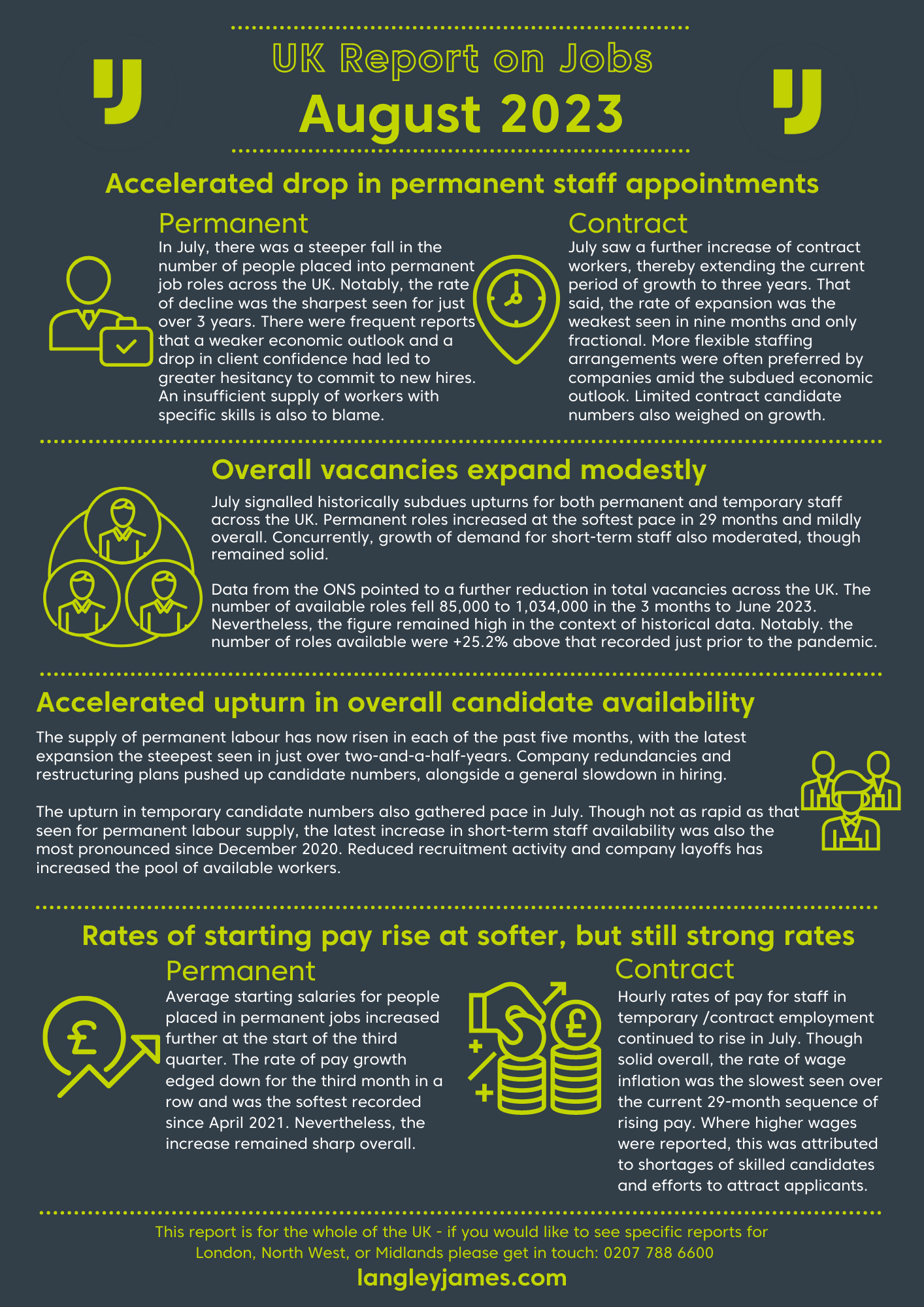

Jul 30, 2023 | Hiring Resources, IT, Tips
We’ve got some tech news to share. Recently, we came across an eye-opening article that shed light on the current state of the workforce in the UK. According to a recent poll, nearly half of UK workers feel that their work is becoming increasingly intense. And the blame seems to fall on staff shortages in the tech sector.
In this blog, we explore the impact of these shortages.
The Intensity of Work in the Tech Sector
The fast-paced world of technology has always been demanding. However, the current scenario is taking intensity to a whole new level. The poll indicates that almost 50% of UK employees are facing higher workloads, tighter deadlines, and increased pressure due to staff shortages. As more businesses rely heavily on technology, the demand for skilled IT professionals has soared. Therefore leading to a shortage that affects the entire industry.
The Ripple Effect on Tech Employees
With tech talent in high demand, the workforce is feeling the brunt of the shortages. Employees are working longer hours and feeling stretched thin. This is affecting not only their productivity but also their overall well-being. As a result, the importance of striking a balance between work and personal life has become more crucial than ever.
The Challenge for Employers
For employers, the shortage of IT talent presents a unique challenge. Attracting and retaining skilled tech professionals in this competitive landscape has become an uphill battle. Companies need to adapt their recruitment strategies and offer enticing packages that go beyond just financial rewards. Creating a positive work culture, providing growth opportunities, and offering work-life balance can be game-changers in attracting and keeping top talent.

The Role of IT Recruitment Agencies
This is where IT recruitment agencies, like ours, step in. Our mission is to bridge the gap between talented IT professionals and companies in need of their expertise. We understand the challenges faced by both job seekers and employers and work tirelessly to find the perfect match. Our friendly and dedicated team is committed to nurturing meaningful connections that go beyond just matching skills with job requirements.
Navigating the Future of Tech Talent
While the shortage of tech talent poses challenges, it also presents an opportunity for growth and innovation. As a community, we can navigate through these intense times together. At Langley James, we are passionate about making a difference. Our friendly approach, combined with our industry expertise, enables us to provide tailored solutions that address the unique needs of both job seekers and employers.
Our Thoughts
The poll results highlight the intensity of work experienced by employees in the UK due to staff shortages in the tech sector. As an IT recruitment company, we recognise the impact of these challenges on the workforce and are dedicated to finding innovative solutions. By working together, we can create a thriving tech industry that not only meets the demands of the digital age but also ensures the well-being and growth of its most valuable asset – its people.
About Langley James
At Langley James, we understand the ever-evolving landscape of the tech industry and the impact of staff shortages on your workforce. In this dynamic environment, effective talent management is more critical than ever. That’s why our approach goes beyond surface-level information provided in a CV alone.
With our comprehensive knowledge of candidates, including their experience, specific project involvements, strengths, and areas for improvement, we strive to find the perfect match for your business. Our dedicated and specialised consultants work closely with you, considering both the role requirements and the unique needs of your business.
We take immense pride in our thorough understanding of candidates’ skills and experiences, ensuring that we deliver the very best talent to meet your IT recruitment needs.
Let’s discuss your specific IT recruitment requirements today. Reach us at 0207 099 4839 or via email at langleyjames@langleyjames.com.
We’d love to hear your views on this. What are your thoughts on the impact of staff shortages on your team? Tweet us @ITRecruitment, or follow us on Facebook or LinkedIn

Jul 10, 2023 | Management, Tips
In today’s diverse workforce, managing different generations has become a fascinating challenge for hiring managers. With Generation Z, Millennials, and Generation X working side by side, understanding their unique characteristics and preferences is essential for fostering a harmonious and productive work environment. So, let’s dive into the world of these three generations and explore effective management strategies that can bridge the generation gap with a touch of fun along the way!
The Rise of Gen Z
Purpose-Driven and Digitally Savvy.
Generation Z, born between 1997 and 2012, brings a fresh perspective to the workplace. They value meaningful work that aligns with their personal purpose and societal impact.

Effectively managing Gen Z employees:
- Emphasise the purpose behind their work and how it contributes to the bigger picture.
- Leverage technology and communication platforms that resonate with them, such as collaborative tools.
- Offer regular feedback in short, digestible formats to cater to their shorter attention spans.
- Encourage a diverse and inclusive culture that fosters collaboration and innovation.
Millennials
Work-Life Balance, Flexibility, and Feedback.
Millennials, also known as Generation Y, were born between 1981 and 1996.

Effectively managing Millennials:
- Understand that they seek work-life balance and prioritize flexibility. Offering flexible schedules or remote work options can greatly enhance their job satisfaction.
- Provide regular constructive feedback and recognize their accomplishments to fuel their desire for approval.
- Create an environment that encourages continuous learning and growth opportunities, as Millennials are eager to develop their skills and advance in their careers.
Generation X
Communicate Honestly and Embrace Work Ethic.
Generation X, born between 1965 and 1980, is a generation that grew up in a different era.

Effectively managing Generation X:
- Opt for direct, frank communication rather than relying solely on niceties.
- Appreciate their strong work ethic and dedication. Acknowledge their long hours and commitment to achieving results.
- Utilize more traditional communication methods such as phone calls or emails, as they might prefer them over instant messaging platforms.
Bridging the Gap: Five Tips for Managing Multigenerational Teams:
- Foster cross-generational mentorship programs to encourage knowledge sharing and collaboration.
- Implement flexible work arrangements that accommodate different needs and preferences.
- Provide ongoing learning and development opportunities for all generations.
- Encourage open dialogue and understanding through team-building activities and workshops.
- Celebrate diversity and create an inclusive work environment where everyone’s voice is heard and valued.
Managing a multigenerational workforce requires adaptability, understanding, and a touch of humor. By recognizing the unique qualities and preferences of Generation Z, Millennials, and Generation X, hiring managers can cultivate a harmonious workplace where each generation can thrive. Embrace the diversity, bridge the generation gap, and enjoy the wealth of perspectives that each generation brings. Happy managing!
Remember, creating an engaging and fun work environment for all generations is the key to success in today’s dynamic and ever-evolving workplace landscape.
About Langley James
At Langley James, we understand the importance of effective talent management in today’s diverse workforce. With our comprehensive knowledge of candidates, including their experience, specific project involvements, strengths, and areas for improvement, we go beyond the surface-level information provided in a CV alone.
Our team of dedicated and specialised consultants is committed to finding the perfect match for your organisation, considering both the role requirements and the unique needs of your business. We take pride in our thorough understanding of candidates’ skills and experiences, ensuring that we deliver the very best talent to meet your IT recruitment needs.
To discuss your specific IT recruitment requirements, contact us at 0207 099 4839 or via email at langleyjames@langleyjames.com. Our team is eager to assist you in finding the right professionals who will contribute to your company’s success.
We’d love to hear your views on this. What are your thoughts on managing the generational mix in your IT team? Tweet us @ITRecruitment, or follow us on Facebook or LinkedIn

Jul 10, 2023 | IT, IT Market Reviews
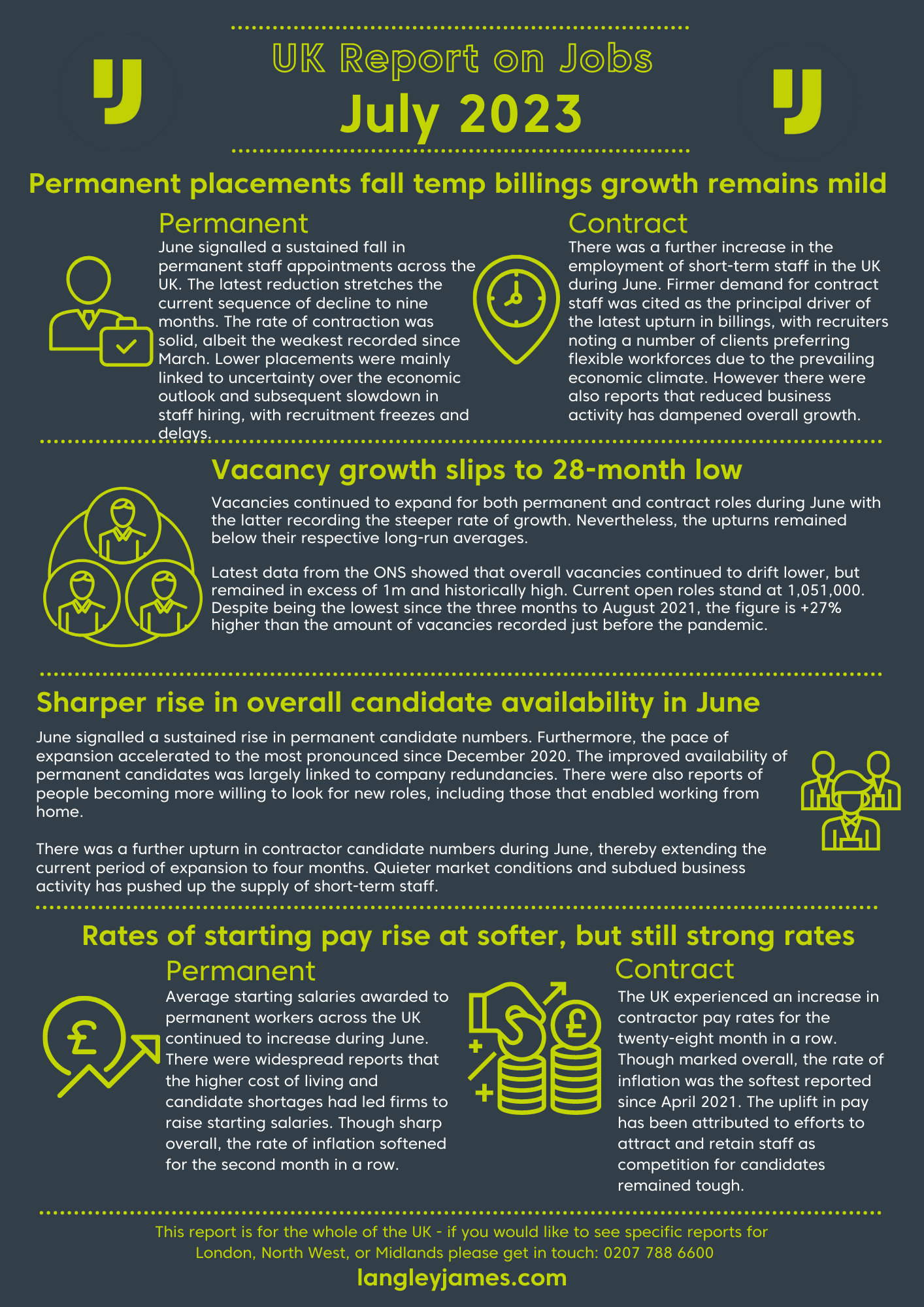
`

Jun 28, 2023 | Hiring Resources, IT
In today’s competitive IT landscape, hiring managers face a significant challenge—the ongoing IT skills crisis. The demand for skilled IT professionals continues to outpace the supply, making it increasingly difficult to find and secure top talent. However, with the right strategies and innovative approaches, hiring managers can successfully navigate this crisis and build a high-performing IT team. In this blog post, we’ll explore some effective solutions to help you overcome the IT skills shortage and find the ideal candidates for your organisation.
Hiring Mangers Should Embrace the Gig Economy
Incorporating the gig economy into your talent acquisition strategy can be a game-changer. By leveraging IT contractors, you can access a pool of specialised talent on-demand. This flexible arrangement allows you to quickly fill skill gaps and tackle short-term projects without long-term commitments.
Foster Internal Talent Development
Investing in the professional growth of your existing employees can be a strategic solution. Implement training programs, certifications, and mentorship opportunities to upskill and reskill your current team members. By nurturing internal talent, you can fill crucial roles internally and create a culture of continuous learning and advancement.
Tap into Professional IT Networks
Engage with professional IT networks, industry associations, and online communities. Participate in relevant events, conferences, and webinars to connect with IT professionals actively seeking new opportunities. Building relationships within these networks can provide access to a diverse pool of talent and valuable industry insights.
As a Hiring manager You Need to Leverage Social Media and Online Platforms
Harness the power of social media and online platforms to expand your reach and attract top IT talent. Maintain an active presence on platforms like LinkedIn, GitHub, and Stack Overflow. Share engaging content, job openings, and insights about your organisation’s work culture to create a strong employer brand and attract the attention of skilled candidates.
Collaborate with IT Recruitment Specialists
Partnering with an IT recruitment agency can be a strategic move. These specialists, like us, possess in-depth industry knowledge, an extensive network of IT professionals, and expertise in candidate sourcing and screening. They can streamline your recruitment process, saving you time and effort while connecting you with the right talent.
Offer Competitive Compensation and Benefits
To attract and retain top IT talent, it’s crucial to offer competitive compensation packages and attractive benefits. Stay up-to-date with market trends to ensure your salary offers align with industry standards. Additionally, consider flexible work arrangements, professional development opportunities, and perks that cater to IT professionals’ specific needs and preferences. Take a look at our latest IT Salary Guide to get up to date on the current salaries on offer for the most popular jobs in IT.

Hiring Managers Need to Streamline the Hiring Process
In a competitive talent market, a lengthy and complex hiring process can deter top candidates. Simplify and streamline your hiring process to ensure a positive candidate experience. Minimize unnecessary steps, provide prompt feedback, and communicate clearly with candidates to expedite the decision-making process.
Showcase Your Organisation’s Technological Advancements
Demonstrate your organization’s commitment to innovation by highlighting the exciting projects, cutting-edge technologies, and advancements in the IT space. Showcasing your technological prowess and the opportunity for IT professionals to work on meaningful and impactful projects can attract top talent and position your organization as a desirable employer.
Why Hiring Managers Should Work With Langley James
Here at Langley James, we know our candidates. We have in-depth knowledge of their experience, down to the individual projects they have worked on, their strengths (and their weaknesses). We have access to those details that you just can’t get from a CV alone.
Our talented and specialised consultants work hard to ensure that any candidates we send you are not only a perfect match for the role but your business.
To discuss your IT recruitment needs please call us on 0207 099 4839 or email us: langleyjames@langleyjames.com.
We’d love to hear your views on this. What are your thoughts on the current IT skills crisis? Tweet us @ITRecruitment, or follow us on Facebook or LinkedIn

Jun 19, 2023 | IT, Tips
We are in the middle of a long and sustained talent crisis. Candidate availability is decreasing by the day, and job vacancies continue to rise. Albeit at a slightly slower rate over the last few months. But the success of your business depends on your team. The people you hire have a direct impact on your success. So, when it comes to your next vacancy, you may be asking which is best for you – recruitment agency vs direct hiring.
We’ve asked our expert consultants to share their insight on the pros and cons of both to help you make that all important decision.
Agency vs Direct
We’ve written at length about the benefits of working with a specialised recruitment agency, but let’s compare some key areas when it comes to recruitment agency vs direct hiring.
Writing adverts
This may sound like a simple process, but don’t be fooled. Yes, it’s true that we can all write an advert stating the responsibilities and requirements. However, in the current market, that is not enough! Candidates are less likely to apply for a job with a list of demands. They want the story, the feeling, a sense of what you stand for. They want the benefits, the future opportunities, and a sense of being part of something important in the world.
If you don’t have experience of this, you are likely to find that your advert will be a bit of a ‘damp squid’ and won’t attract the people you need to make your business a continued success. Agencies are writing adverts day in, day out. They know what it takes to get the best response.
Access to candidates
A recruitment agency will have access to many more candidates than you will if you recruit direct. Not only do they have a large database of experienced candidates, but they are also able to advertise in lots of different ways. This means that you don’t just get the best people who are currently on the market. A recruiter will also headhunt suitable candidates for you using a combination of technology and their personal network. This means that your shortlist should be the very best candidates for the job.
Direct hiring tends to be focused on adverts, website pages and the odd social media post. The reach is not as great as that of a recruiter. With direct hiring, you are unlikely to have the tools you need to get your advert out as far as it needs to go. Lots of companies use their own employees to recommend candidates. Whilst this is great in some instances, it can have an impact on your diversity. Something to bear in mind with any employee referral scheme.
Sifting through CV’s – Recruitment Agency vs Direct Hiring
Depending on how much time you have, it could be a benefit for you to read through all the applications you receive if you do decide direct hiring is for you. The advantages are that you see not just shortlisted candidates, but every single response. This will give you a real insight into the market (if your job advert is great!) and may give you insight on what you need to change to attract the best.
You’ve also got to have the technical knowledge when it comes to IT. You may be looking for experience in a particular piece of tech. And unless you’re aware of other technologies where skills can easily transfer, you could be missing out on a great candidate!
Either way, be prepared to spend lots of time looking at unsuitable CVs as the pay-off for direct hiring. However, if you don’t have the extra time needed to go through the process, using a recruitment agency van be a valuable way of finding new talent for your business. Shortlisting is completed on your behalf, and you only have to choose who to interview from a shortlist of CVs.

Employer branding
You’ve probably heard more and more people start to talk about employer branding. It’s a vital part of the direct hiring process. When was the last time you reviewed yours? What does your Glassdoor say about you? How are your Google reviews? There are many things to consider when recruiting direct when it comes to how you are perceived in the market.
However, we know that there are some really great companies to work for our there who don’t have any employer brand at all. And if this is you then using a recruitment agency is the best idea. Recruitment consultants are highly skilled at attracting candidates to opportunities. They sell the opportunity first and the company a very close second. This gives the added benefit that any questions candidates have about your values, culture, and more, can be answered directly. So, whether you have a strong employer brand or not, you’ll still get the best candidates using a recruitment agency.
The same can be said for candidate experience too. If you already have a robust recruitment communication process, great, direct hiring could be for you. But remember that candidates expect a response within 24 hours of their application now. They expect to be kept up to date at every stage in the process. Do you have the time and organisation to do that effectively?
Cost
There’s a general misconception in the market that using recruitment agencies can be costly. But this is usually when it’s looked at in isolation and not compared to direct hiring. If you wanted to do the same work as a recruiter does, it could end up costing you considerably more. And this cost increases if you’re not regularly recruiting. Recruitment agencies spend hundreds of thousands of pounds behind the scenes to make sure that they are providing the best service and the best candidates.
You’d be amazed how much it costs to just advertise a job on one job board, let along over 30! Access to CV databases is also at a great cost, and let’s not get started on the costs associated with LinkedIn! Then there’s the time spent searching out the best candidates. At Langley James, we allocate at least 3 full days just to shortlist candidates for you. And in the current market, this can take longer too.
But there’s one huge benefit when it comes to cost. Recruitment agencies will not charge you a penny until they have been successful, regardless of the time spent on the role. This is something you can’t do with direct hiring. You take a financial risk every time you recruit direct – there are no guarantees of success.
Recruitment Agency Vs Direct Hiring – Summary
If you have lots of time on your hands, and an ‘easy to fill’ role then direct hiring will probably work for you. But, if you have a harder to fill role but you still want the very best candidates, without having to invest your own time, you need the help of a recruitment agency.
About Langley James
We have been helping companies to attract and retain the very best IT talent since 1999. But we don’t just simply find the best candidates. We can advise you on the current jobs market conditions. Share data on average IT salaries. Talk to you about the benefits that candidates are looking for. In fact, we do everything we can to help ensure that you get the very best people for your team. Get in touch with our team to find out how we can help you to recruit the best!

Jun 9, 2023 | IT, IT Market Reviews
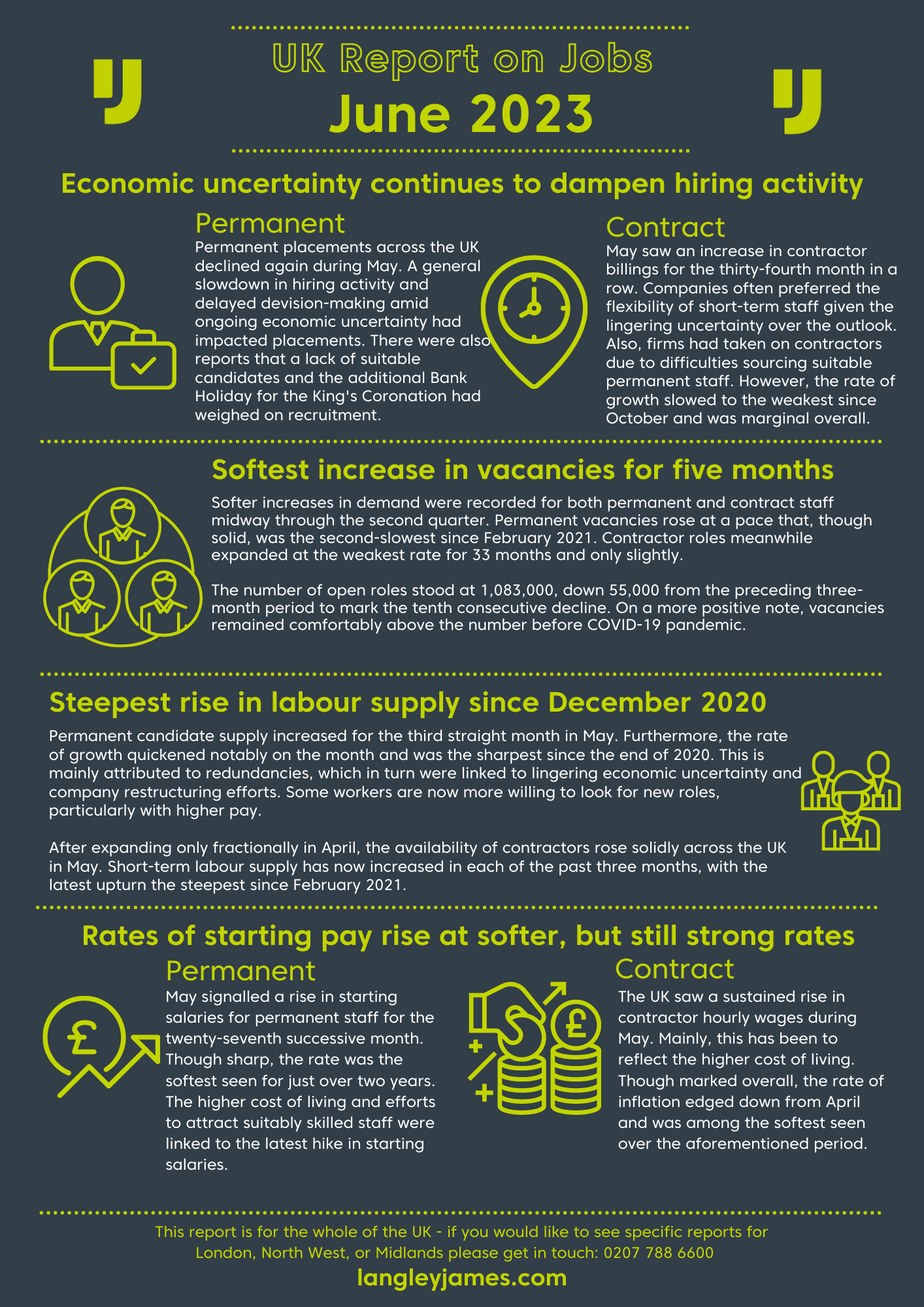

May 18, 2023 | Hiring Resources, IT, Tips
Hey there, IT hiring managers! Are you tired of sifting through endless resumes? Conducting countless interviews, and still struggling to find that perfect candidate? Well, fear not! We’ve got a secret weapon up our sleeves that will revolutionise your talent acquisition game.
Enter the world of IT recruitment agencies. Where the magic of matching exceptional talent with the perfect job happens. Buckle up and let’s explore why IT recruitment agencies are the game-changers in today’s IT recruitment market.
IT Recruitment Agencies Provide Supercharged Sourcing
Gone are the days of scouring job boards and drowning in a sea of unqualified applicants. IT recruitment agencies have an extensive network, And a knack for sniffing out top talent. With their industry connections, they have access to a hidden pool of skilled professionals. Some who might not be actively looking but are open to exciting opportunities. Let us do the digging and present you with a shortlist of exceptional candidates. Saving you time and headaches.
Navigating the IT Talent Jungle
In a highly competitive market, finding the right IT talent can feel like searching for a needle in a haystack. But fear not! IT recruitment agencies are the seasoned navigators of this talent jungle. We know what skills and expertise to look for. And we can spot those hidden gems that others might overlook. Consider us your trusty safari guides, equipped with a keen eye for talent.
Tap Into The Matchmaking Mastery of IT Recruitment Agencies
Finding the perfect match between a candidate and a job isn’t just a lucky coincidence. It’s an art. IT recruitment agencies excel at this matchmaking dance. We take the time to understand your company’s culture, values, and specific job requirements. Armed with this knowledge, we dive deep into our pool of talented candidates, We evaluate not just their technical skills but also their personality fit. It’s like finding a puzzle piece that fits perfectly, creating a harmonious and productive work environment.

Unleashing Unconventional Talent
Sometimes, the most extraordinary talent lies outside the box. IT recruitment agencies have a knack for identifying those unconventional candidates. Those who bring fresh perspectives, innovative ideas, and unique problem-solving skills to the table. We believe in thinking outside the binary code, and we’re not afraid to challenge the status quo. Embrace the power of diversity and let us introduce you to the game-changers who will push your company to new heights.
IT Recruitment Agencies Are Your Silent Partners
Picture this: you’re in the midst of a talent war, and you need reinforcements ASAP. That’s where IT recruitment agencies become your silent partners. Working tirelessly behind the scenes to scout, screen, and secure the best talent for your team. We become an extension of your HR department, collaborating seamlessly to fulfill your staffing needs. From negotiating offers to managing onboarding, consider us your backstage crew, ensuring a smooth and successful hiring process.
About Langley James
Here at Langley James, we know our candidates. We have in-depth knowledge of their experience, down to the individual projects they have worked on, their strengths (and their weaknesses). We have access to those details that you just can’t get from a CV alone.
Our talented and specialised consultants work hard to ensure that any candidates we send you are not only a perfect match for the role but your business.
So, are you ready to embrace the power of IT recruitment agencies? We’re here to be your allies, your advocates, and your partners in talent acquisition. Together, we’ll revolutionise your hiring process, saving you time, energy, and headaches. Let’s embark on this adventure together and discover the exceptional talent that will propel your company to new frontiers.
To discuss your IT recruitment needs please call us on 0207 099 4839 or email us: langleyjames@langleyjames.com.
We’d love to hear your views on this. What are your thoughts on the current IT recruitment maket? Tweet us @ITRecruitment, or follow us on Facebook or LinkedIn

May 12, 2023 | IT, IT Market Reviews
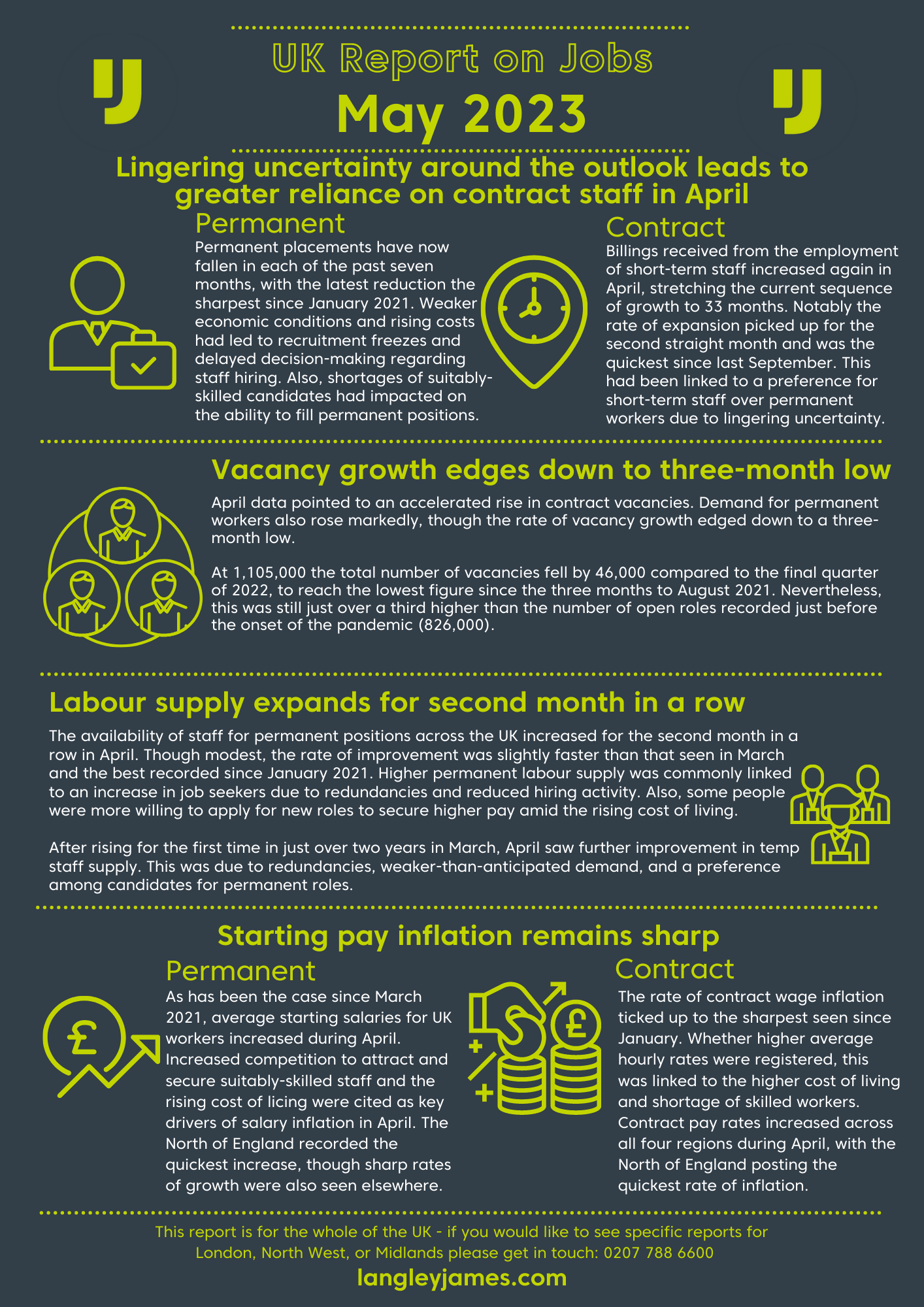


Recent Comments