From Hype to Delivery: How Tech Leaders Are Building High-Output Teams in 2026
Hype to Delivery
Over the past 18 months, the narrative surrounding enterprise technology was dominated by exploration. Boardrooms across the UK, Europe, and global hubs invested heavily in assessing how artificial intelligence and next-generation automation could transform their operations.
As we progress through 2026, the conversation has fundamentally shifted. The focus is no longer on conceptual pilots or speculative roadmaps—it is on practical delivery, system integration, and operational speed.
Tech leaders who are successfully moving from initiative to output are quietly restructuring their approach to talent, skills, and execution. Here is how high-output teams are being built in the current market.
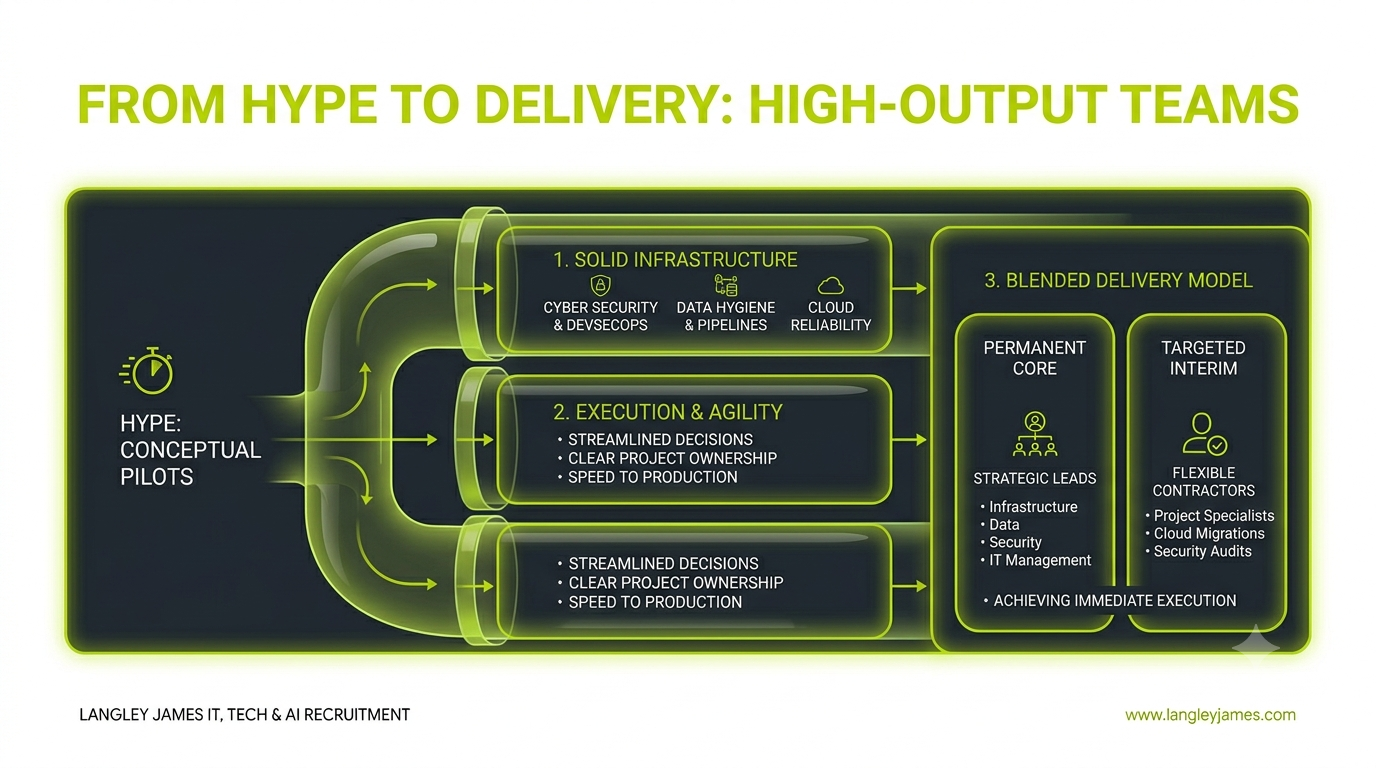
1. Grounding Innovation in Solid Infrastructure
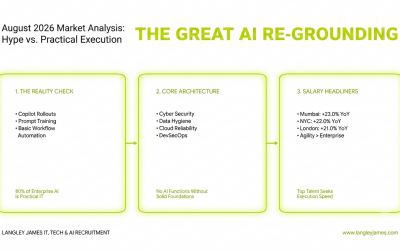
While headline-grabbing tools such as Microsoft Copilot rollouts and workflow automation have driven early productivity gains, leading CTOs and IT Directors recognise a fundamental truth: advanced automation requires rock-solid foundations.
High-output organisations are placing renewed emphasis on core architecture:
-
Cyber Security & DevSecOps: Ensuring automated workflows and data access do not introduce vulnerabilities.
-
Data Hygiene & Pipelines: Structuring legacy data so intelligent tools deliver accurate, actionable outcomes.
-
Cloud Infrastructure & Reliability: Maintaining stable, scalable environments capable of handling modern operational demands.
Without strong core IT capability, sophisticated tools remain stranded in trial phases. Building a resilient engineering baseline is proved to be the fastest route to real ROI.
2. The Agility Advantage: Execution over Committee Loops
One of the most notable shifts in the 2026 candidate market is talent movement. Experienced AI, Cloud, and Infrastructure specialists are increasingly drawn to agile, mid-sized businesses and growth-focused enterprises.
Why? Because skilled tech professionals want to see their work deployed into production, rather than delayed in prolonged governance loops.
For hiring organisations, offering clear project ownership, streamlined decision-making, and modern tooling has become a primary recruitment asset. Companies that demonstrate execution speed are consistently winning the competition for top-tier technical capability.
3. The Blended Delivery Model: Permanent Core + Targeted Interim
To maintain momentum without over-stretching internal resources, forward-thinking organisations are adopting a hybrid approach to talent strategy:
-
Permanent Core Capability: Securing long-term strategic leads in Infrastructure, Security, Data, and IT Management to preserve institutional knowledge and culture.
-
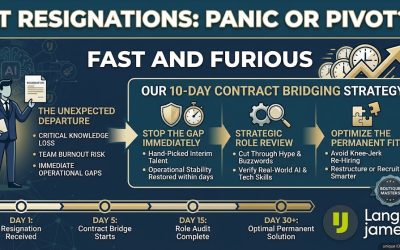
Targeted Interim Specialists: Deploying experienced contractors for critical project phases—such as cloud migrations, pipeline remediation, or security audits—to achieve immediate execution without long-term overhead.
This flexible model allows businesses to respond dynamically to changing priorities while keeping project delivery strictly on schedule.
Moving Forward
The tech landscape in 2026 isn’t slowing down; it is maturing. Organisations that combine robust core infrastructure, agile delivery environments, and a well-balanced blend of permanent and contract expertise are making the fastest progress.
For an up-to-date look at market rate movements across permanent salaries and interim day rates, view our August 2026 IT, Tech & AI Salary Guides. To discuss your specific team structure or benchmark upcoming roles, contact James Toovey and the team at Langley James.
Connect with the team at Langley James today. – Click Here
Or give us a call on 020 7788 6600
Or email James@langleyjames.com