Why Smart Companies Are Hiring Interim This Summer (And It’s Not About Saving Money)

Estimated 1.5 Minute Read]
Summer always puts a strain on lean IT teams. Someone’s on leave, projects don’t pause to accommodate it, and the people left covering quietly absorb the gap. This year, there’s a second pressure layered on top: genuine hesitation about permanent hiring, driven by changes to unfair dismissal law that most businesses haven’t fully got their heads around yet.
Here’s the bit worth getting right, because the headlines have muddied it: this was never going to be a “day one” unfair dismissal right. That proposal was dropped during the Bill’s passage through Parliament. What’s actually now law is a reduced qualifying period — down from two years to six months — taking effect for dismissals from 1 January 2027.
The detail that matters for hiring decisions made right now: anyone brought on from around July 2026 will cross that six-month threshold just as the new rules land. Hire in August, and by February next year, that person has full unfair dismissal protection. For a small, lean IT or tech team, getting a permanent hire wrong inside that window suddenly carries more weight than it used to.
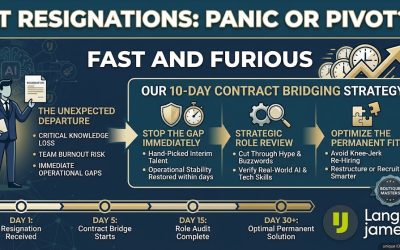
That’s exactly why interim and contract hiring deserves a proper look this summer — not as a stopgap, but as a genuinely sound strategic move.
The “try before you buy” logic actually works both ways. You get to see someone operate inside your business — handling your systems, your stakeholders, your particular flavour of chaos — before committing to a permanent decision. If it’s a strong fit, many contract arrangements can convert to permanent further down the line, by which point you’re hiring with real evidence rather than a gut feeling from two interviews.
It also genuinely solves the summer capacity problem. Bringing in an interim IT Manager or engineer for the next few months covers the gap without adding permanent headcount risk during a period when budgets and confidence are both more cautious than usual.
And it sidesteps the qualifying-period question entirely. Contractors operating through their own limited company sit outside the employee unfair dismissal framework in the way a permanent hire wouldn’t, provided the engagement is genuinely structured as a B2B arrangement (this is exactly what IR35/CEST assessment is there to confirm, properly and compliantly).
None of this is about avoiding obligations to people — it’s about giving yourself room to make a confident permanent decision later, without the pressure of getting it right in one shot during the most stretched month of the year.
If your team’s feeling the summer squeeze and you’re nervous about committing to a permanent hire right now, an interim contractor might be the better first move — not the compromise option, the smart one.
Connect with the team at Langley James today. – Click Here
Or give us a call on 020 7788 6600
Or email James@langleyjames.com